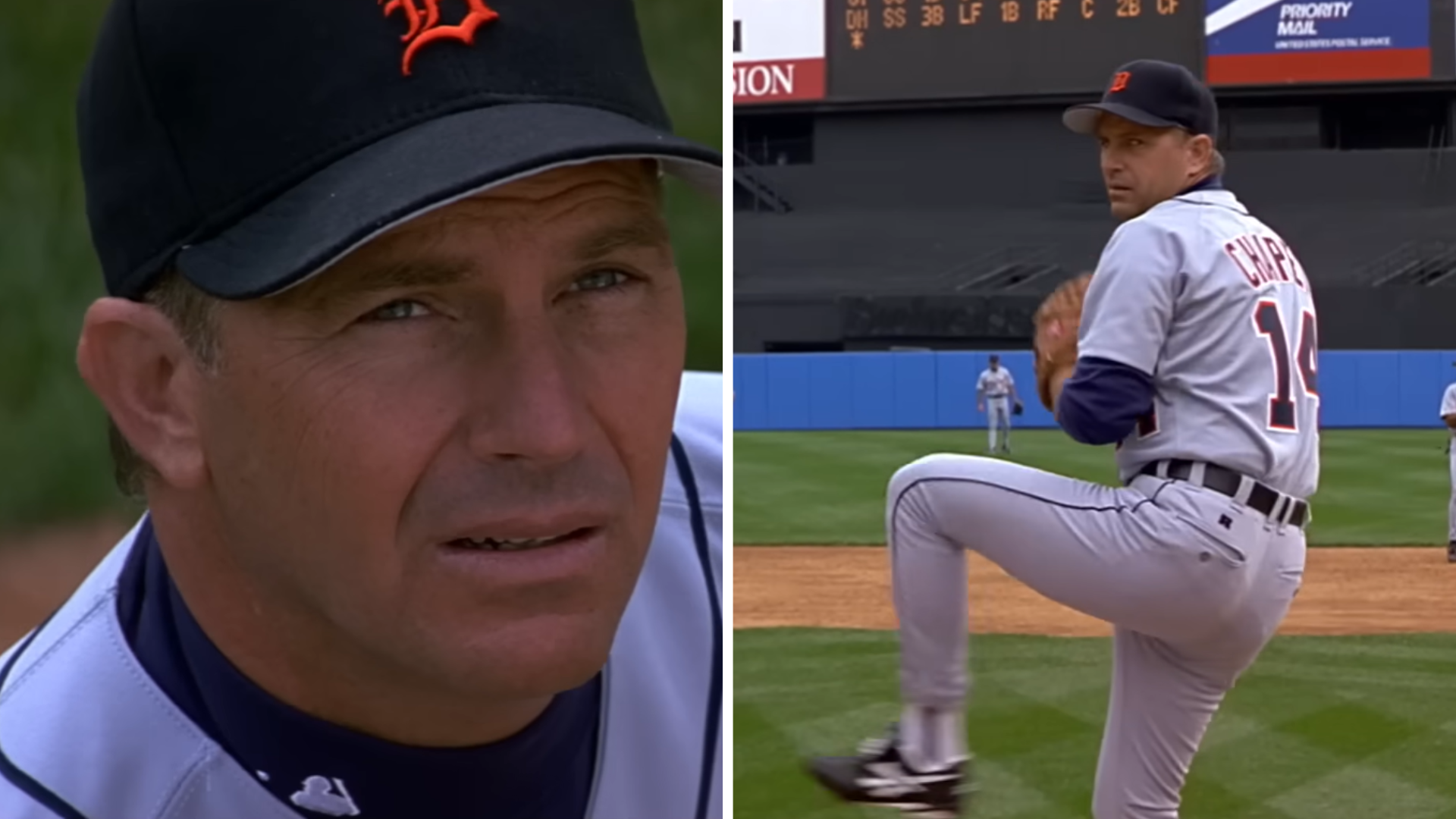
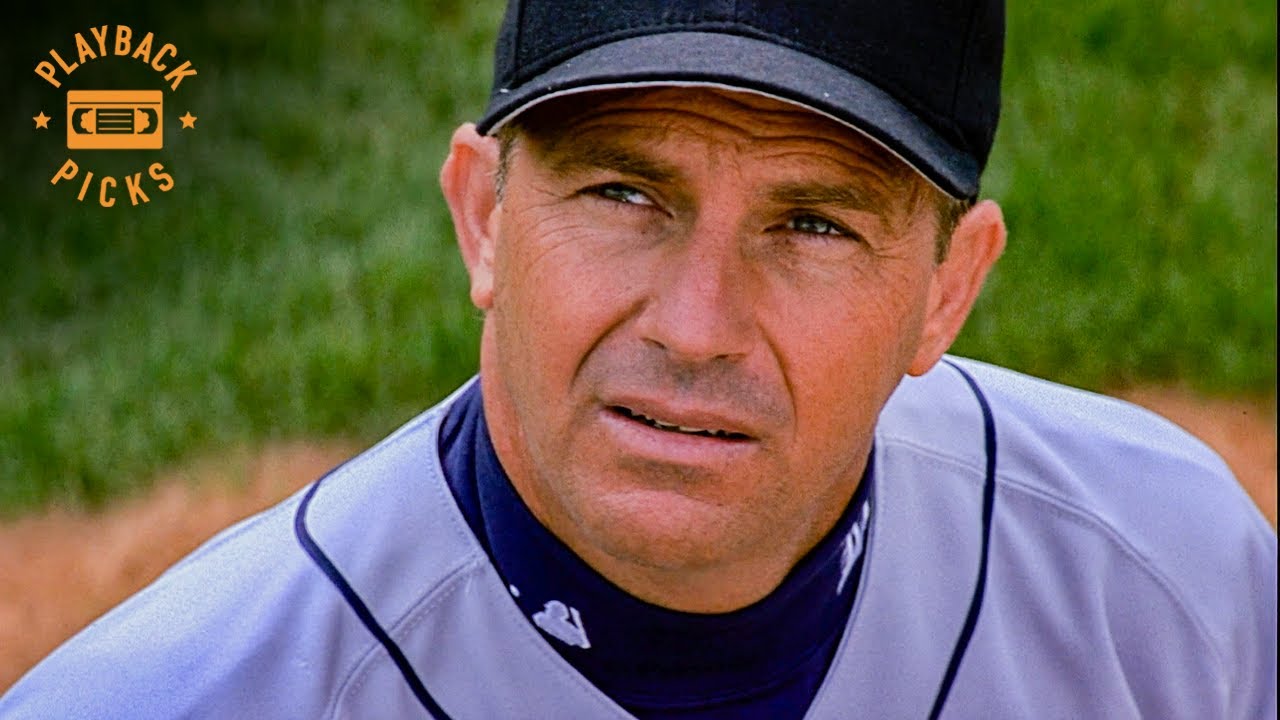
The final game in For Love of the Game (1999) has to do something difficult: make Kevin Costner look like a veteran pitcher capable of pulling off one extraordinary afternoon at Yankee Stadium. Sam Raimi could not hide behind quick cuts and distant angles, either. Billy Chapel spends much of the sequence alone on the mound, where every movement has time to register.
The production went surprisingly far to make that work. Costner consulted real players, the crew spent weeks inside the original Yankee Stadium, active professionals appeared around him, and the actor pushed his own arm hard enough that filming eventually had to change. Even the movie’s perfect game received an unexpected real-life counterpart before audiences got to see it.
1. They filmed the game inside the real Yankee Stadium
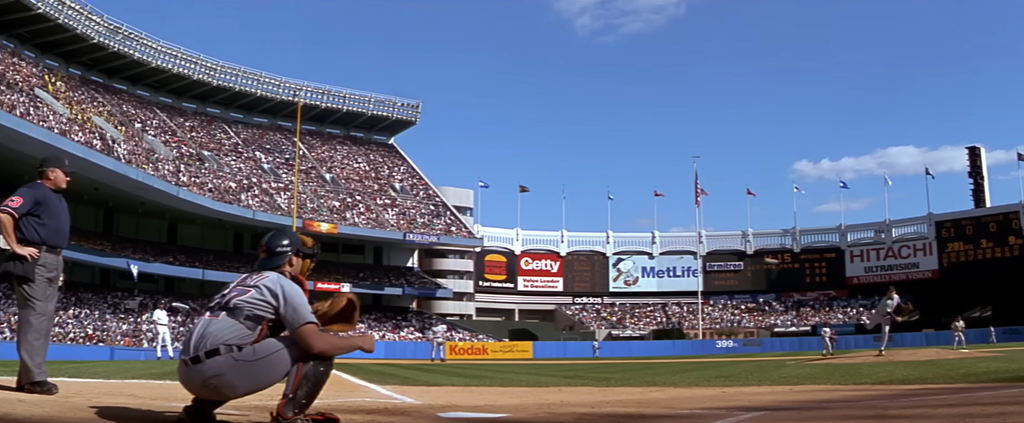
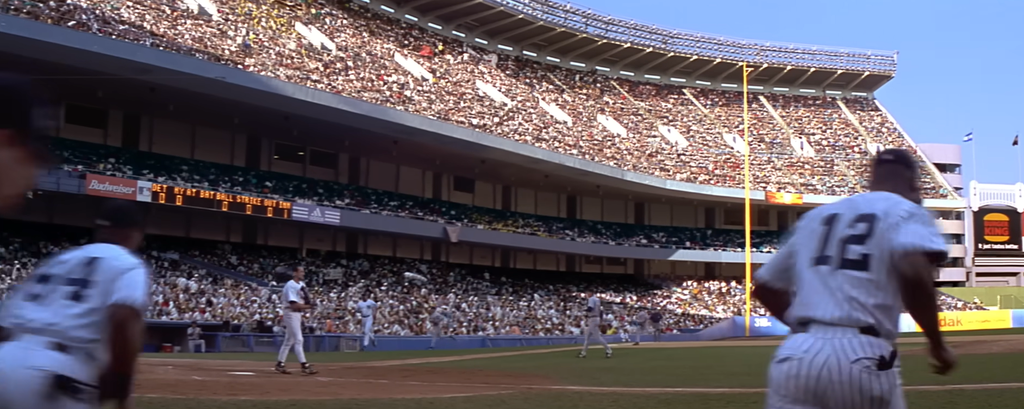
Billy Chapel’s final appearance was not recreated somewhere else and dressed to resemble the Bronx. The production spent roughly five weeks filming inside the original Yankee Stadium in late 1998, shortly after the Yankees had won the World Series.
That gives the game something a replica would have struggled to reproduce. The old seating bowl, dugouts, field, surrounding architecture, and even the passing subway become part of the sequence. Watching it now also means seeing a stadium that no longer exists.
2. George Steinbrenner had rules for the Yankees uniforms
The Yankees did not simply hand over their stadium and let the production fill the field however it wanted. Team owner George Steinbrenner wanted people wearing Yankees uniforms to be established actors or actual players.
The movie went even further around them, using genuine umpires and stadium personnel. It helps explain why the game rarely has that slightly awkward quality sports movies can get when everyone except the star looks like an extra trying to imitate an athlete.
3. Costner studied the little habits of a real pitcher
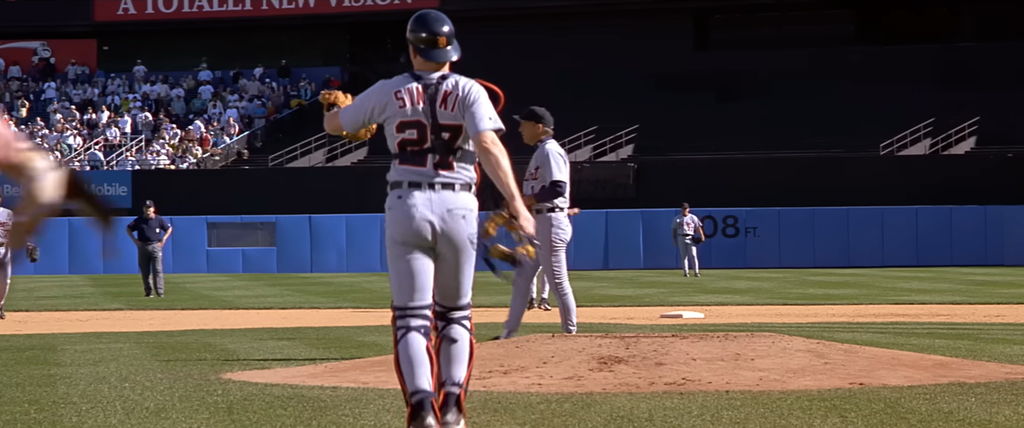
Kevin Costner already had enough experience with the sport that Yankees pitcher Mike Buddie was not brought in to rebuild his mechanics from scratch. Costner was more interested in smaller questions: Would a veteran behave this way? Would this reaction feel natural during a perfect game?
Buddie became someone Costner could check those details against. That approach fits the performance nicely. Billy does not spend nine innings showing off an elaborate pitching style. Much of the realism comes between pitches, when Costner is walking around the mound, collecting himself or communicating with Gus.
4. Some of Costner’s shoulder pain was real
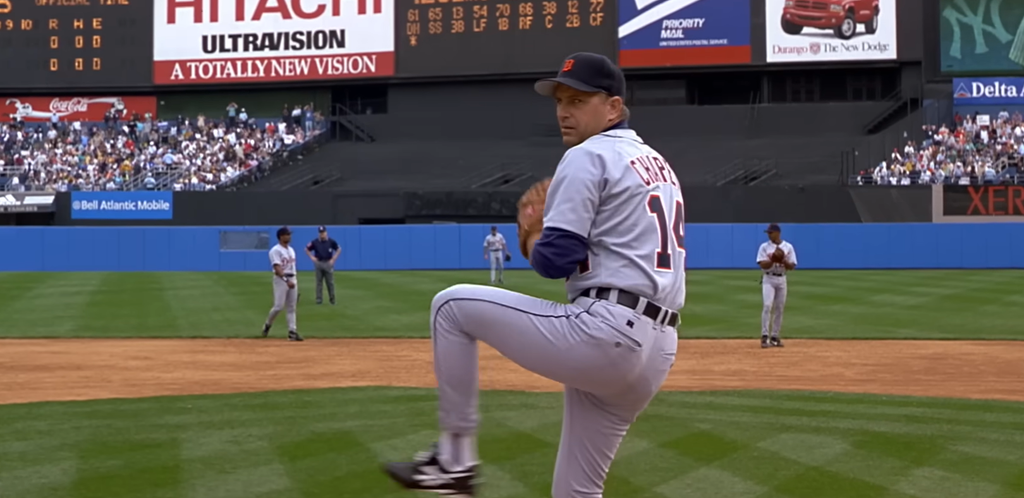
Billy’s arm gradually becomes one of the biggest obstacles in the game, and Costner did not have to manufacture every sign of discomfort. During an early day of filming, he reportedly threw around 200 pitches and badly overworked his shoulder.
Yankees trainers Gene Monahan and Steve Donohue treated him while the production began spreading the pitching material across the schedule so his arm could recover. Some days were shifted toward dugout scenes with John C. Reilly instead. Costner was supposed to look exhausted late in Billy’s game. By then, keeping him fresh enough to film had become a real production problem.
5. Dave Eiland supplied some of Billy’s pitches
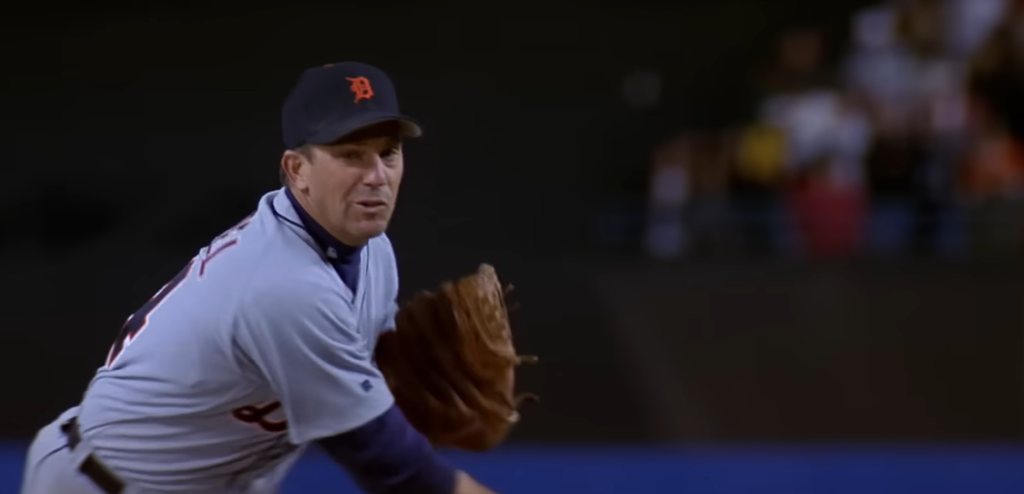
Eventually, the movie needed another right-handed pitcher who could pass for Costner when the camera did not require his face. Dave Eiland, then an active Major League pitcher, came to New York and spent several weeks working as Costner’s pitching double.
Eiland explained that a sequence might show Costner beginning his delivery before cutting to the pitch reaching the plate. In some of those shots, the second half was Eiland. The crew matched his haircut, makeup, and Detroit uniform closely enough to stitch the performances together without calling attention to the switch.
6. “Clear the mechanism” had to work visually, not just in Billy’s head
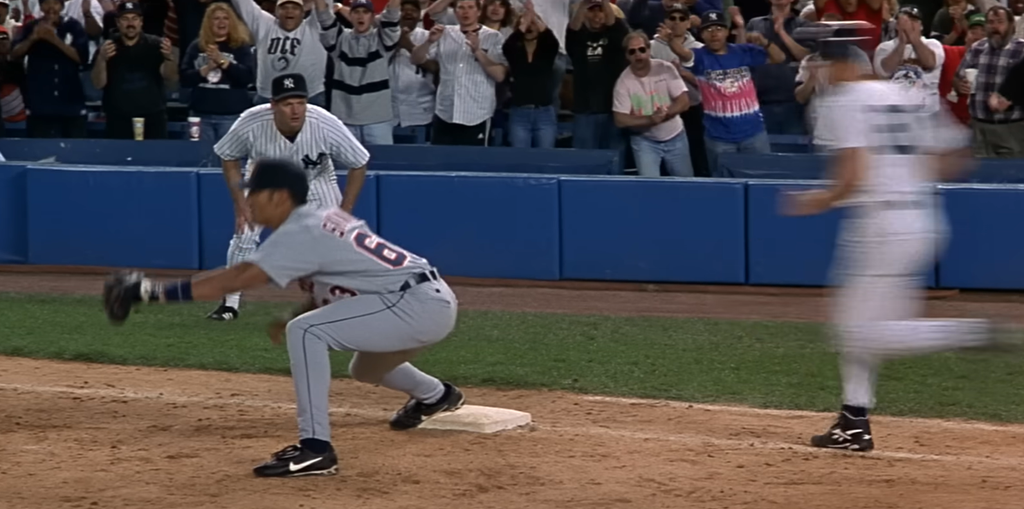
One of the movie’s most memorable ideas happens when Billy says, “Clear the mechanism,” and the hostile stadium seems to disappear around him. The concept of Billy shutting everything else out came from Michael Shaara’s story and Dana Stevens’ screenplay, but Raimi still had to figure out how to put that internal experience onscreen.
He worked with storyboard artists and cinematographer John Bailey to remove both the surrounding noise and the visual distraction of the stadium. Suddenly Costner seems almost alone with the catcher. It makes a psychological routine into something the audience can experience with him rather than simply hear about.
7. One slow-motion setup actually broke a camera lens
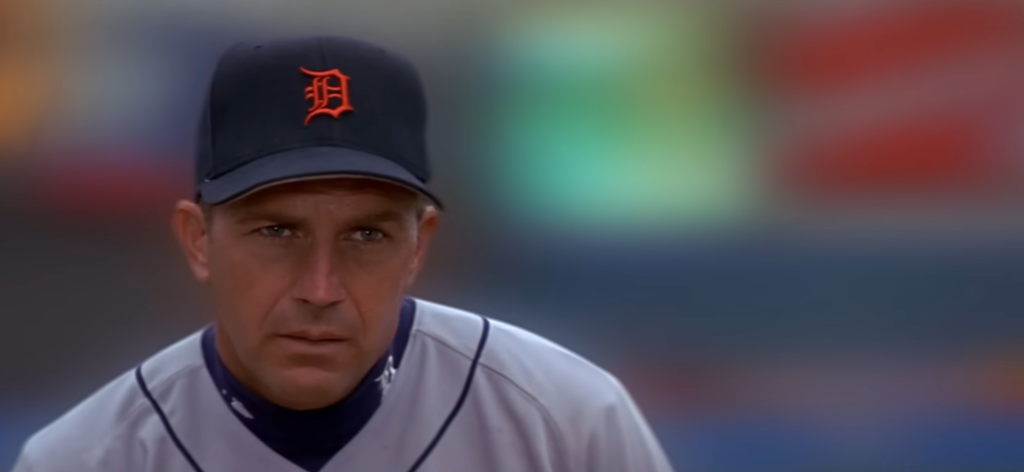
For some of the extreme close-ups, assistant director Sean Ferguson wanted to capture a pitch spinning directly toward the camera. Mike Buddie repeatedly threw toward expensive lenses positioned behind protective netting.
He kept missing the lens by inches until eventually one throw connected and broke it. The finished images last only moments, but they were created by putting the camera almost directly in the path of a real professional-level pitch.

8. The packed Yankee Stadium crowd was partly an illusion
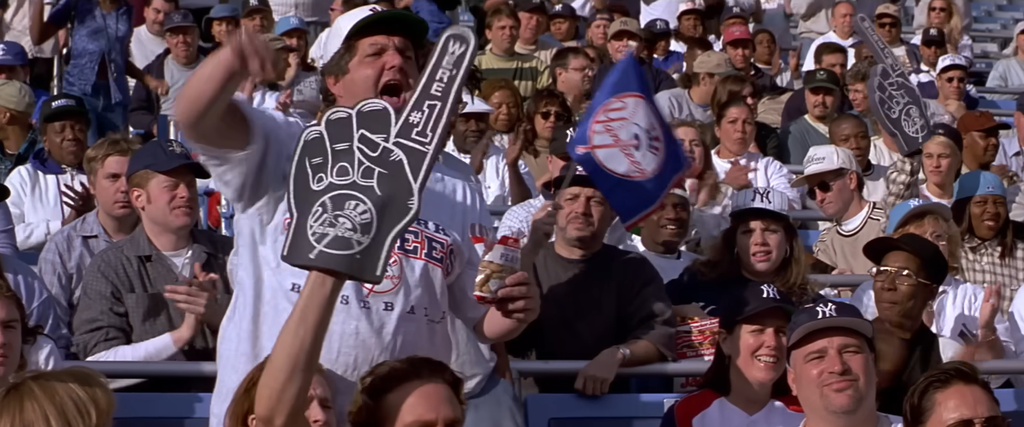
The movie makes Billy’s achievement feel as though it is unfolding in front of a nearly full Yankee Stadium, but the production could not bring tens of thousands of people back every day. Depending on the shoot, it had roughly 300 to 1,200 local extras available.
The solution was wonderfully practical. Groups were moved into whatever sections the camera could see, cardboard figures filled distant rows, previously recorded crowd footage helped with wider views, and digital additions covered remaining gaps. The same people could effectively become several different parts of the stadium depending on where Raimi pointed the camera.
9. Sam Raimi specifically wanted Vin Scully
Vin Scully does a huge amount of work for the final game. His commentary makes Billy’s fictional performance sound like something audiences might genuinely have heard during an important afternoon at Yankee Stadium.
Raimi wanted Scully personally. He had listened to the broadcaster after moving to Los Angeles and remembered hearing him for years, even while putting his children to sleep. Raimi was told that pairing Scully with Steve Lyons was not completely realistic for this particular broadcast, but authenticity gave way on that one detail because he wanted that voice in the movie.
10. David Cone threw a real perfect game before the movie opened
The strangest coincidence happened after the Yankee Stadium material had already been filmed. On July 18, 1999, Yankees veteran David Cone retired all 27 Montreal Expos hitters he faced in the same stadium. For Love of the Game did not reach theaters until September.
Cone was 36, making the resemblance to the aging Billy Chapel even harder to ignore. Costner later sent him a note acknowledging the parallel, and Cone has said the movie came to feel remarkably close to his own experience. For a film built around an older pitcher finding one extraordinary afternoon in the Bronx, reality supplied an unexpectedly convincing finishing touch.
To Watch or Buy For Love of the Game, click here: https://www.amazon.com/Love-Game-Brian-Cox/dp/B000I9WW5O