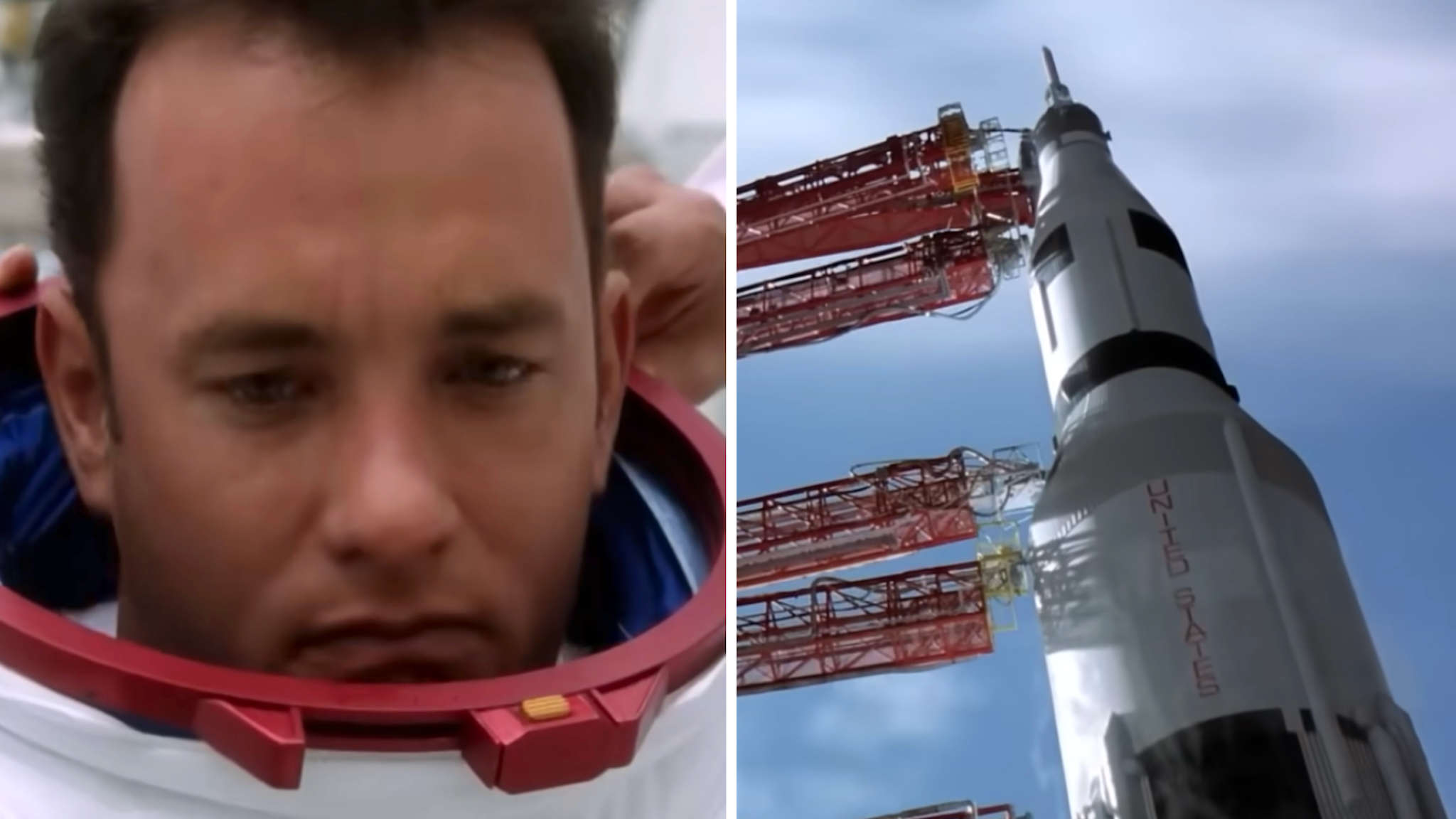
On April 11, 1970, three brave astronauts strapped themselves into a giant Saturn V rocket, preparing to embark on NASA’s third lunar landing mission. While millions of viewers remember the iconic 1995 blockbuster starring Tom Hanks, the real-life launch of Apollo 13 was an extraordinary historical event packed with unbelievable tension, sudden crew replacements, and near-catastrophic technical glitches before the spacecraft even left Earth’s atmosphere.
Ron Howard’s Oscar-winning film used groundbreaking cinematic techniques to recreate those iconic nine minutes of liftoff, immortalizing the courage of the crew for new generations. However, the true history behind that historic April afternoon is even more dramatic than what made it onto the silver screen. Here are 7 mind-blowing real-life facts about the historic Apollo 13 launch and how Hollywood brought it back to life!
1. A Sudden Measles Exposure Forced a Last-Minute Crew Swap
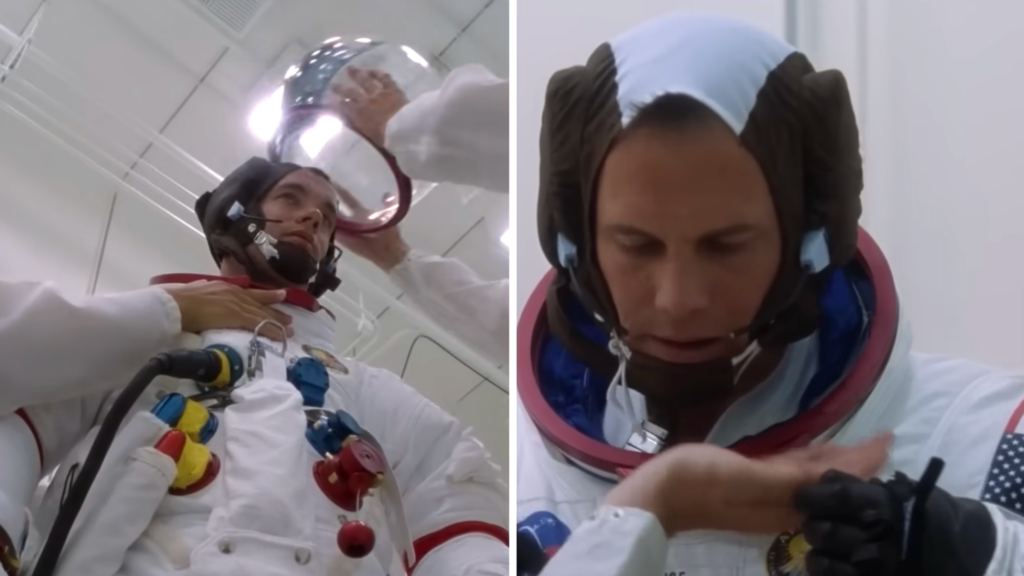
Just three days before the scheduled launch on April 11, 1970, NASA doctors delivered shocking news to the prime crew. Backup pilot Charles Duke had inadvertently exposed the team to the measles. While Commander Jim Lovell and Lunar Module Pilot Fred Haise were immune, Command Module Pilot Ken Mattingly was not. Fearing Mattingly might fall dangerously ill mid-mission, NASA made the unprecedented decision to ground him and elevate rookie backup Jack Swigert to the prime crew with less than 72 hours of team integration time before liftoff.
2. The Number 13 Was Surrounded by Creepy Superstitions
Superstitious observers could not ignore the uncanny repetition of the number 13 surrounding the mission. Apollo 13 was scheduled to launch at 13:13 CST (1:13 PM) from Pad 39—which is a multiple of 13 ($39 = 13 \times 3$). Furthermore, the explosion that crippled the spacecraft occurred on April 13. While NASA engineers rejected numerology, astronaut Jim Lovell later admitted in interviews that while he wasn’t superstitious, the strange alignment of numbers before the launch certainly raised plenty of eyebrows across the space agency.
3. Engine Vibrations Nearly Destroyed the Rocket During Liftoff
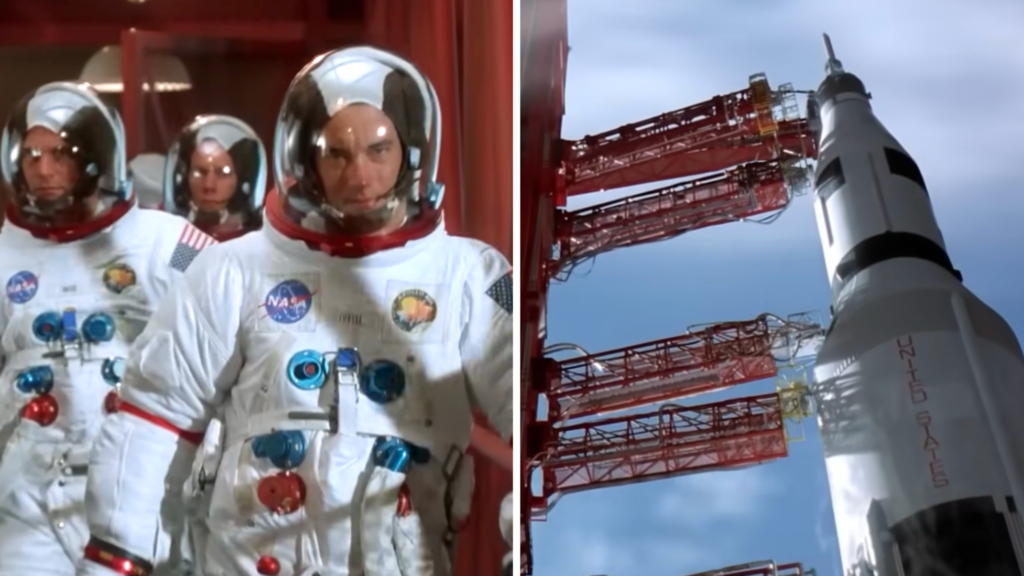
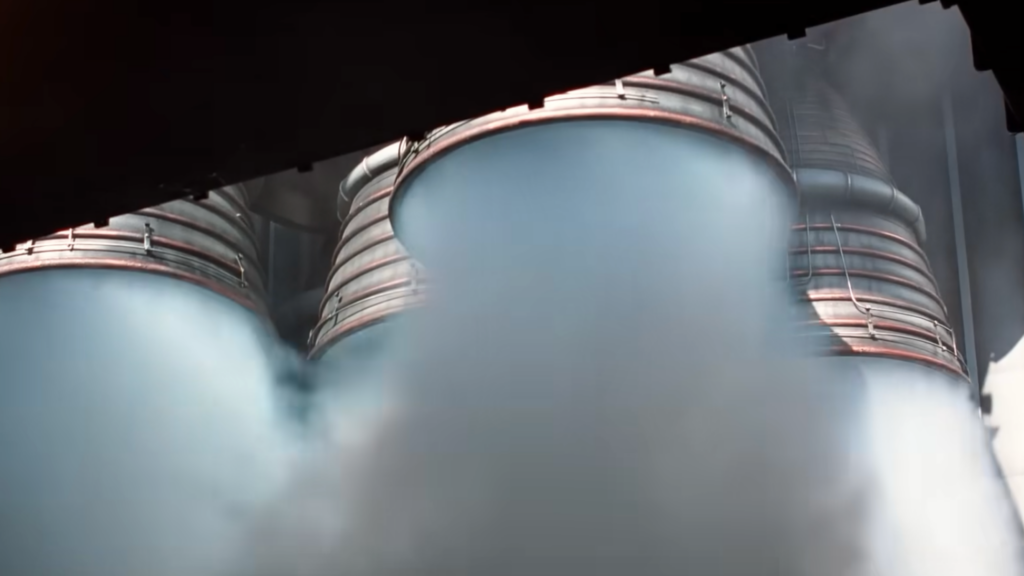
Five minutes into the launch, as the Saturn V rocket roared through the upper atmosphere, a terrifying mechanical failure occurred that almost aborted the mission immediately. The central engine of the second stage experienced violent “pogo oscillations”—extreme vertical vibrations that exceeded safety limits and threatened to tear the rocket apart. To prevent structural failure, the automated flight computer prematurely shut the center engine down two minutes early, forcing the remaining engines to burn longer to safely reach orbit.
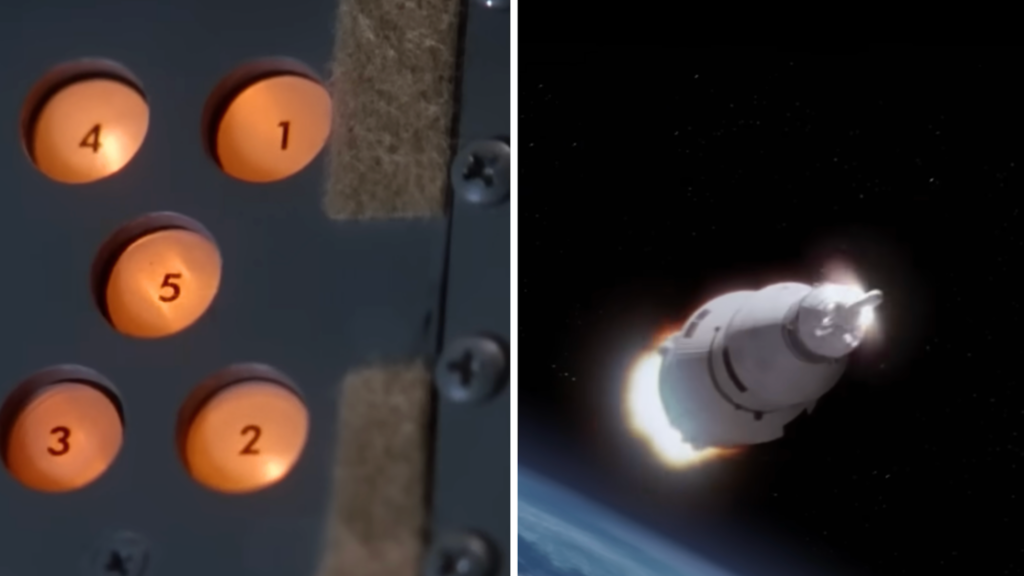
4. Tom Hanks Filmed the Launch Sequence in Actual Zero Gravity
When director Ron Howard set out to film Apollo 13, he refused to use cheap wire rigs or artificial camera tricks to simulate weightlessness during the launch sequence. Instead, he secured special permission from NASA to fly the cast inside the KC-135 reduced-gravity aircraft, affectionately nicknamed the “Vomit Comet.” By flying steep parabolic arcs, the plane created 25-second bursts of genuine zero gravity. The actors and film crew completed over 600 parabolic flights to capture authentic weightlessness on screen.
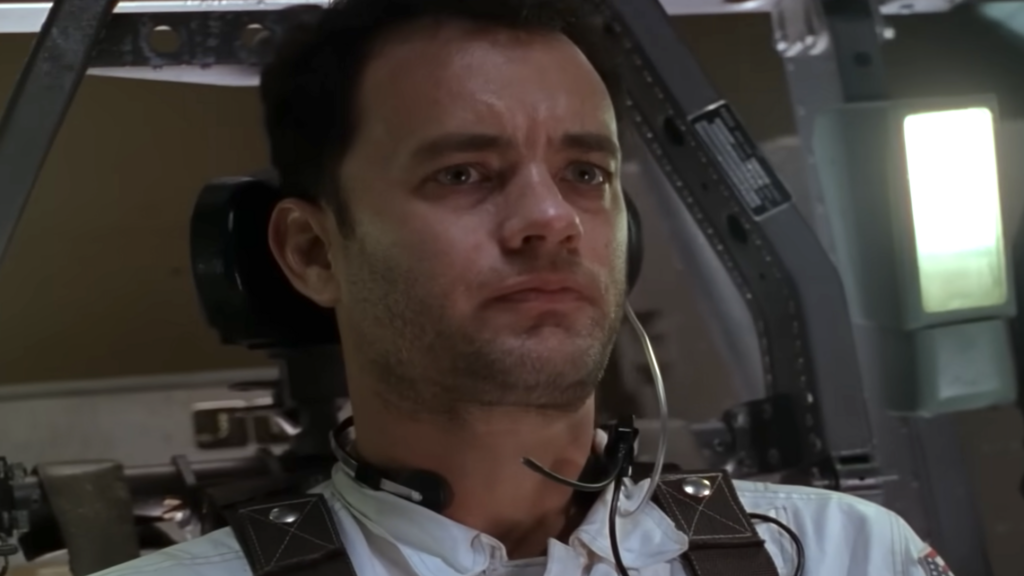
5. Hollywood Recreated the Saturn V Liftoff Using Massive Scale Models
Since NASA obviously could not launch a real multi-billion-dollar Saturn V rocket for a movie crew, the production team had to invent groundbreaking special effects. Visual effects studio Digital Domain constructed a massive 60-foot-tall, highly detailed replica of the Saturn V rocket and its launch tower. Combined with explosive pyrotechnics, atmospheric smoke machines, and early CGI enhancements, the film crew recreated the iconic 1970 blast-off so convincingly that even seasoned NASA engineers mistook movie footage for historical archive material.
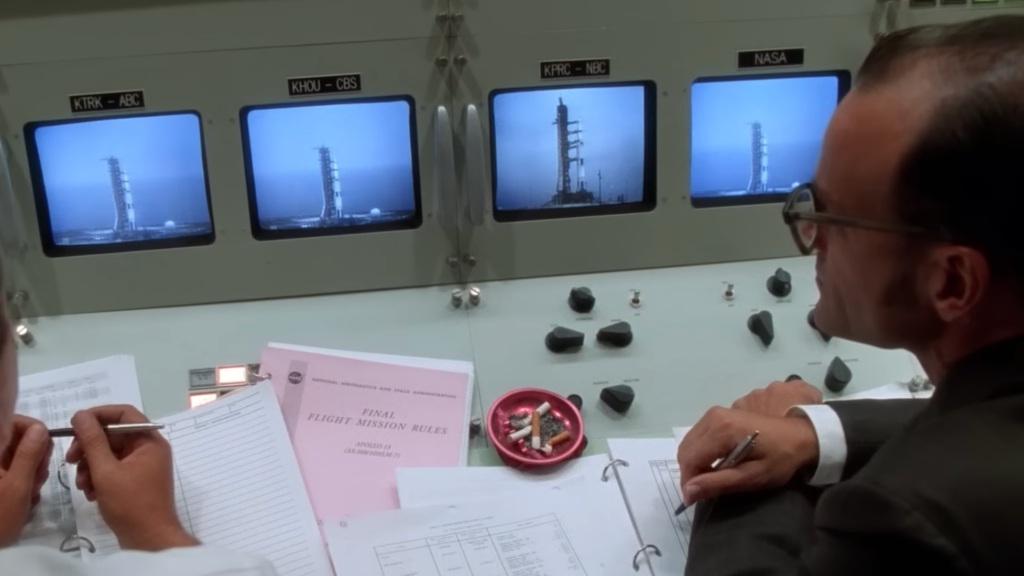
6. The Real Jim Lovell Made a Cameo Appearance at the End of the Film
The historical connection between the real mission and the 1995 film reached a deeply emotional moment during the final scene on the recovery ship USS Iwo Jima. The actual Commander Jim Lovell made a special cameo appearance in the movie, dressed in a full naval officer uniform as the captain of the ship. In a poetic passing of the torch, the real-life space hero steps forward on deck to shake the hand of actor Tom Hanks, who had just spent months portraying him on the big screen.
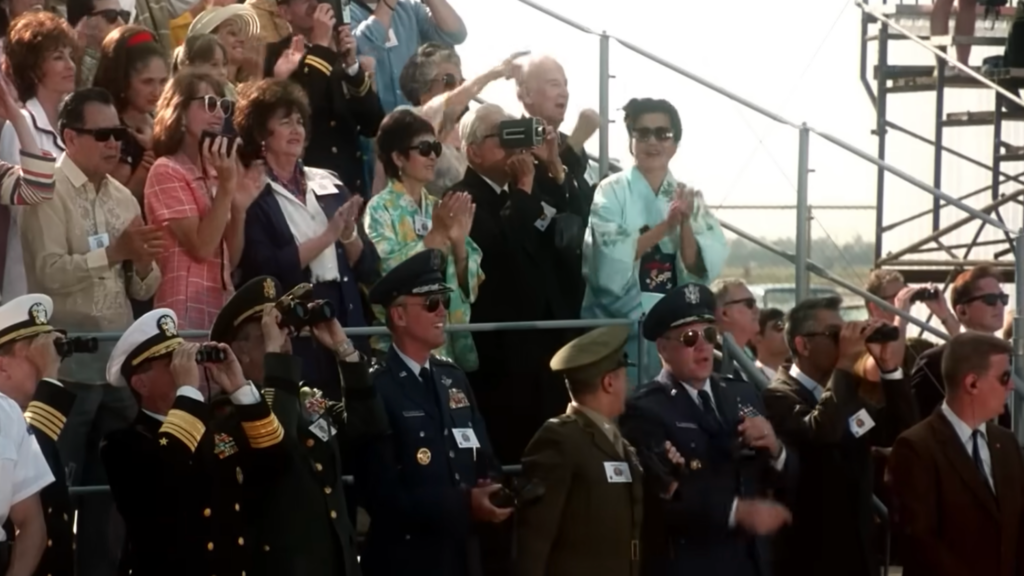
7. The Rocket’s Sound Effects Used Real Submarine Explosions
To ensure movie audiences felt the earth-shaking power of the 1970 Saturn V launch, sound designers went to extreme lengths. They mixed original 1970 NASA audio recordings of the rocket engines with low-frequency recordings of underwater dynamite explosions and jet engines. When played through theater sound systems, this custom acoustic mix created a visceral physical vibration in viewers’ chests, accurately replicating what eyewitnesses felt standing miles away from Cape Canaveral on launch day.
If you want to stream or buy Apollo 13, click here: