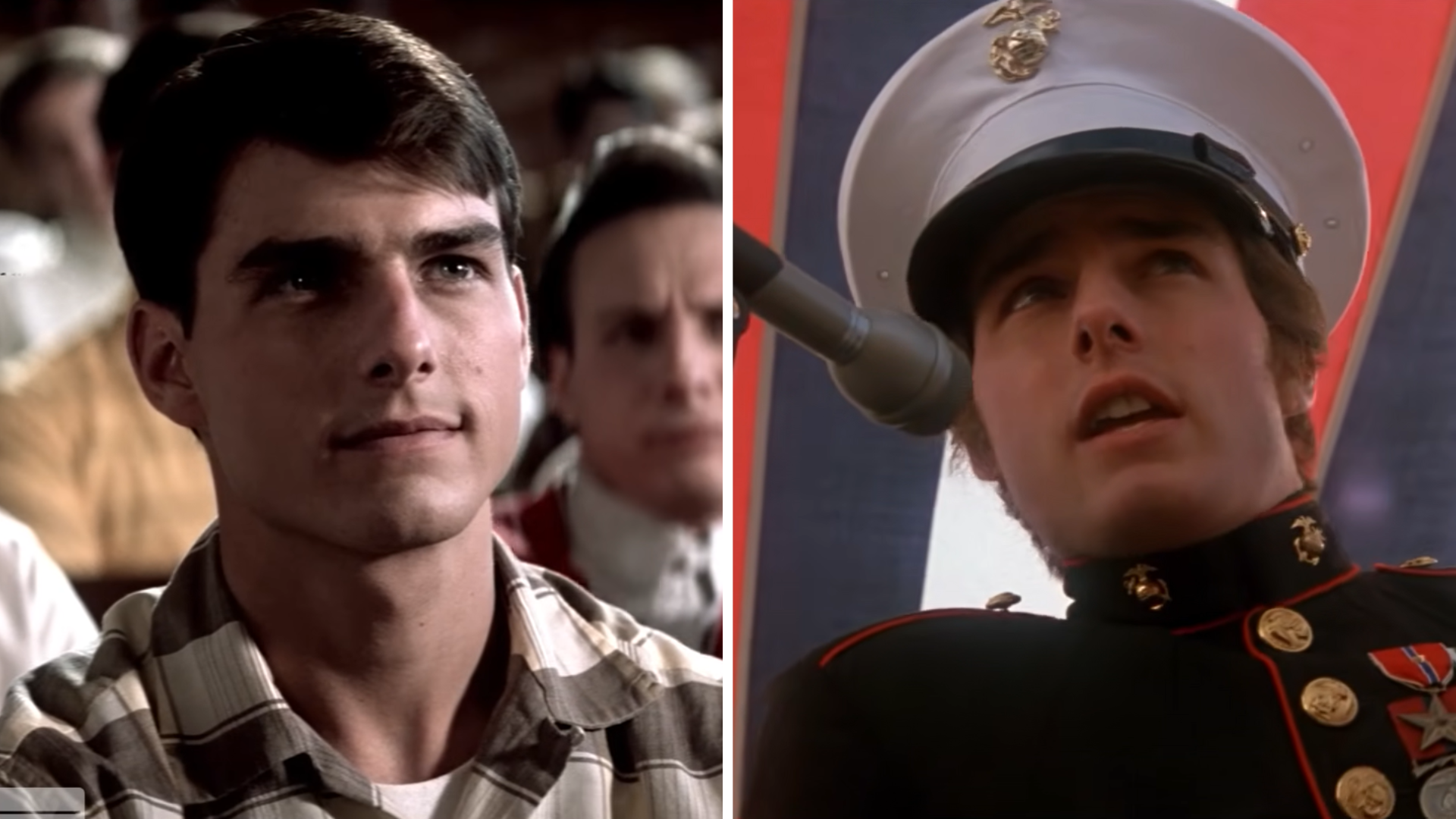
Tom Cruise entered Born on the Fourth of July (1989) with an image audiences already understood. Movies like Top Gun had made him a natural fit for confident, ambitious young men who seemed to expect the world to open up in front of them. Oliver Stone saw that familiarity as something he could use rather than escape.
Ron Kovic begins the movie with some of that same certainty. In the marine recruitment scene, he listens to the presentation with complete attention. By the time he returns home and tries to address his hometown crowd, almost everything about Cruise’s performance has changed: his appearance, movement, voice, and even the way he uses silence.
1. Stone wanted Cruise because of his clean-cut star image
Cruise was not an obvious choice only because he resembled a younger Ron Kovic. Stone said it was the actor’s image as America’s “Golden Boy” that really interested him. He wanted someone audiences associated with youth, success, and physical confidence, then wanted to see what happened when that certainty was stripped away.
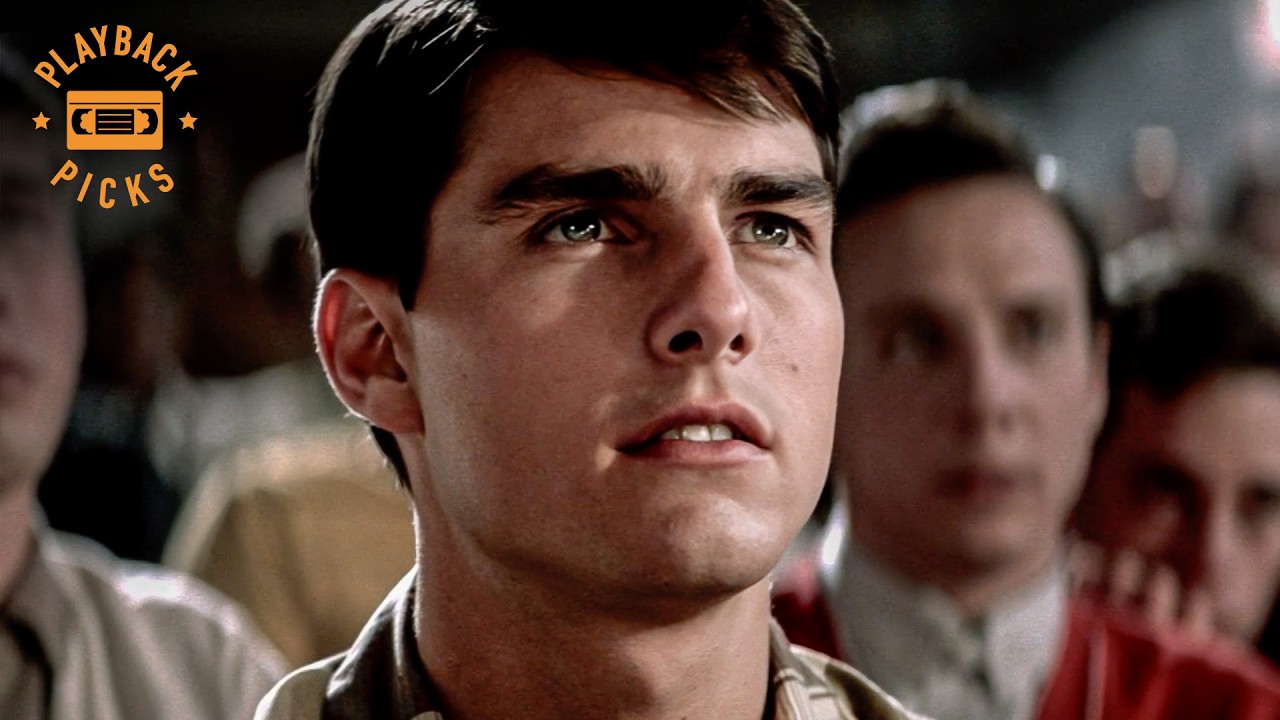
That makes the casting part of the movie’s effect. When young Ron sits listening to the Marine recruiter, Cruise does not need much work to convince us that this is a teenager who believes he can handle whatever comes next. The audience already brings some of that confidence with them.
2. The recruiter scene uses the Cruise we already knew
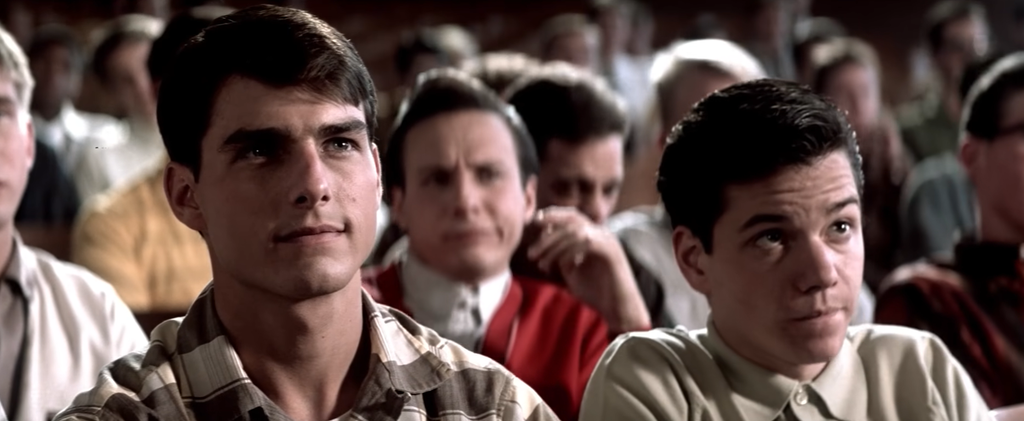
Young Ron barely has to speak while the Marine recruiter makes his pitch. Cruise spends much of the scene watching him, visibly drawn to the promises of challenge, duty, and proving himself.
It is close to the version of Cruise moviegoers had become accustomed to during the 1980s: competitive, earnest, and eager to push himself. That familiarity makes the later transformation more effective. The movie first lets Cruise look completely at home in the role before gradually taking that confidence away.
3. Stone tried to film Ron’s transformation in order
Stone wanted Cruise to experience the character’s changes rather than simply jumping back and forth between different stages of Ron’s life. He later said the production shot in continuity as much as possible so Cruise could understand the progression step by step.
That approach is particularly interesting when comparing these two scenes. The eager student listening to the recruiter and the veteran struggling through his homecoming speech feel like performances separated by far more than makeup. Cruise had been moving through Ron’s experiences as the production continued.
4. Cruise trained until the wheelchair stopped looking like a prop
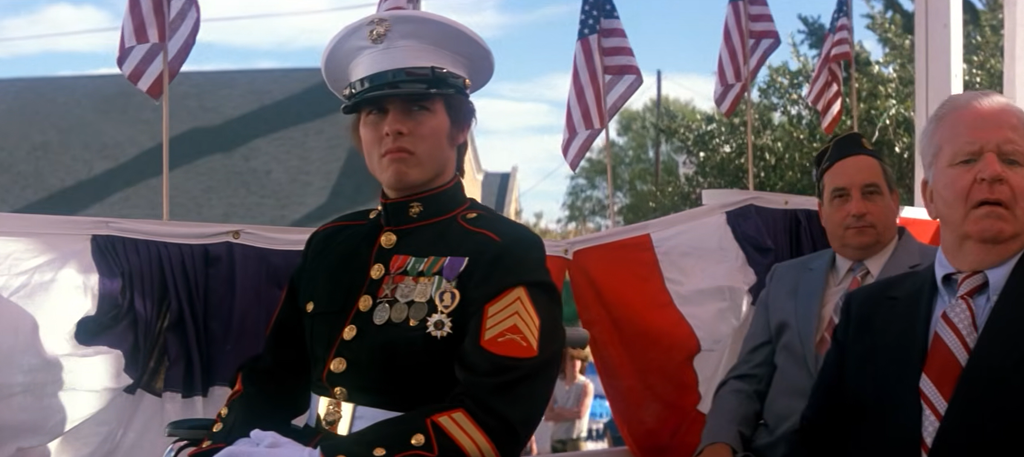
Preparing for the older Ron required Cruise to rethink basic physical behavior. He spent time in veterans’ hospitals and went around Westwood in a wheelchair alongside Kovic so that using it would eventually feel natural rather than staged.
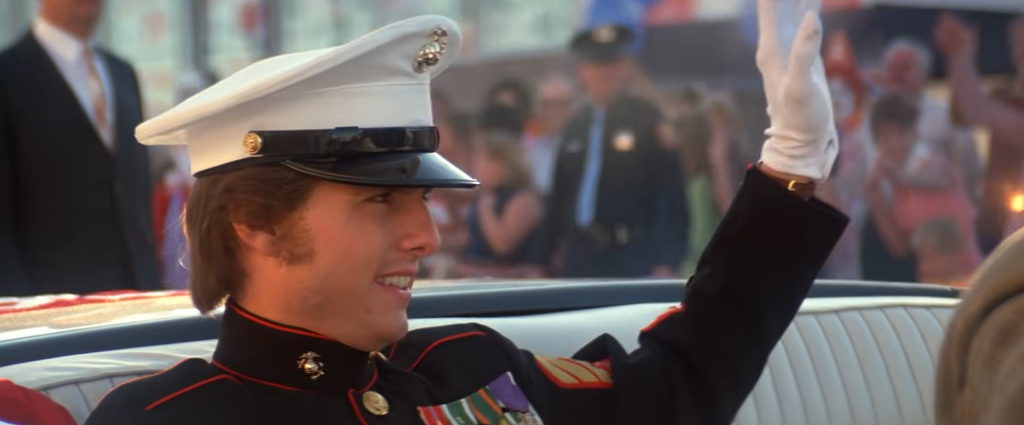
You can see the result before Ron even begins his homecoming speech. Cruise does not constantly call attention to the chair. His posture, turns, and small adjustments feel practiced enough that the audience can concentrate on Ron rather than on an actor demonstrating how carefully he prepared.
5. Cruise had to carry Ron across roughly 20 years
Born on the Fourth of July covers about two decades of Kovic’s life, forcing Cruise to move from high school student to Marine, returning veteran, and political activist. Stone recalled that the long span required extensive changes in makeup and appearance throughout the production.
The two supplied scenes make that progression unusually easy to see. Young Ron is neatly dressed, alert, and physically restless. At the homecoming ceremony, even before the speech begins to collapse, Cruise seems heavier in his movements and older in his expression. The change is doing more work than the costume alone.
6. The movie turns Cruise from the listener into the speaker
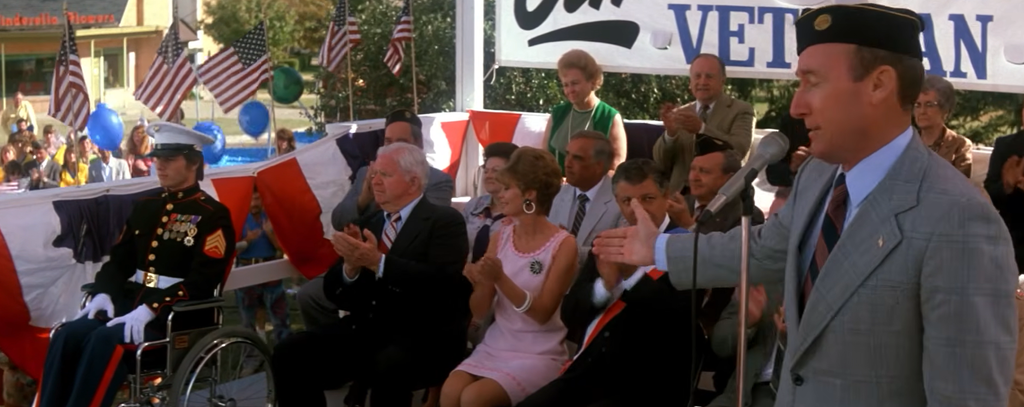
There is a simple reversal connecting the two sequences. In high school, Ron sits in the audience while an older Marine confidently tells him what service and sacrifice will mean. He listens without challenging the certainty of anything being said.
Years later, Ron is the person placed in front of an audience. Now he is expected to provide the confident words. He starts trying to give his hometown the kind of reassuring speech the occasion calls for, but his own experience keeps getting in the way. The movie has moved Cruise from someone absorbing a public message to someone discovering how difficult it is to repeat one.
7. Cruise eventually has to do most of the work with his face
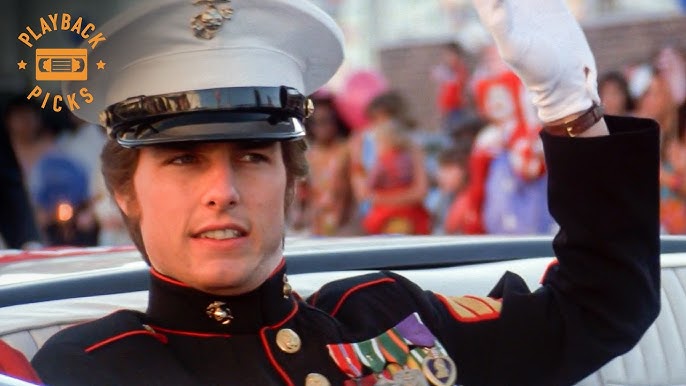
Stone noted that Cruise had previously been an actor strongly associated with athletic movement and physical grace. Playing Kovic forced him to find other ways of carrying scenes once Ron’s movement became limited.
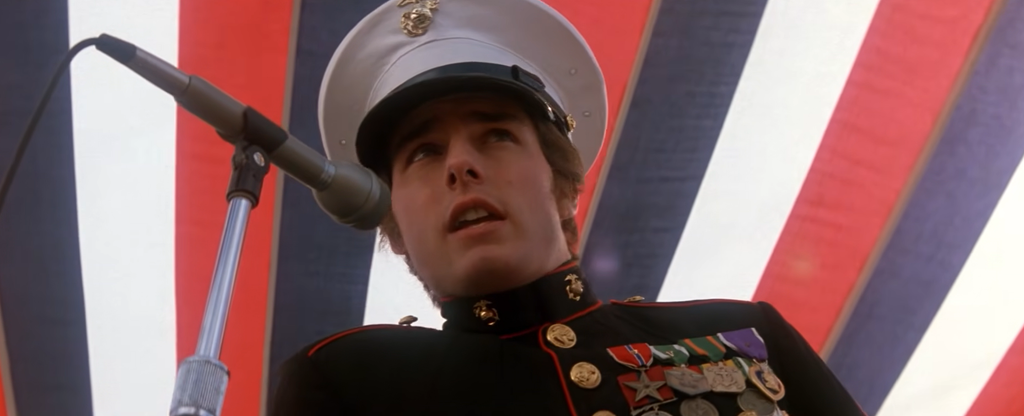
The homecoming speech is one of the clearest examples. Cruise begins by trying to maintain the public performance, but the strain gradually moves into his breathing, eyes, and pauses. He does not need a dramatic physical gesture to show Ron losing control of the moment. By the end, the face that looked so open and certain during the recruiter scene is doing almost everything.
To Watch or Buy Born on the Fourth of July, click here: https://www.amazon.com/Born-Fourth-July-Tom-Cruise/dp/B000I9VO30