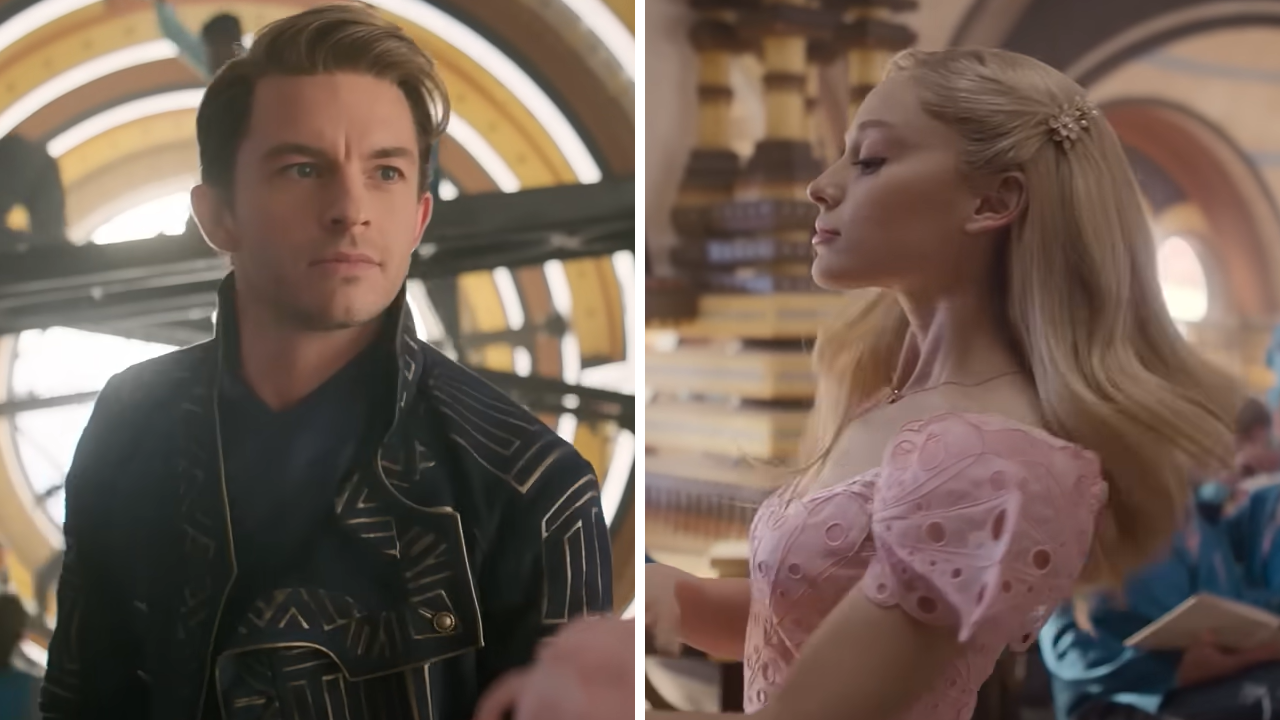
The Shiz University library in Wicked looks like the kind of set that would be easier to create on a computer. Instead, Jonathan Bailey and the dancers were climbing through giant bookcases that were really turning around them while “Dancing Through Life” was filmed.
That decision made the sequence much harder to pull off, but it also gave the performers something real to work with. Production designer Nathan Crowley, director Jon M. Chu, choreographer Christopher Scott, and the effects team spent months figuring out how to turn a library into a working piece of machinery.
1. The giant spinning bookcases really worked
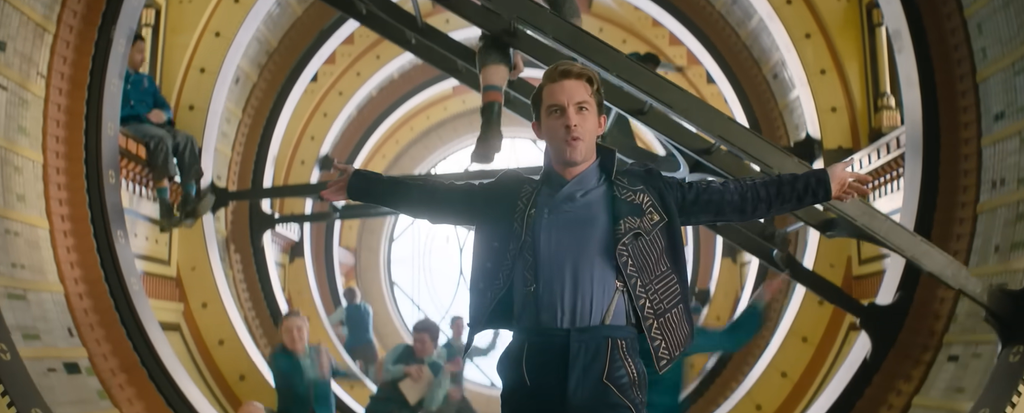
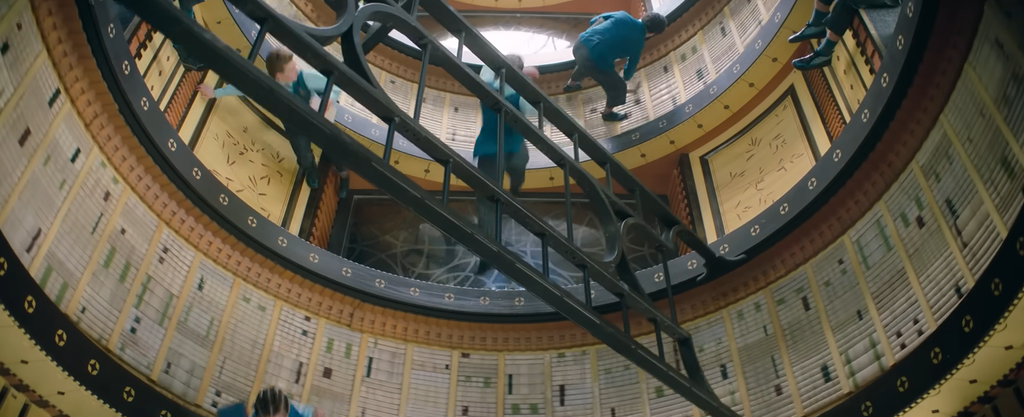
Those rotating shelves were not digital creations. Crowley and special-effects supervisor Paul Corbould built three enormous circular bookcases that could physically turn while Bailey and the dancers moved through them. Cinematographer Alice Brooks said people have specifically asked whether the sequence was created with visual effects, but the machinery itself was a fully working practical set.
2. A Fred Astaire movie inspired the whole idea
Crowley traced the basic concept back to the 1951 musical Royal Wedding, famous for a sequence in which Fred Astaire appears to dance across the walls and ceiling of a rotating room. Crowley first imagined giving Fiyero moving wheels to dance inside, and Chu suggested turning those wheels into bookshelves so the idea would actually belong inside Shiz University.
3. Giant belts and steel drums kept the shelves moving
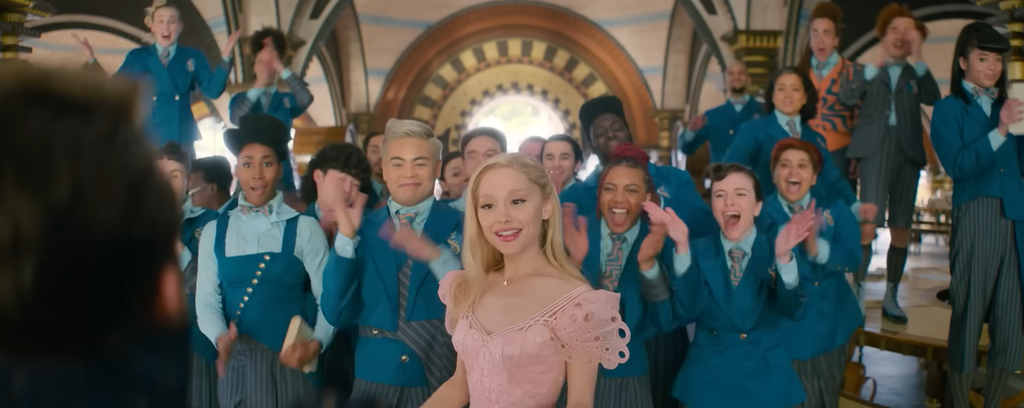
Behind the fantasy look was some serious machinery. Crowley said the circular steel drums were driven by huge belts and mechanical wheels, with several separate systems controlled by technicians behind the set. That meant Bailey was performing inside something closer to a custom-built amusement ride than an ordinary movie backdrop.
4. The three sections could rotate independently
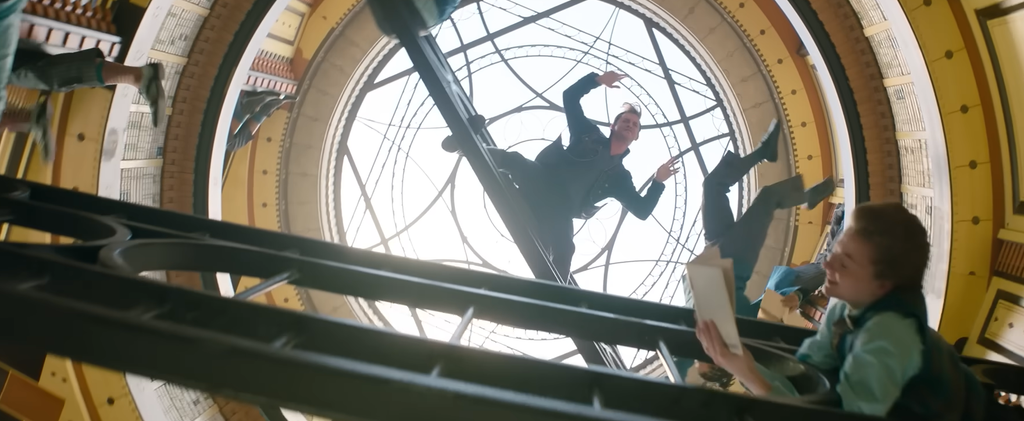
The library was even trickier because its three rotating chambers did not have to move together. Chu explained that each could turn independently, giving the filmmakers far more combinations for the choreography but also making the timing much more complicated. The machinery required close coordination between the performers and the crew operating it.
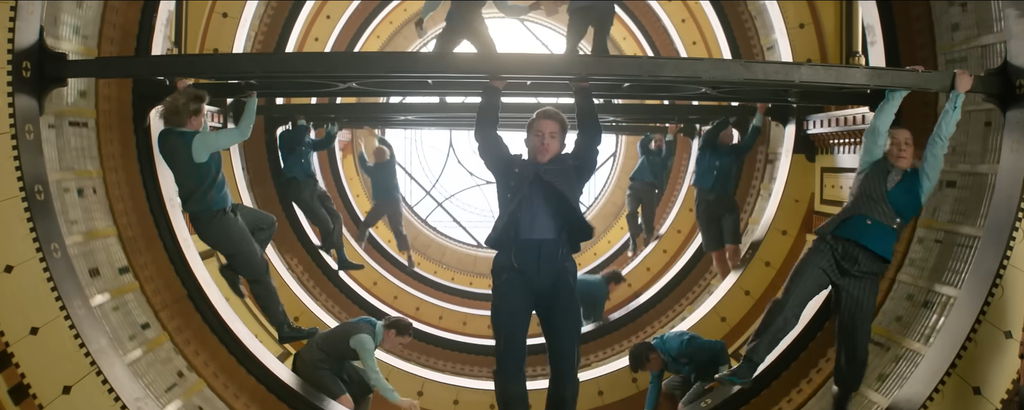
5. The choreography had to wait for the set to exist
Christopher Scott could not fully plan the number on paper because nobody yet knew what dancers would actually be able to do inside the moving structure. Chu recalled Scott considering whether he needed stunt performers, parkour specialists, or break dancers before the finished machinery gave the team something concrete to experiment with. The set was built early and spent weeks being tested and rehearsed before the sequence was filmed.
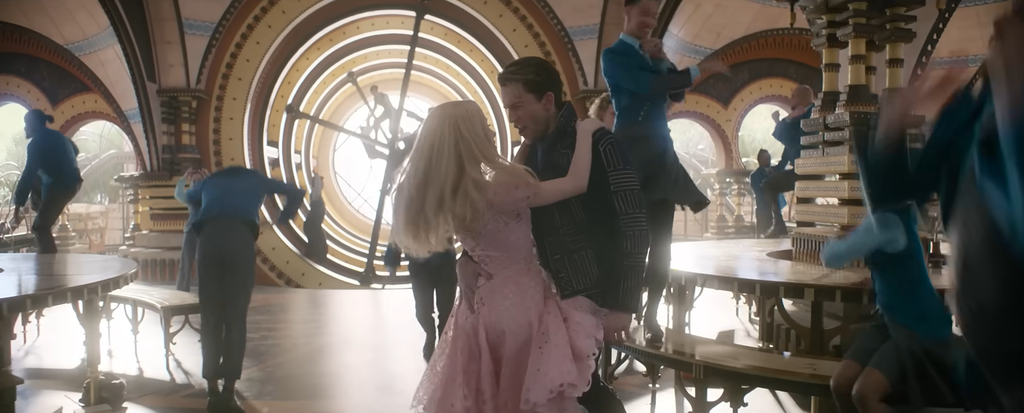
6. The camera needed its own openings in the bookcases
The spinning shelves created another problem: there were very few places to put a camera or a light. Brooks worked with Crowley to add windows and gaps directly into the structures, giving her small shooting positions around the wheels while also letting light reach the dancers. What looks like decorative architecture in the finished scene was partly designed around where the camera needed to go.
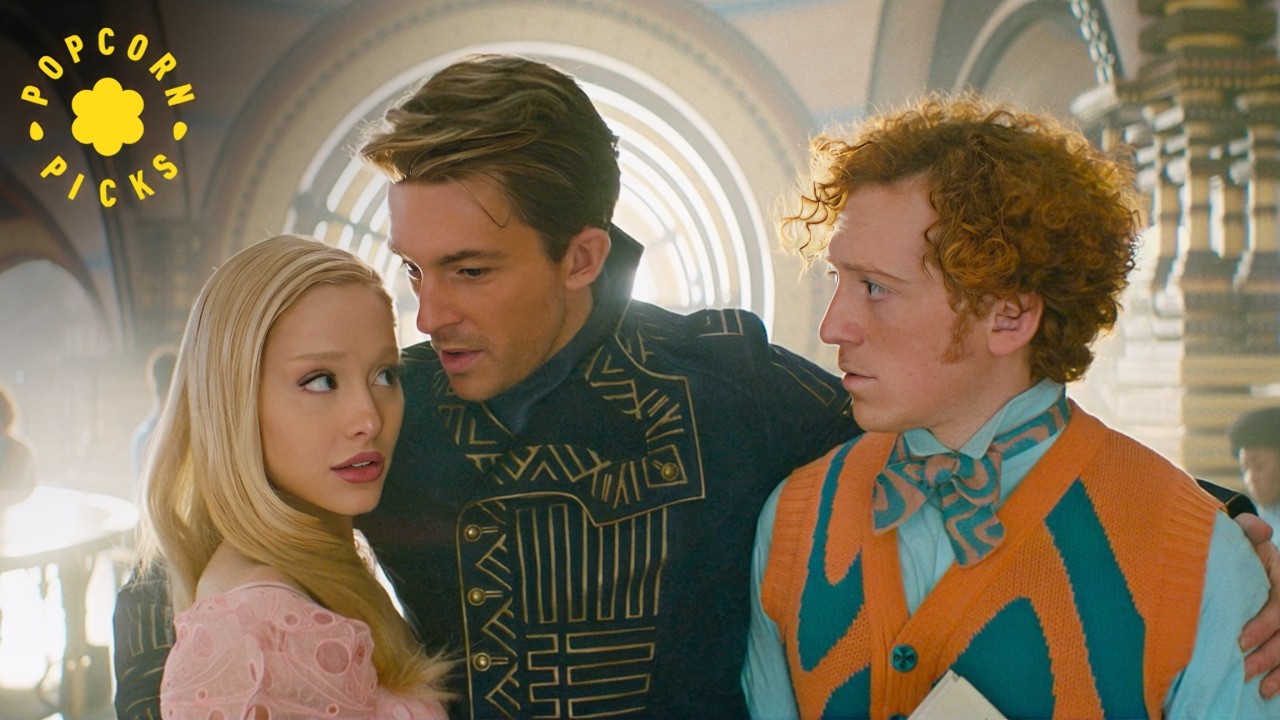
7. Most of those books were not actually books
Filling such enormous moving shelves with real books would have created an unnecessary headache, so much of what viewers see is actually a façade. The production placed real books only in selected slots where Bailey or another performer needed to pick one up or interact with it. The trick let the shelves look packed without loading the machinery with thousands of individual props.
To Watch or Buy Wicked click here: https://www.amazon.com/Wicked-Bonus-Jon-M-Chu/dp/B0DGZV9Z5Z