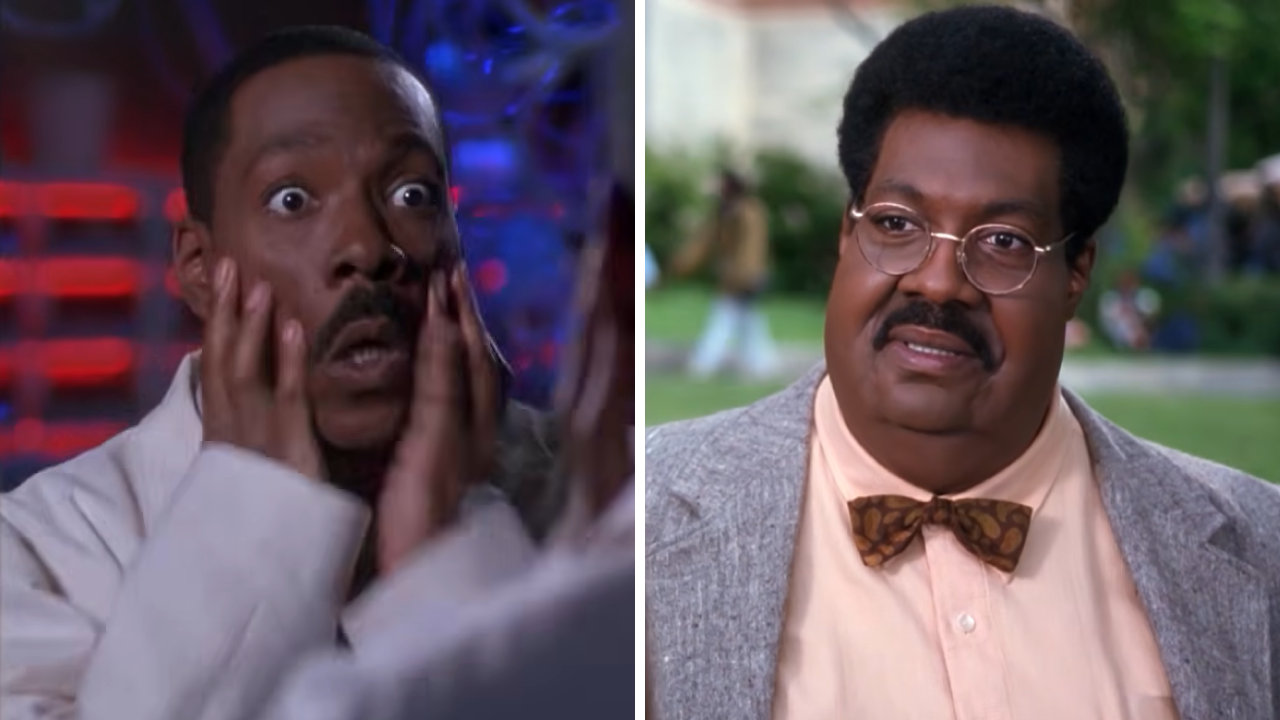
Eddie Murphy disappears so completely into Sherman Klump in The Nutty Professor (1996) that it is easy to forget how much work went into making the character possible. The transformation was not simply a costume and a few facial pieces. Makeup artist Rick Baker and his crew rebuilt Murphy’s appearance from his face down to the way Sherman’s body moved.
That physical work ended up affecting Murphy’s performance just as much as his appearance. Baker had to convince the filmmakers that the idea could work, Murphy spent hours being transformed before shooting, and the same techniques eventually expanded into an entire family of characters.
1. The studio needed proof that Sherman’s look would work
Sherman Klump was going to look so different from Eddie Murphy that there was some concern about whether audiences would still connect with the actor underneath. Rick Baker has recalled being asked to demonstrate that the transformation could actually work before the filmmakers fully committed to it.
That was a bigger challenge than simply making Murphy unrecognizable. Sherman still had to feel warm, expressive, and human. If the makeup became the first thing audiences noticed in every scene, the character could easily turn into a technical showcase instead of someone viewers cared about.
2. One makeup test helped sell the entire idea
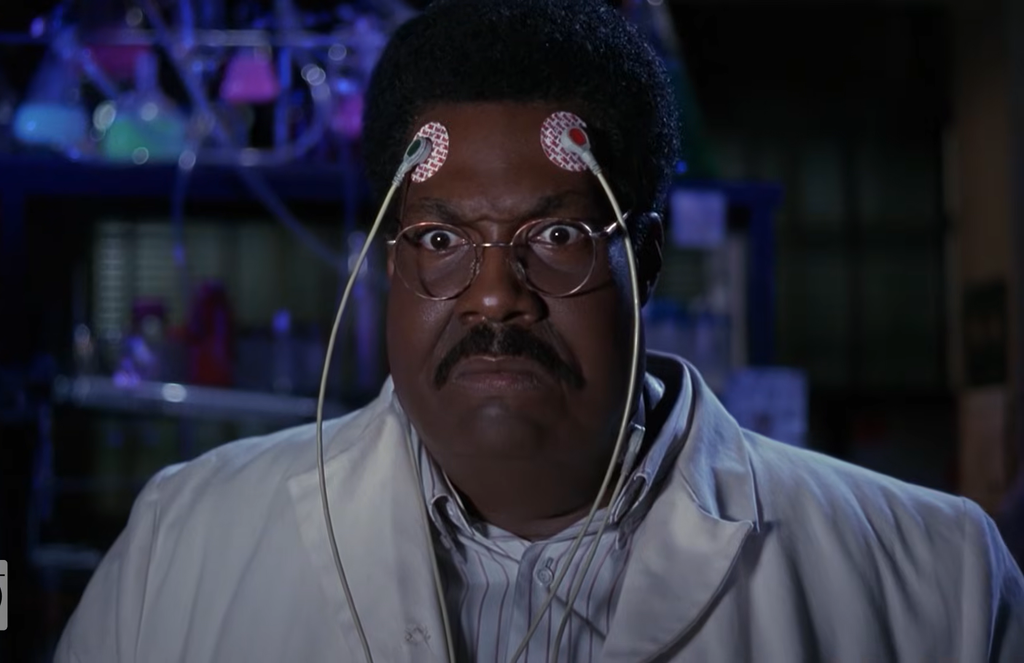
Baker created an early version of Sherman and brought Murphy in to see what happened once the actor was actually wearing it. The reaction was encouraging almost immediately. Murphy started improvising and experimenting with the character as soon as he saw himself transformed.
That test gave the producers something sketches and sculptures could not. They could see Sherman moving, talking, and reacting instead of simply looking at a design. Murphy seemed to understand the character more clearly once the new face was staring back at him.
3. Baker started with head-to-toe casts of Murphy
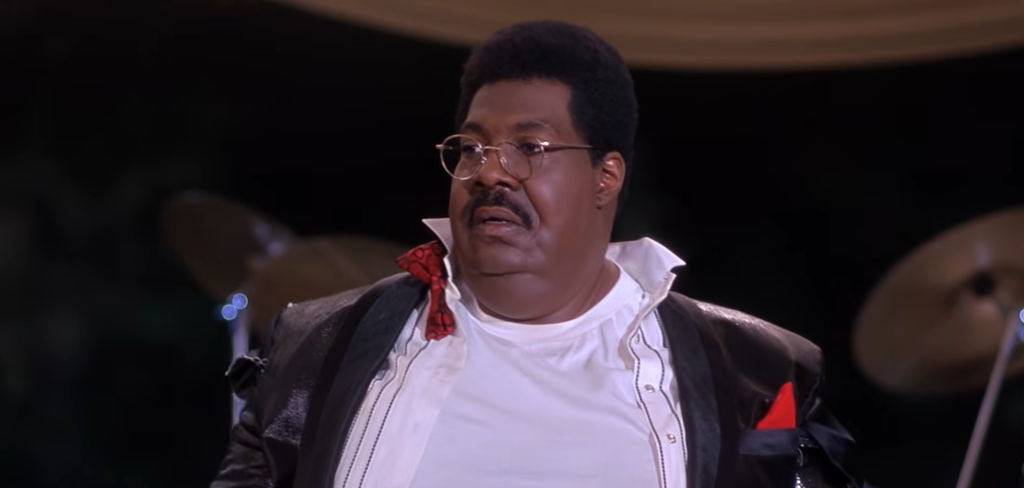
Before Sherman could be sculpted, Baker’s team needed an exact physical starting point. Murphy went through extensive life-casting so the artists had accurate reproductions of his head and body to build upon.
Those casts gave the crew something much more useful than measurements or photographs. Every new cheek, neck piece, and section of Sherman’s body could be designed around Murphy’s actual proportions, which helped the finished pieces fit closely enough for him to perform inside them.
4. Sherman’s face was sculpted in clay first
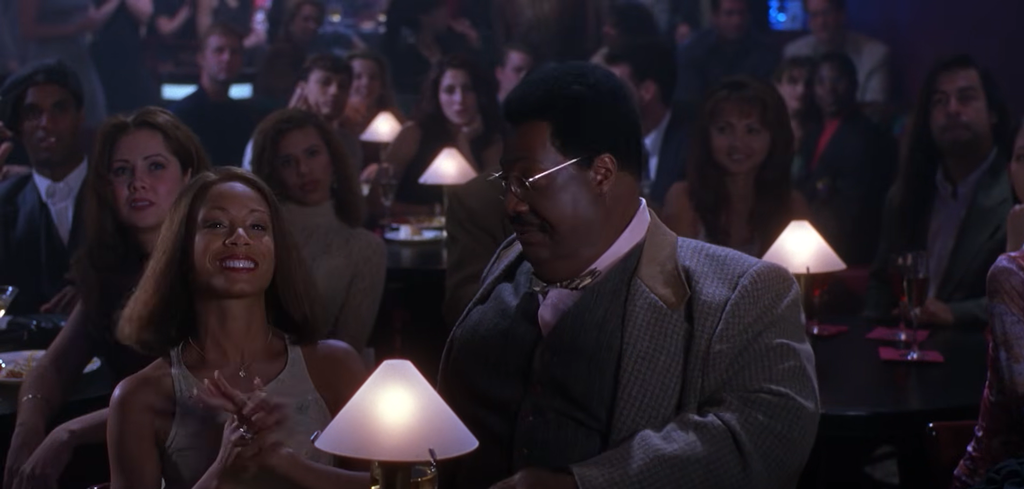
Sherman did not begin as a collection of finished prosthetic pieces. Baker’s artists first worked in clay, adding new shapes over reproductions of Murphy’s head until they found the face they wanted.
That stage determined much of what audiences would eventually recognize as Sherman: the fuller cheeks, altered jawline, and heavier neck. Only after those proportions were established could the crew turn the sculpture into the separate pieces Murphy would wear during filming.
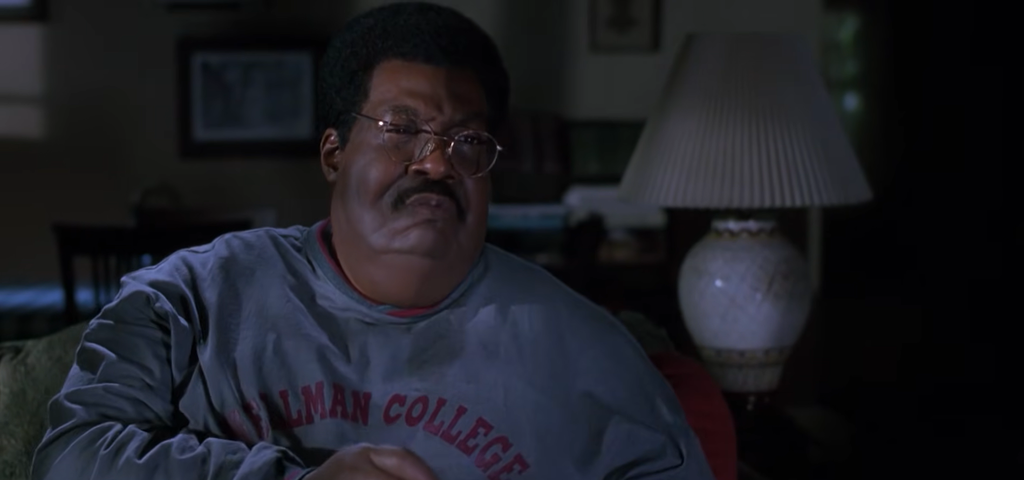
5. Sherman’s body used more than a simple foam suit
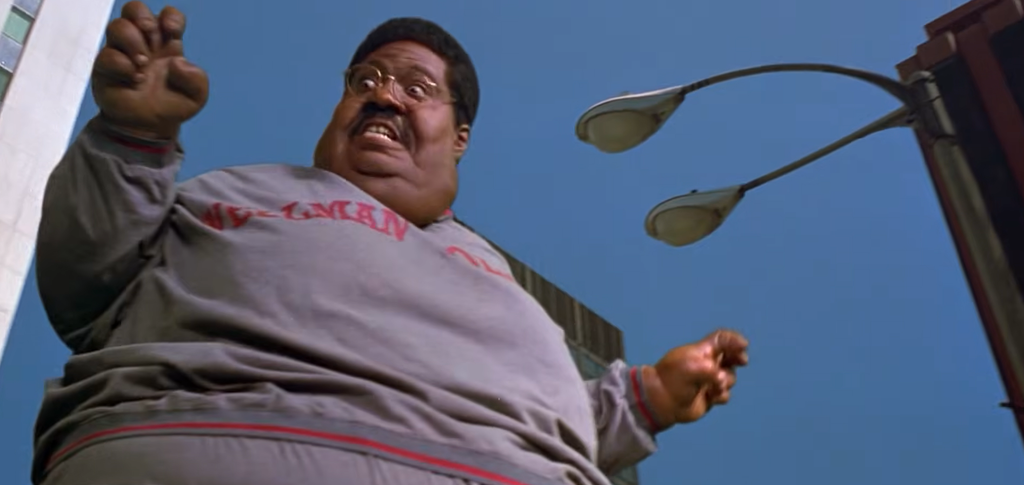
A rigid costume would have made Sherman look convincing while standing still and much less convincing the moment Murphy started moving. Baker’s crew experimented with different materials, including silicone, foam rubber, and liquid-filled sections designed to create more natural movement.
That mattered because Sherman is constantly sitting, walking, dancing, and reacting physically to the people around him. The body had to move with Murphy rather than simply surround him. The more naturally the suit responded, the easier it became to stop thinking about the mechanics underneath it.
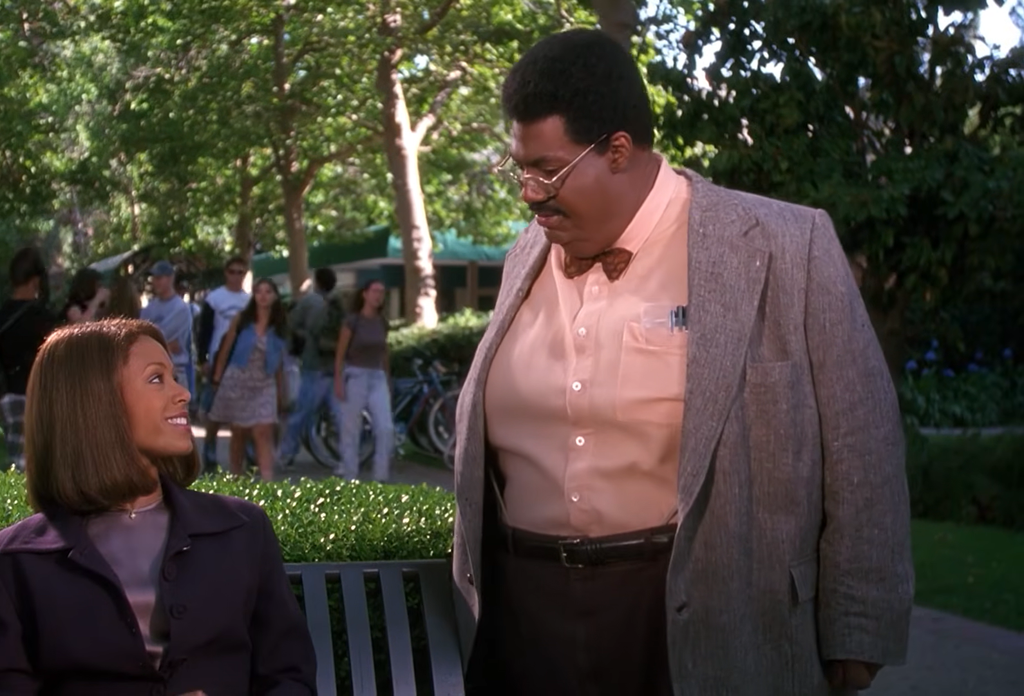
6. Murphy spent about three and a half hours becoming Sherman
Playing Sherman meant beginning work long before the cameras started rolling. For roughly 70 production days, Murphy reportedly spent about three and a half hours in the makeup chair as Baker’s team assembled the transformation.
The time makes more sense when you look closely at the finished character. Sherman was not created by one piece that could simply be put on. His face, neck, and body had to work together closely enough that Murphy could still smile, speak and react without the individual elements distracting from the performance.
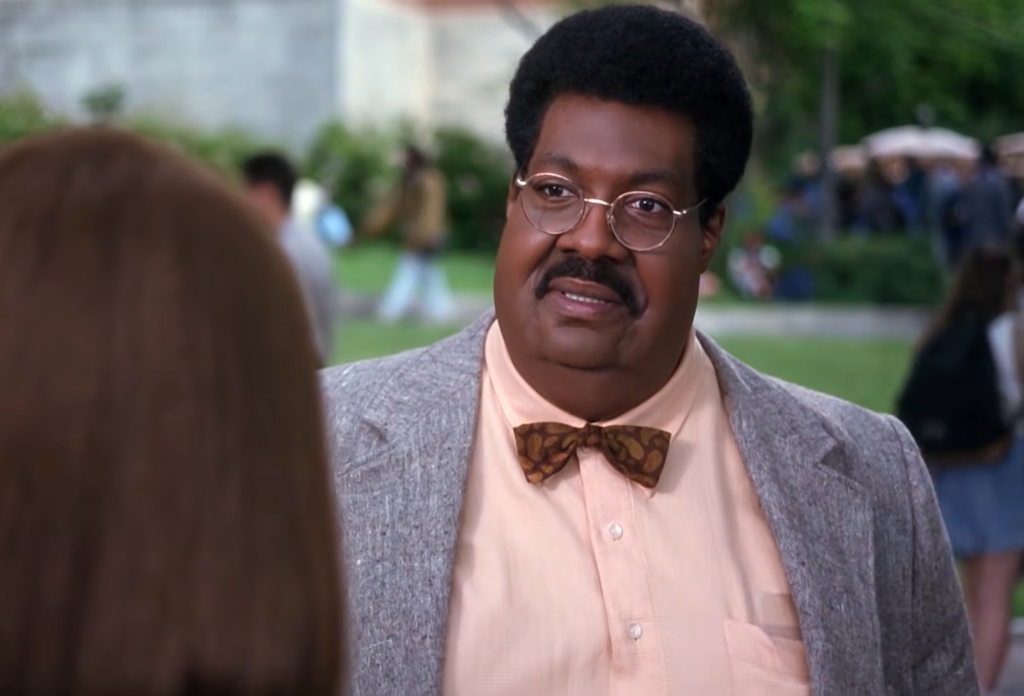
7. Removing the makeup took another hour
Finishing a day of filming did not mean Murphy could simply change clothes and leave. Baker said safely removing the Sherman makeup added roughly another hour to the process.
That gave Murphy an unusually long workday before and after the actual acting. It also helps explain why transformations this elaborate require so much planning. Every day Sherman appeared on camera meant hours of preparation that audiences would never see, followed by another careful process once shooting stopped.
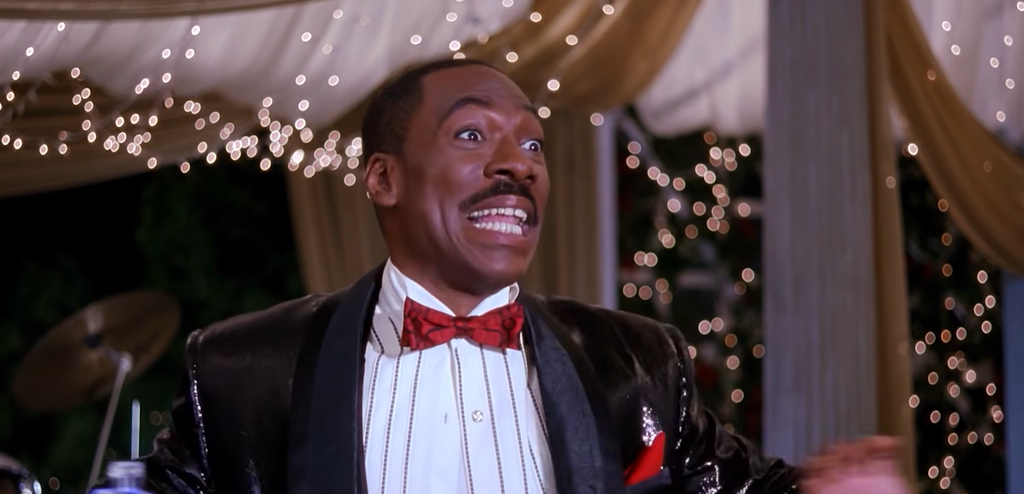
8. The transformation helped Murphy find Sherman’s performance
Murphy has explained that Baker’s designs could influence much more than what one of his characters looked like. He sometimes did not fully know how a character should walk, speak, or gesture until he saw the physical transformation.
Sherman is a particularly good example. Murphy gives him a restrained posture, gentle expressions, and a softness that feels completely different from his more energetic comic personas. The makeup did not simply hide Eddie Murphy. It gave him physical clues for figuring out who Sherman was.
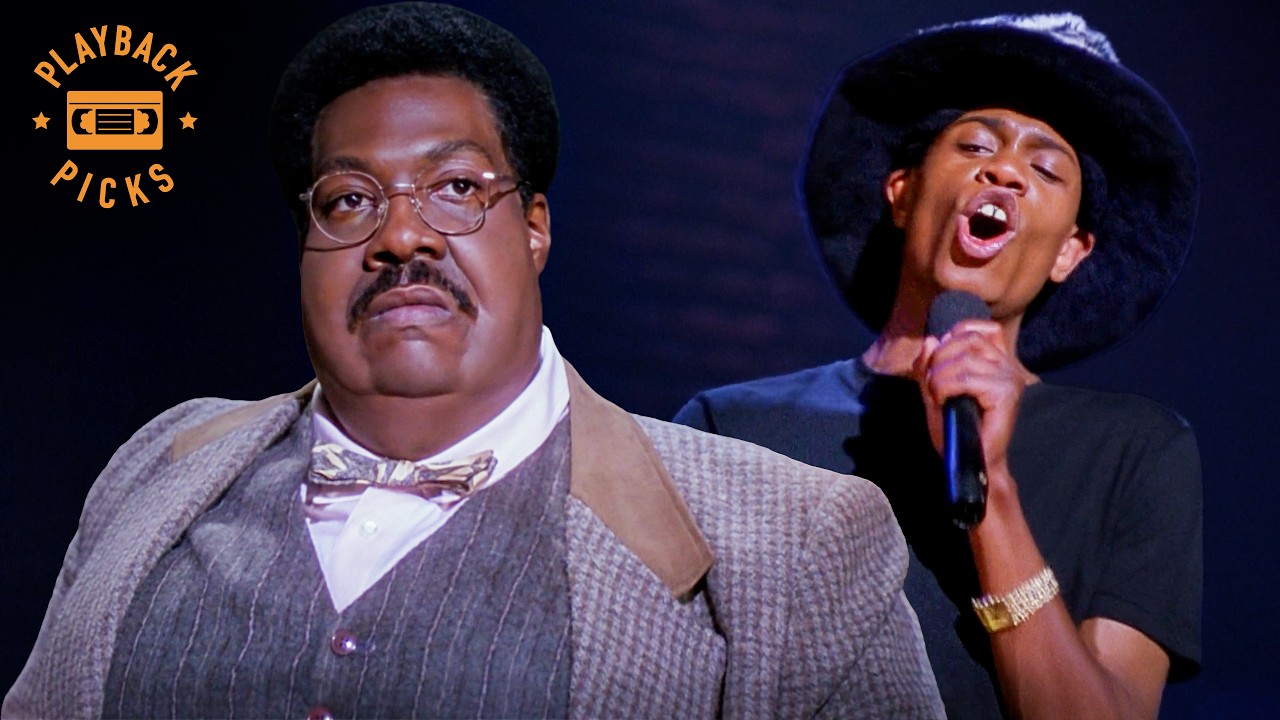
9. Buddy Love barely needed a physical transformation
The clever reversal comes when Sherman becomes Buddy Love. After spending so much effort turning Murphy into someone who looks completely different, the movie essentially returns him to his familiar appearance.
That makes Buddy feel even more removed from Sherman despite requiring far less special-effects work. The contrast comes largely from Murphy himself: his posture changes, his confidence shoots up, and the quiet mannerisms disappear. One character required hours of physical construction. The other could be created mostly through performance.
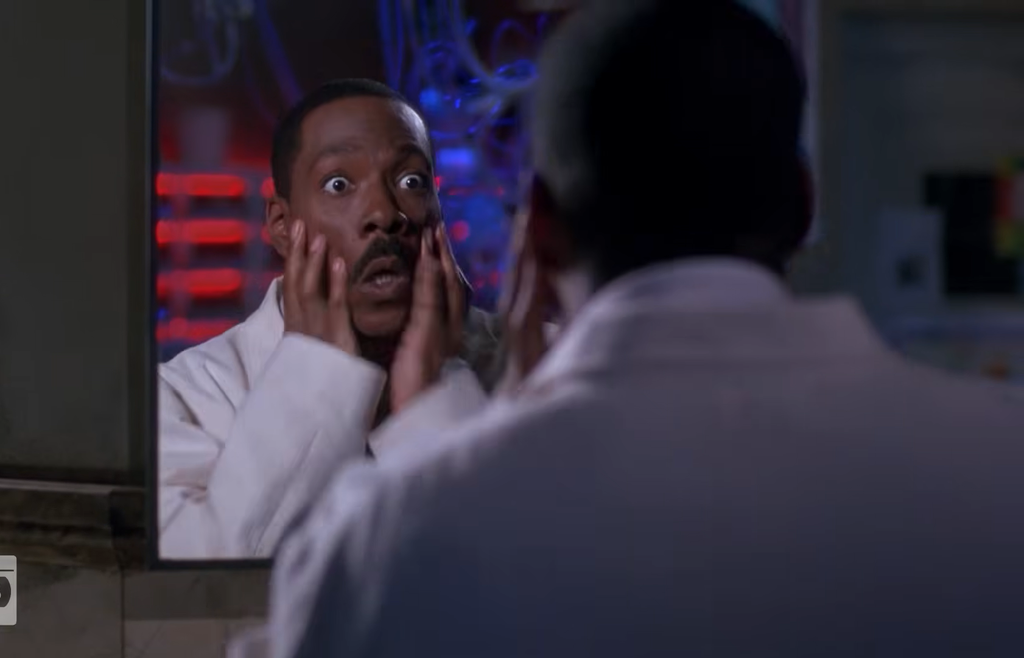
10. Sherman was only the beginning of Murphy’s makeup marathon
Sherman might be the movie’s central transformation, but Murphy and Baker kept going. Murphy also played several members of the Klump family, including Mama and Grandma, turning the family dinner into another showcase for Baker’s prosthetic work.
Those characters had to be filmed separately because Murphy could only wear one elaborate transformation at a time, with the performances later combined into the same scene. Baker even filmed early tests of Murphy as Mama and Grandma when there were concerns about the expense. What began as an ambitious way to create Sherman ultimately became one of the movie’s defining comic ideas.
To Watch or Buy The Nutty Professor, click here: https://www.amazon.com/Nutty-Professor-Eddie-Murphy/dp/B001UNQY38