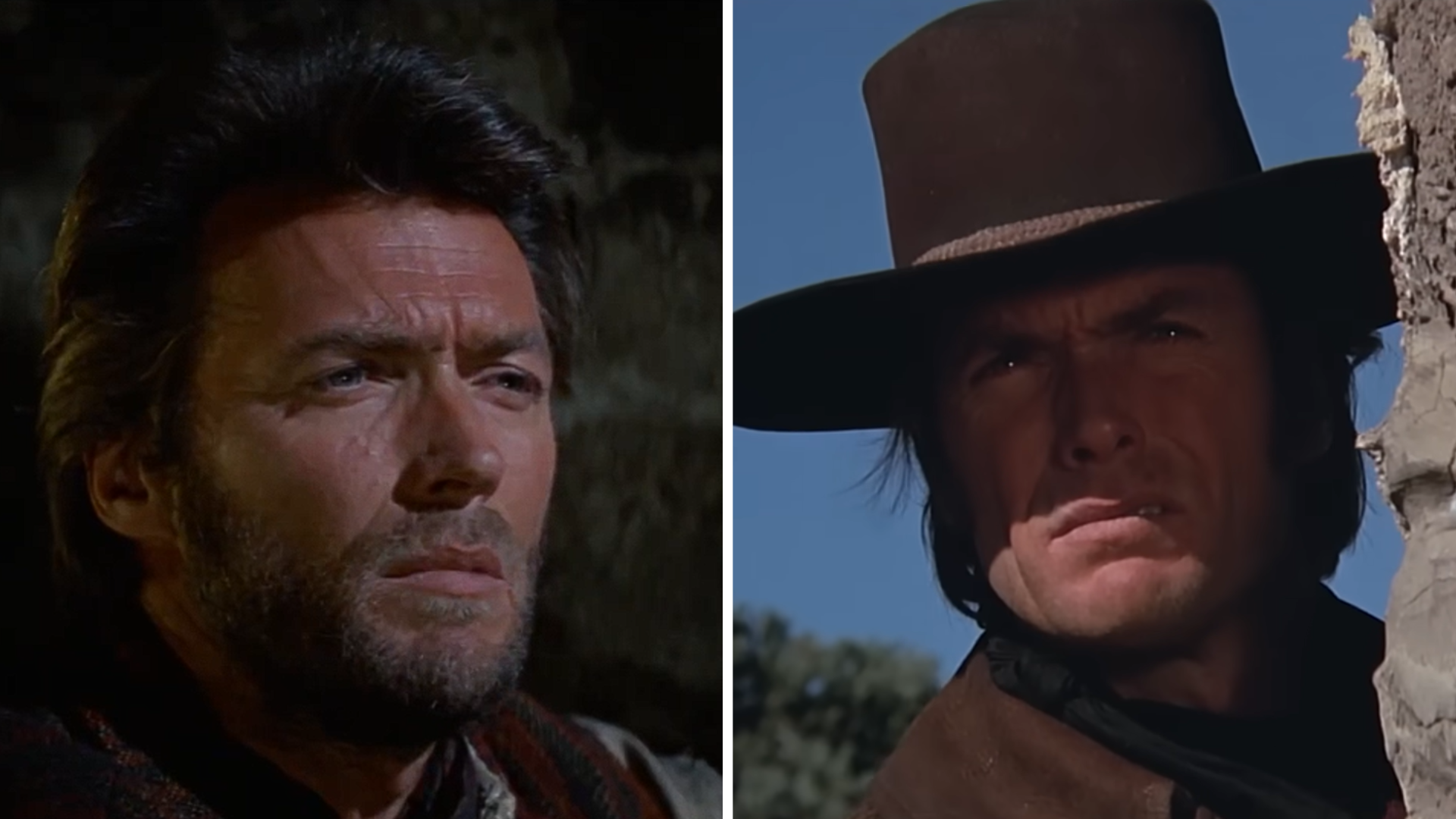
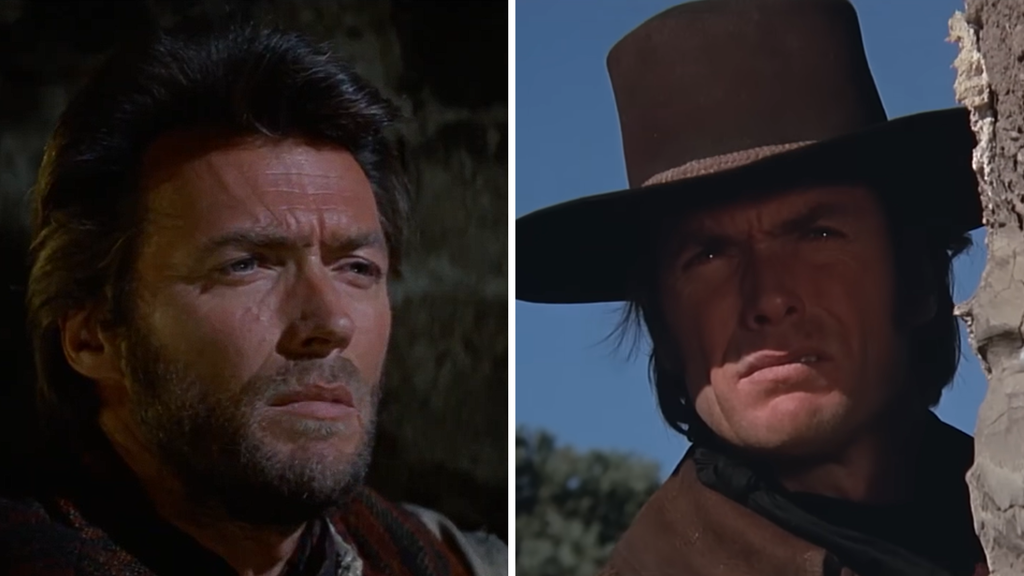
By the start of the 1970s, Clint Eastwood already had one of the most recognizable Western personas in movies. Sergio Leone’s Dollars trilogy had made the poker face, sparse dialogue, cool reactions, and solitary gunfighter central to his screen image. Those films established many of the traits audiences would continue to associate with Eastwood.
But Eastwood did not simply repeat that character once he returned to American Westerns. Two Mules for Sister Sara (1970), Joe Kidd (1972), and High Plains Drifter (1973) keep pieces of the familiar formula while pushing him in different directions. Across those three movies, he becomes more talkative, more openly funny, more morally involved, and eventually much stranger.
1. Hogan talks far more than the Man With No Name
Hogan in Two Mules for Sister Sara still looks immediately familiar: weathered clothes, a horse, a weapon, and very little interest in settling down. Once he spends the night traveling with Sara, though, the resemblance starts to loosen.
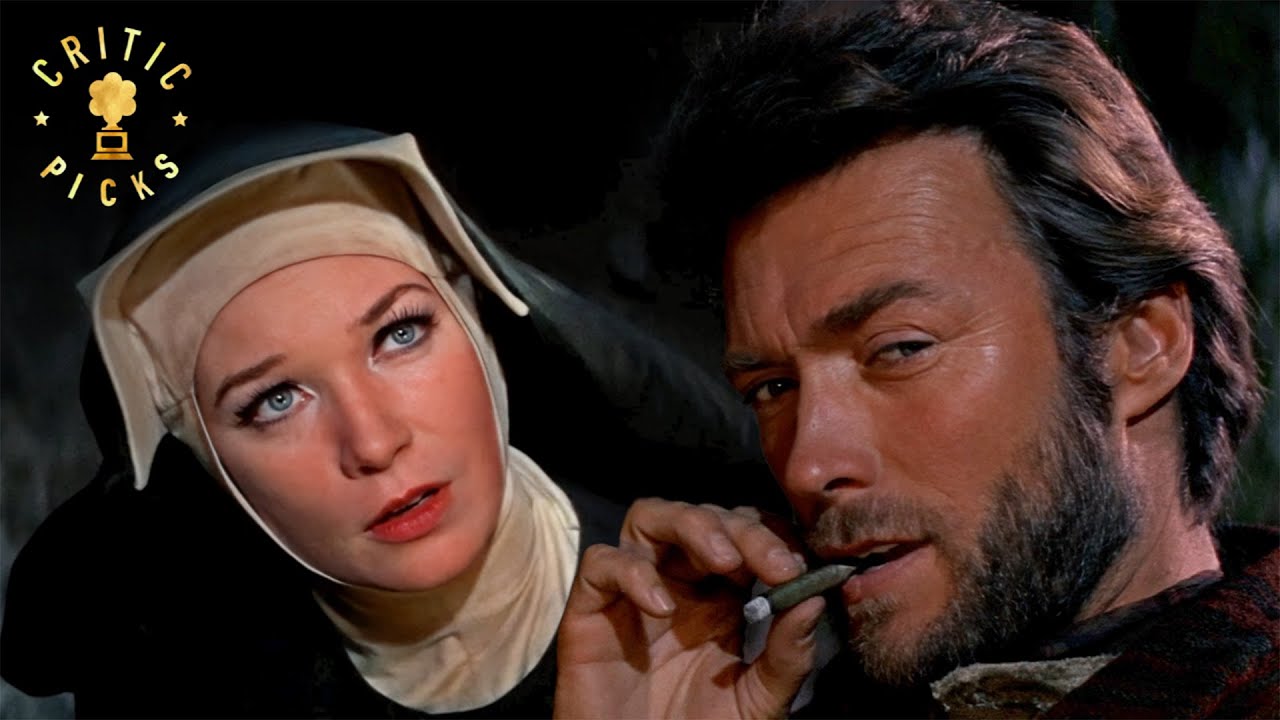
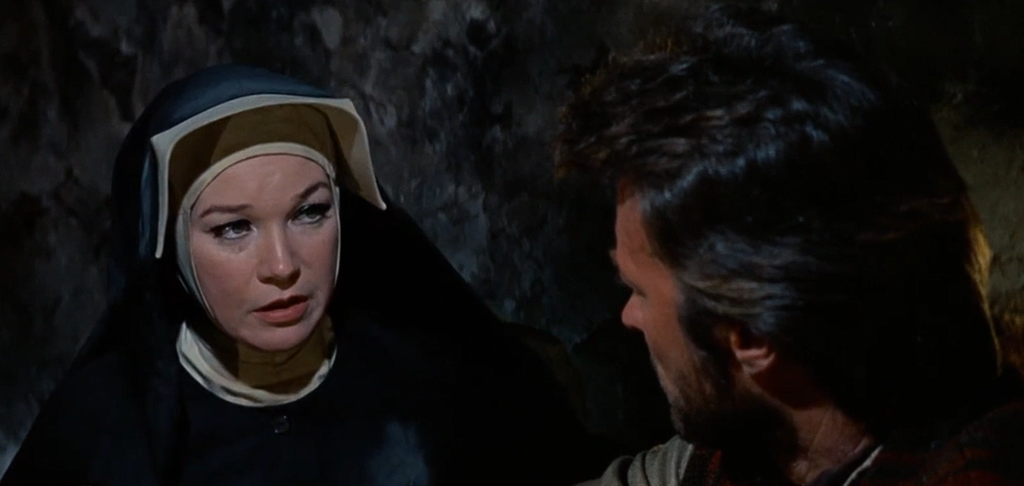
Their camp conversation runs through miracles, marriage, and Hogan’s preference for living alone. He jokes with Sara, challenges her answers, and even gets a laugh out of her. That is a lot more verbal give-and-take than Eastwood needed in the Leone films, where attitude and movement could carry entire stretches of a scene.
2. Sara turns Eastwood’s loner into half of a comedy duo
Shirley MacLaine also gives Eastwood someone who can keep upsetting the rhythm he normally controls. Hogan thinks he understands the world around him, while Sara keeps surprising him with what she knows, what she can do, and how easily she can answer him back. Hogan is still capable and self-reliant, but the joke is frequently that Sara is much harder to categorize than he expects.
3. Joe Kidd starts out determined not to choose a side
Joe Kidd gives Eastwood another independent gunman, but the movie makes his detachment part of the story rather than simply part of his cool. Kidd initially has little interest in getting pulled into the conflict between Luis Chama and wealthy landowner Frank Harlan.
That changes once Harlan begins threatening innocent villagers. The escape with Helen is the moment Kidd stops treating the dispute as somebody else’s problem. He takes control of the church situation, secures a rifle, stops the planned executions, and leaves with Helen before making pursuit harder for Harlan’s men.
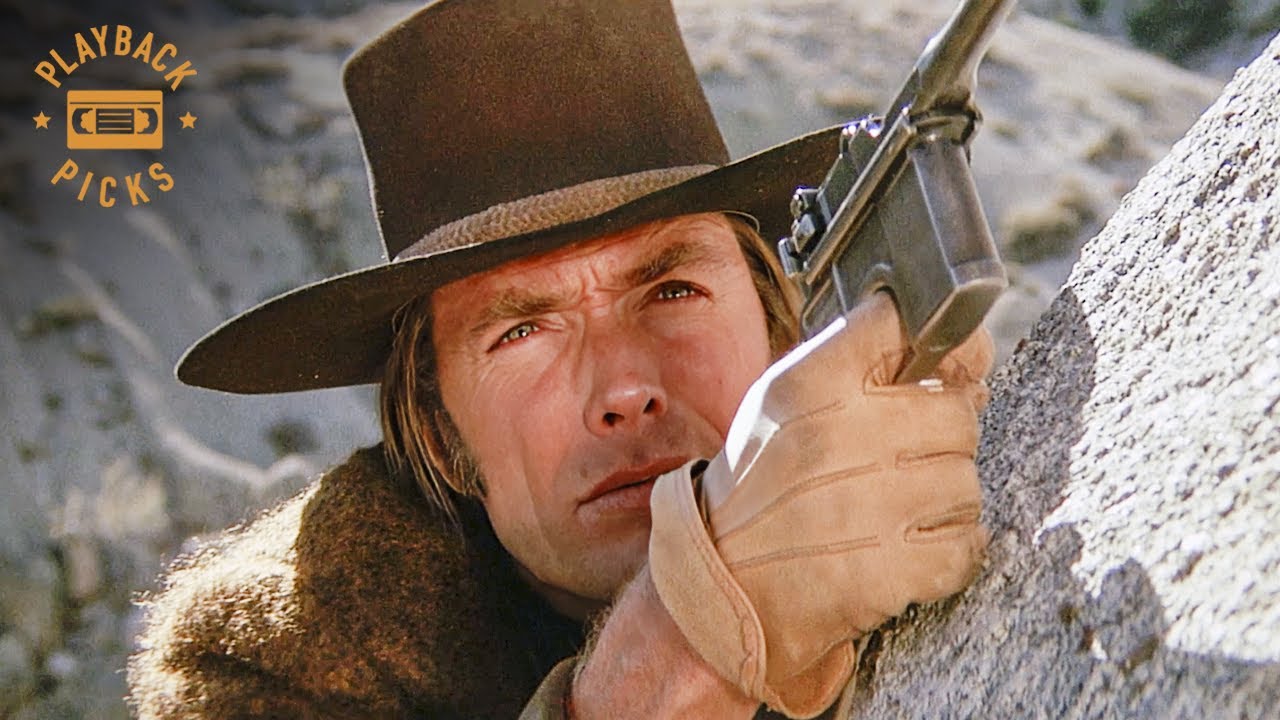
4. Kidd keeps Eastwood’s old competence but gives it a new purpose
The interesting thing is that Kidd does not suddenly become a different kind of action hero once he changes sides. Eastwood still plays him with the same economy that had served him so well before.
He watches, waits, and solves one practical problem after another. The church tower gives him an opening, Harlan’s rifle gives him reach, and the horses give him a way to slow the men who would follow. The familiar Eastwood cool is still there; what changes is what Kidd decides to use it for.
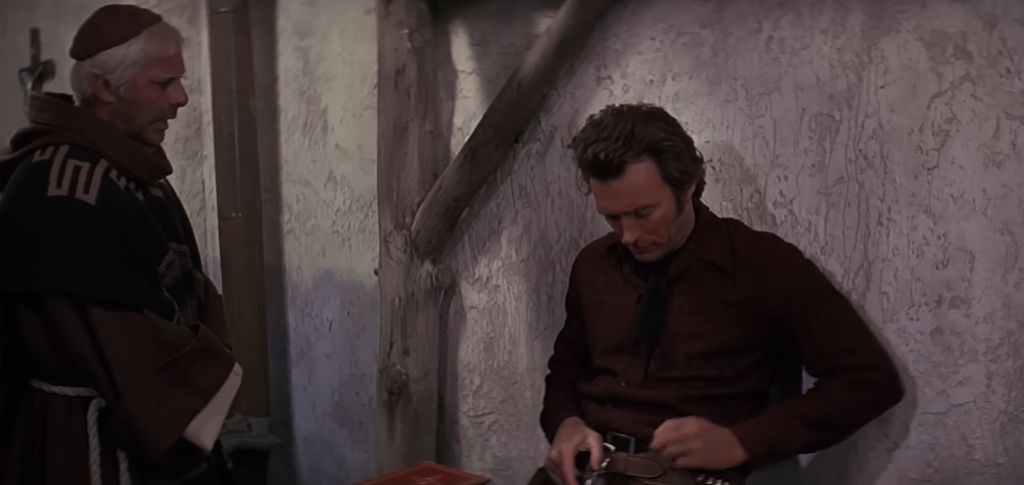
5. High Plains Drifter brings back the nameless stranger with a twist
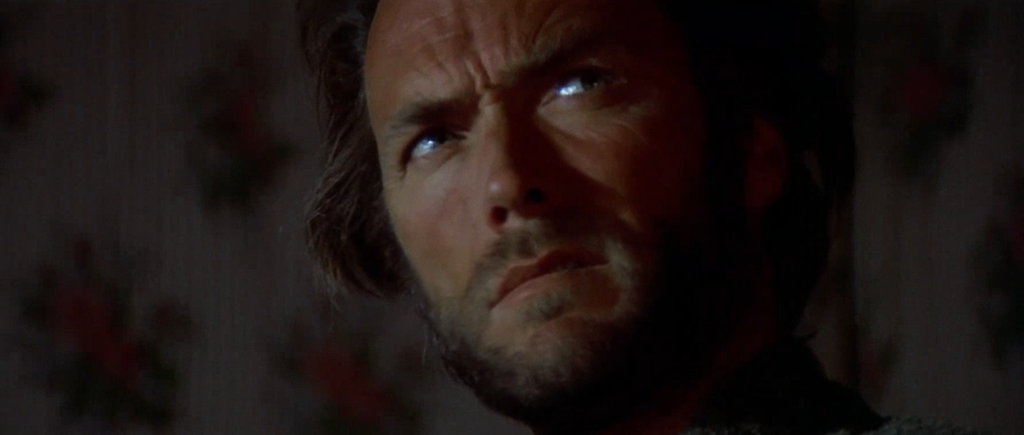
By 1973, Eastwood could have treated another mysterious gunfighter as familiar territory. Instead, High Plains Drifter, the first Western he directed himself, makes the Stranger feel less like another variation on Leone’s drifter and more like someone who may not fully belong to the ordinary world.
The character is a kind of supernatural agent, emerging from the landscape with his connection to Lago’s past left deliberately uncertain. The old Eastwood ingredients are there, particularly the sparse dialogue and unreadable face, but they now make the character eerie rather than merely cool.
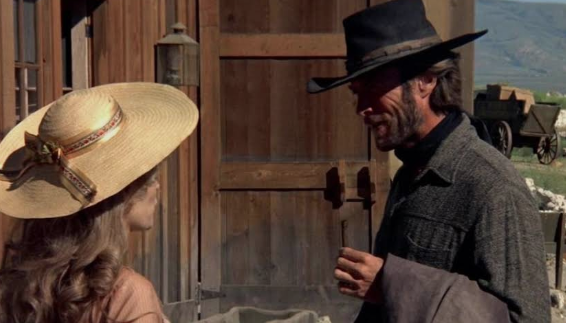
6. Sarah gets closer to the Stranger’s secret through conversation
The morning scene with Sarah Belding shows how much High Plains Drifter has changed the meaning of Eastwood’s usual reserve. Sarah tells the Stranger about former marshal Jim Duncan and the unmarked grave outside town, then warns him that frightening people can be dangerous.
He gives her very little back. Yet the conversation matters because Duncan’s grave becomes one of the strongest clues to the Stranger’s identity and purpose. The movie takes Eastwood’s reluctance to explain himself and turns it into part of a larger mystery.
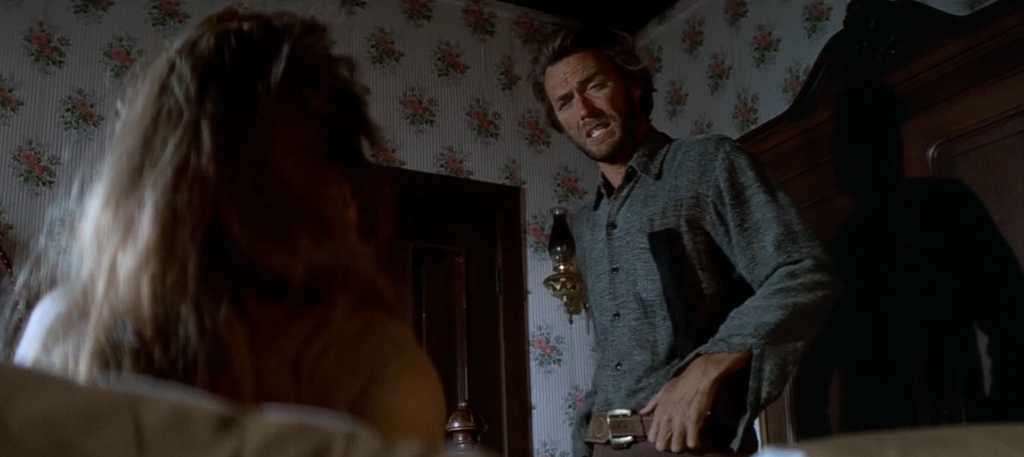
7. Three directors found three different uses for the same star
The three movies arrived within only a few years, but they place Eastwood in noticeably different versions of the Western. Don Siegel directs Two Mules for Sister Sara as a dry partnership in which Eastwood has to share the rhythm with MacLaine. John Sturges makes Joe Kidd a more straightforward story about a detached man deciding where he stands. Then Eastwood directs High Plains Drifter himself and pushes the familiar lone gunfighter toward allegory and the supernatural.
Eastwood did not abandon the screen image the Leone films had given him: instead, he kept finding new uses for it. By 1973, the silence, independence, and guarded expression were still recognizable, but they could now support comedy, moral hesitation or a character who might not be quite what he seems.
To Watch or Buy Joe Kidd, click here: https://www.amazon.com/Joe-Kidd-Clint-Eastwood/dp/B003A1453E
To Watch or Buy High Plains Drifter, click here: https://www.amazon.com/High-Plains-Drifter-Clint-Eastwood/dp/B000I9VOCQ
To Watch or Buy Two Mules for Sister Sara, click here: https://www.youtube.com/watch?v=0Woy4LAxUWY