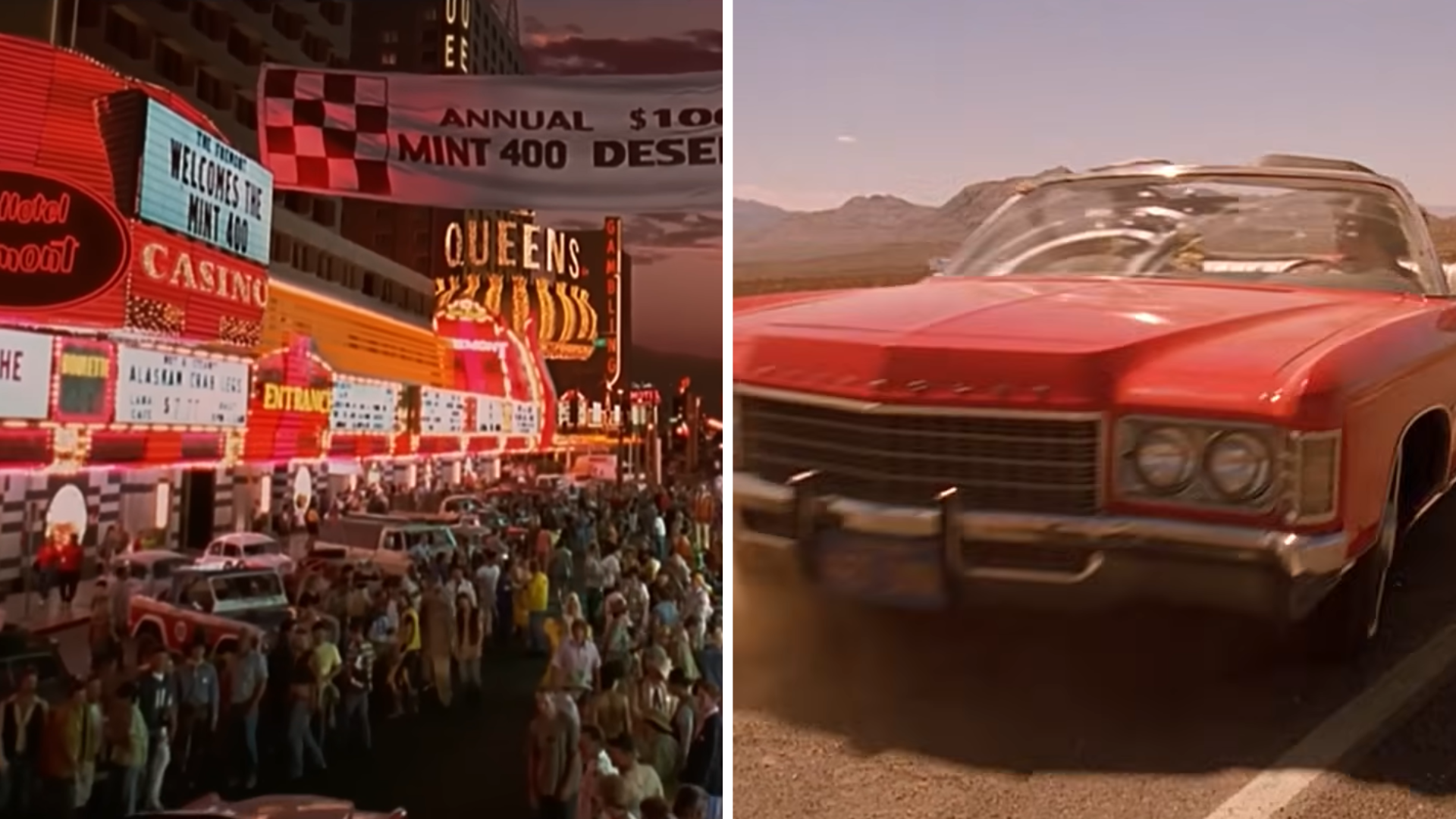
With Fear and Loathing in Las Vegas (1998), Terry Gilliam was trying to recover a very specific Las Vegas: the city Hunter S. Thompson encountered in 1971. By the time the movie was made, enough of that world had changed that the production had to combine surviving casinos, period cars, carefully chosen clothes, and reconstructed views of the Strip.
The result is useful for more than atmosphere. The Red Shark, the Mint 400, the loud resort clothes, and even the way Duke checks into a hotel. The scenes place the story in a recognizable moment when Las Vegas still looked very different from the city that came after it.
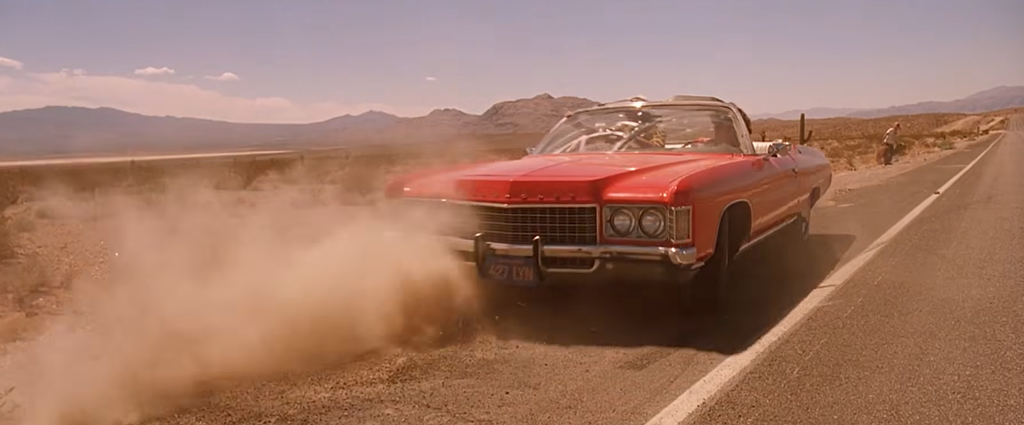
1. The Red Shark looks exactly right for an early-’70s road trip
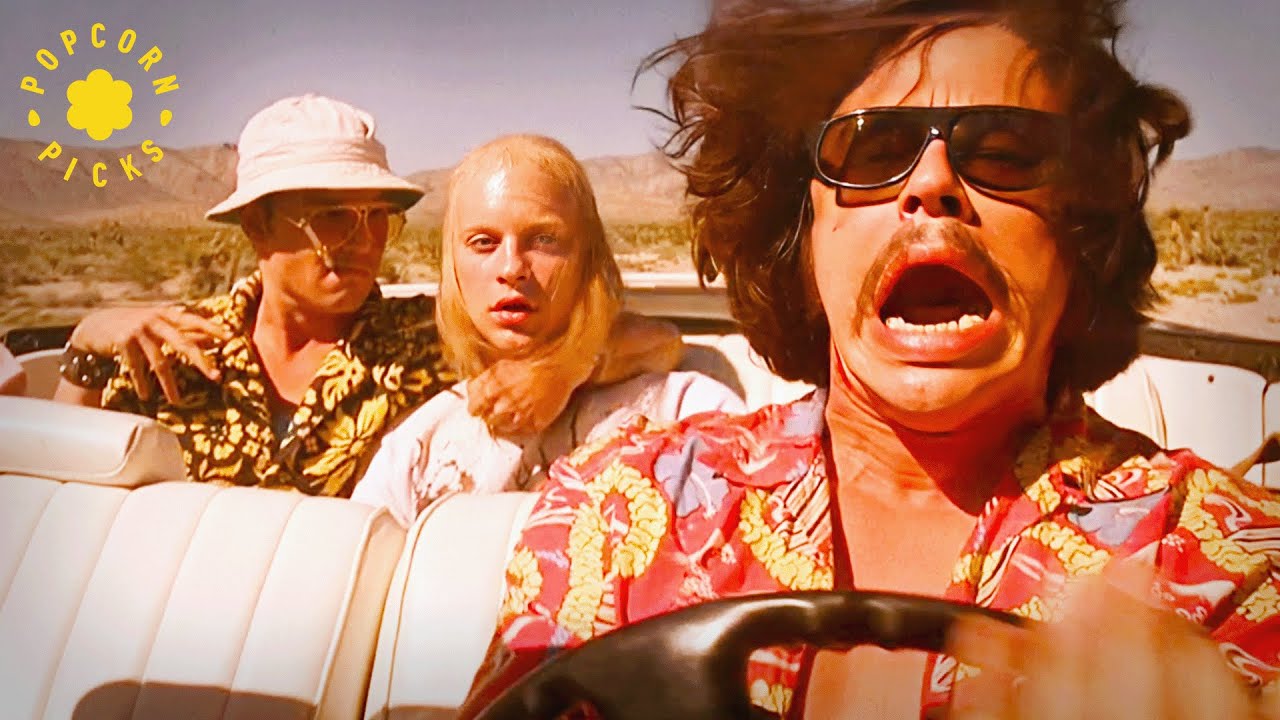
Few objects establish the period as quickly as Duke and Gonzo’s enormous red convertible. A Chevrolet Impala was used for exterior shots, while Hunter S. Thompson’s own 1973 Chevrolet Caprice was used for many of the interiors. Johnny Depp had even driven Thompson’s car from Colorado to Los Angeles before production, giving the movie an unusually direct connection to the writer whose 1971 trip inspired it.
2. Some of Duke’s clothes actually belonged to Hunter Thompson
Duke’s bucket hats, tinted glasses, and loud shirts do not feel like somebody in the late 1990s guessing what a writer might have worn in 1971. Depp spent extensive time with Thompson before filming and borrowed pieces from his wardrobe while building the character. Christie’s account of the production notes that Depp dug through Thompson’s own 1971 clothes, which helps explain why Duke’s mismatched road-trip look feels so specific rather than generically retro.
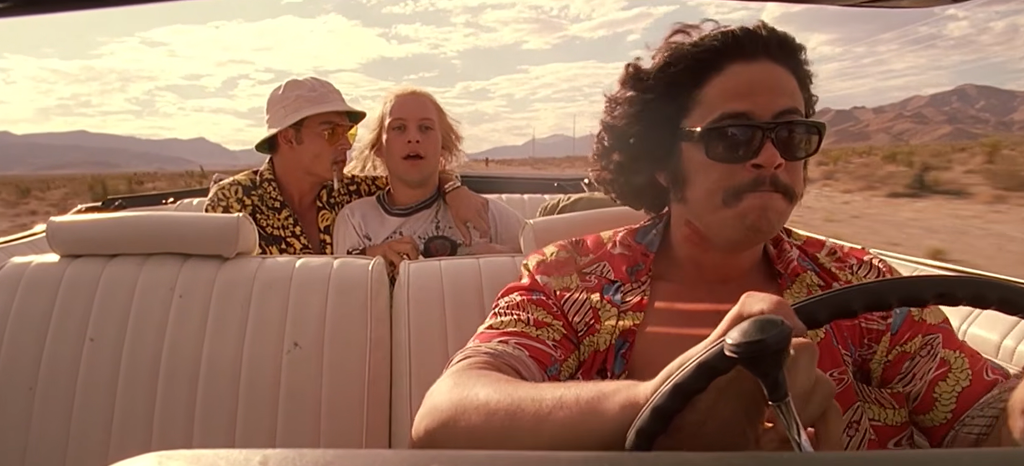
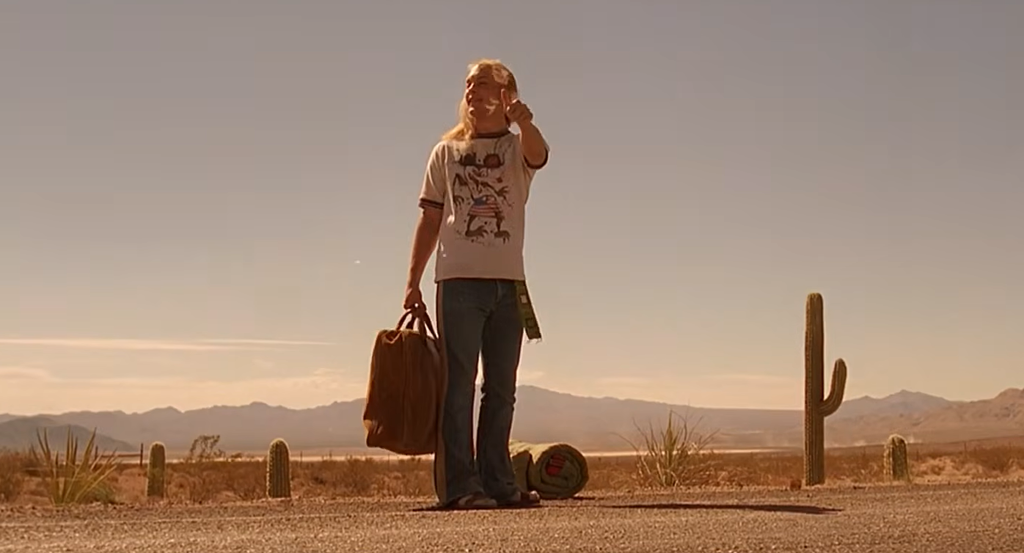
3. The hitchhiker scene preserves an older kind of road travel
Tobey Maguire’s hitchhiker is standing by an empty desert highway when Duke and Gonzo pull over and invite a complete stranger into the Red Shark. There is no phone contact, navigation screen, or easy way for anyone to know much about anybody else before getting into the car. The movie does not stop to underline any of that, which is precisely why the scene works as a period detail: picking somebody up along a long stretch of highway is simply part of the world these characters inhabit.
4. The Mint 400 was a real piece of early-’70s Vegas culture
Duke reaches Las Vegas because he is supposed to cover the Mint 400, and the event was already a major desert spectacle by 1971. The race began in 1968 as a promotion connected to the Mint Hotel and quickly grew into a serious off-road competition that attracted racers and celebrities. Thompson’s original assignment to cover it became the starting point for the Las Vegas story, so the race is not simply a colorful event invented to make the movie feel period-specific.
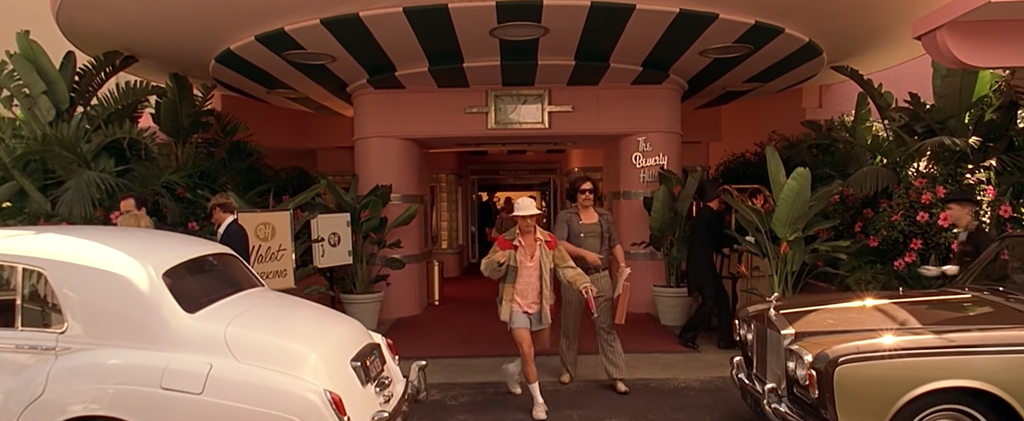
5. The filmmakers could no longer simply return to Thompson’s Mint
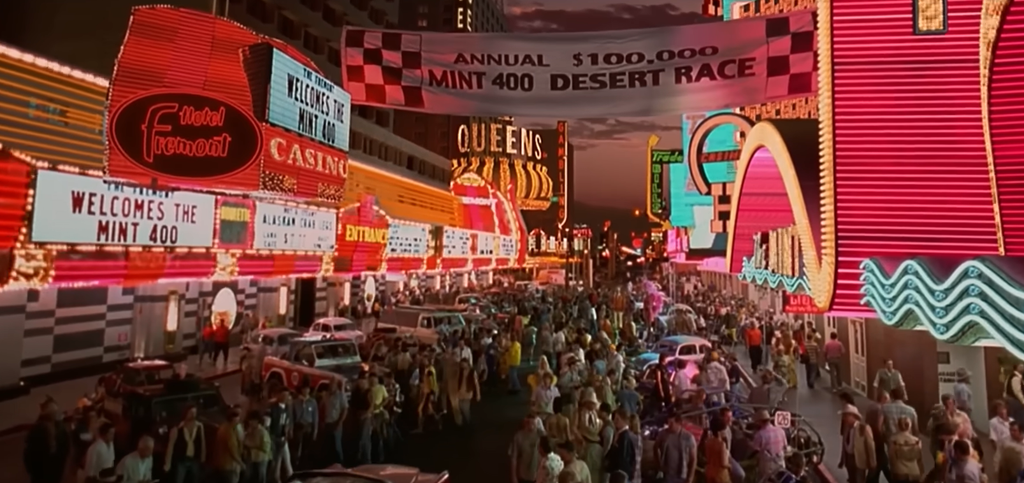
The Mint Hotel Duke visits belonged to a version of Las Vegas that had already changed considerably by the late 1990s. Producer Stephen Nemeth said the production would have loved to find Del Webb’s Mint preserved as Thompson knew it, but that was no longer possible. The filmmakers instead relied on careful camera placement, older footage and reconstructed elements to recover the look they needed.
6. Even the Vegas skyline had to be rebuilt
Gilliam’s crew sometimes had to combine what remained of Las Vegas with newly created imagery. Cinematographer Nicola Pecorini described one period skyline shot in which the production photographed the street-level action and visual-effects artists supplied the upper portion of the old cityscape. It is an interesting wrinkle in the movie’s nostalgia: what looks like an image of 1971 Vegas is partly a record of the real city and partly a reconstruction of things that had already vanished.
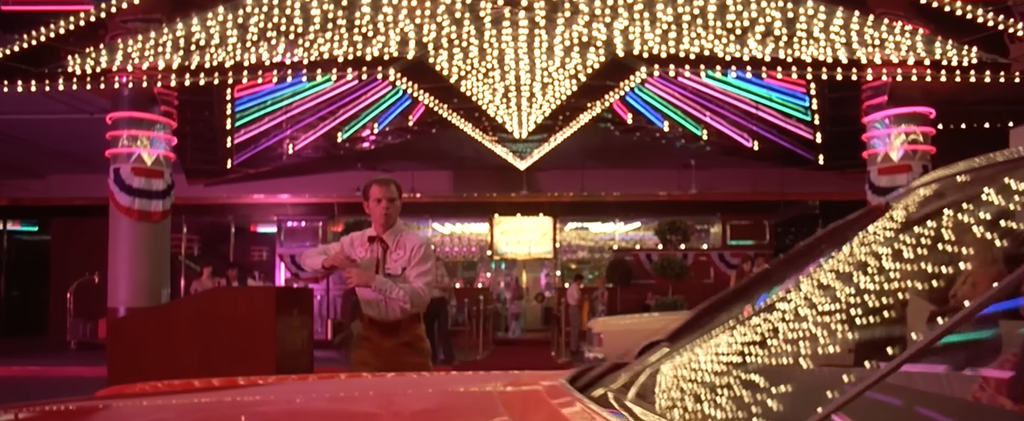
7. Real older casinos helped fill in the missing Vegas
The production still found plenty of genuine Las Vegas architecture to work with. Nevada’s film office lists locations including the Stardust, Riviera, Red Rock Canyon, and Jean Dry Lake, while contemporary production reports describe the Stardust being transformed for the film and the Riviera supplying additional interiors and entrances. Instead of building every piece of the city on a soundstage, Gilliam could weave surviving pieces of an older Strip into his recreation of an even earlier one.
8. The background tourists were dressed for 1971 too
The period look does not stop with Depp and Benicio Del Toro. Costume designer Julie Weiss had to dress large groups of background performers for the Mint 400 material, with contemporary production reports singling out loud plaids and bright colors among the choices used to recreate the event. Those crowds make a difference in the arrival scenes because the people waiting around hotels and race events help establish the decade before Duke even starts speaking to them.
9. Tom Jones gives the Vegas arrival a perfectly timed soundtrack
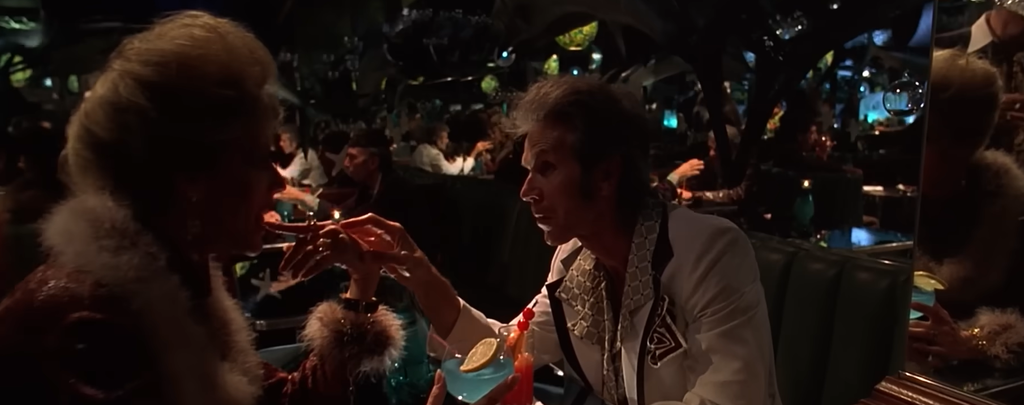
The use of Tom Jones’ “She’s a Lady” is almost suspiciously perfect for a story taking place in 1971. The single first appeared on the UK charts in January of that year, so Duke and Gonzo are arriving in Vegas to music that was contemporary with the period being recreated rather than a later song chosen simply because it sounded retro. The soundtrack uses several older recordings, but the timing of this one makes the arrival feel especially tied to that exact year.
10. Checking into a hotel still involves a desk, paperwork and patience
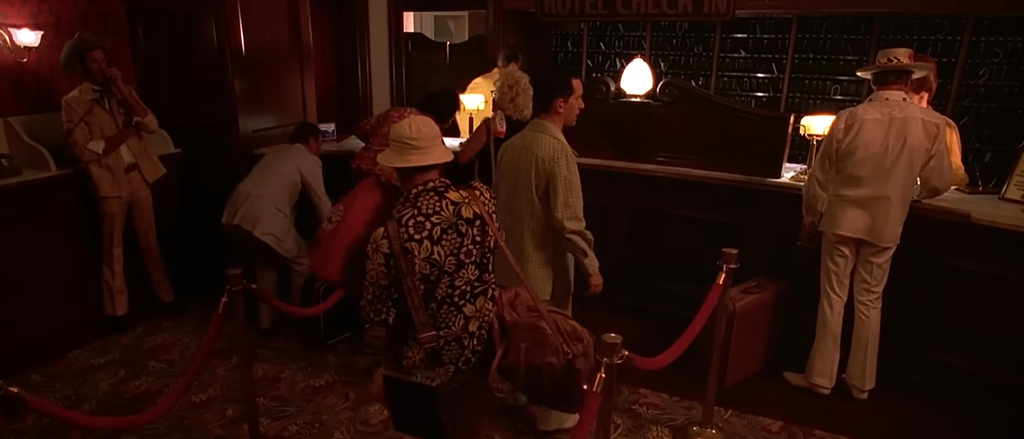
The Mint check-in sequence is packed with small objects and routines that would barely exist in the same form today. Duke has to deal directly with the front desk, paperwork, and a parking ticket, while other parts of the film keep wired phones and cassette players within easy reach. None of those details is treated as a nostalgic attraction because they were ordinary parts of the world the movie is recreating. Nearly three decades after the film itself was made, they have become some of the easiest clues that Duke’s Las Vegas belongs to a very different travel era.
To Watch or Buy Fear and Loathing in Las Vegas, click here: https://www.amazon.com/Fear-Loathing-Vegas-Johnny-Depp/dp/B000I9WW4A