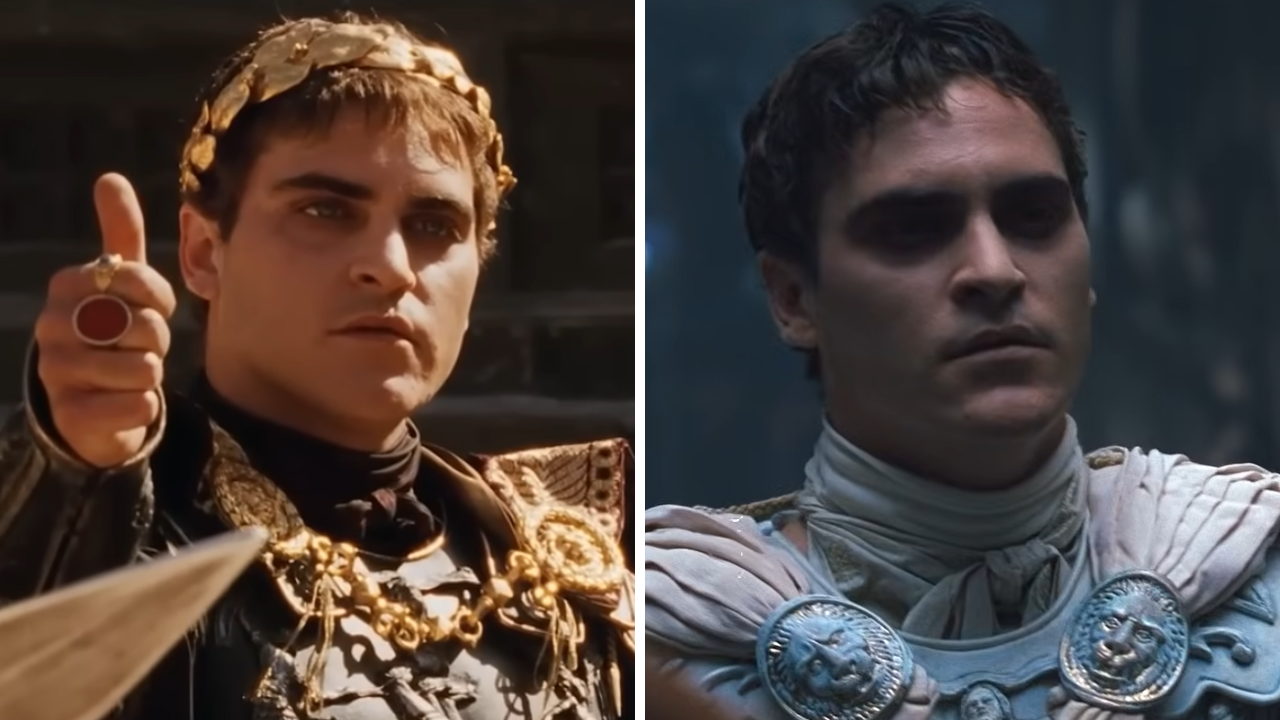
Commodus could have been played as a loud, obvious tyrant, but Joaquin Phoenix goes in a stranger direction. He makes him needy, watchful, wounded, vain, and occasionally almost boyish, which means you’re often trying to figure out what version of him is about to show up.
That’s especially clear in the quieter scenes of Gladiator (2000). Phoenix does a lot with pauses, half-smiles, and tiny changes in his face. Commodus may be emperor, but he rarely looks completely comfortable in the role.
1. He gets quieter when you expect him to get louder
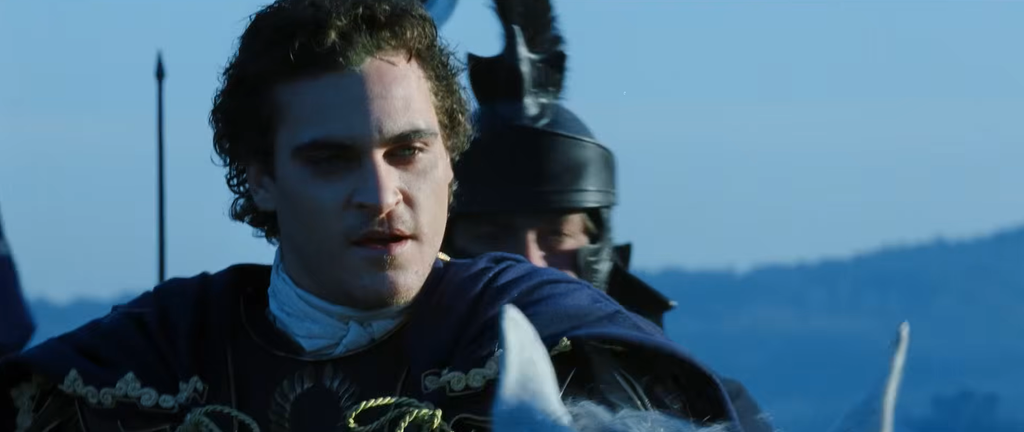
Commodus doesn’t need to shout every time he wants control of a conversation. Phoenix often drops his voice instead, especially around Marcus Aurelius. It creates an odd intimacy that can be much more uncomfortable than a conventional outburst, because you have to lean into what he’s saying rather than waiting for some big theatrical display.
2. His smiles rarely look completely happy
Phoenix gives Commodus a very particular smile. It can appear polite at first, but there’s usually something tight about it, as if he’s checking whether everyone else is laughing too. In the political scenes, you can almost see the calculation happening underneath. The smile stays put while the eyes start telling a different story.
3. He has almost no sense of personal space
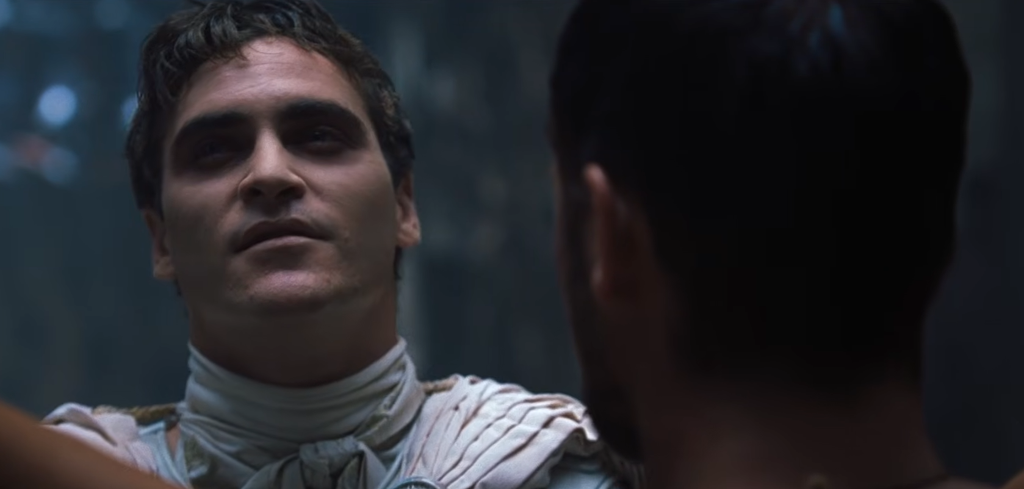
Commodus likes getting really close. Phoenix repeatedly lets him drift into another character’s space during conversations, turning something as simple as standing beside someone into a little power play. It also makes his scenes feel oddly personal for a man who spends so much time surrounded by ceremony and guards.
4. He’s comfortable letting silence hang there
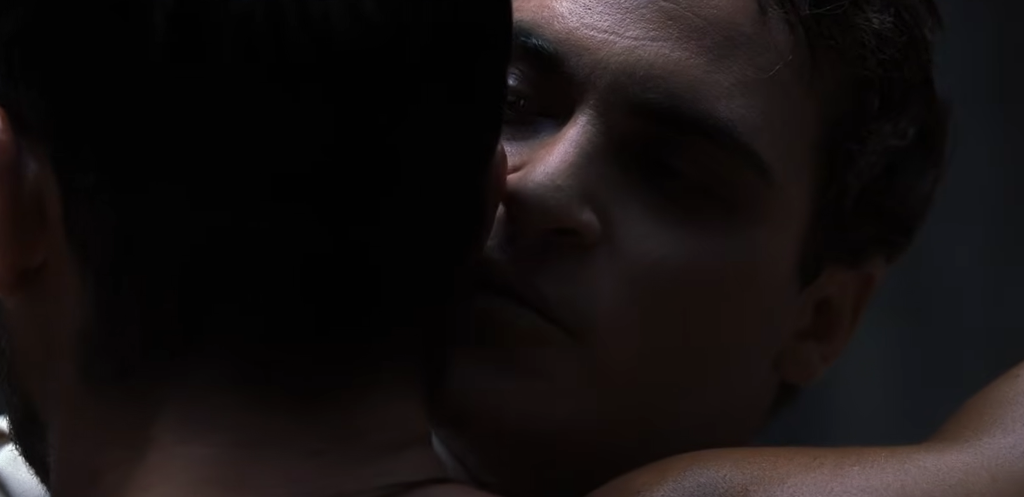
Phoenix doesn’t rush to fill every pause. Commodus can stare at someone for a beat too long, sit with what they’ve said, and then answer once the other person has already started feeling uncomfortable. Those gaps make him hard to read. Sometimes he looks hurt, sometimes he looks furious, and sometimes you don’t know until he finally speaks.
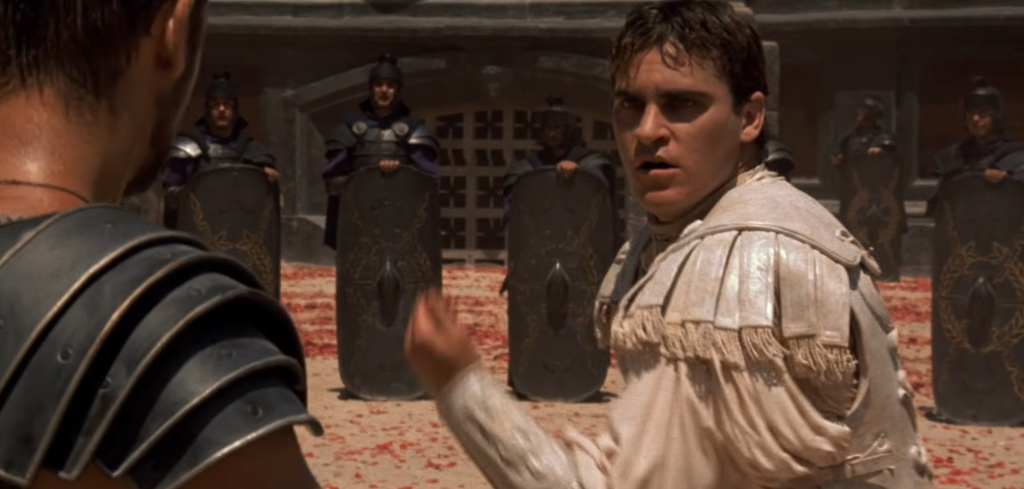
5. He’s always checking the room
A lot of Commodus’ insecurity shows up when he isn’t talking. Phoenix keeps glancing toward senators, advisers, the crowd, or whoever happens to have everyone’s attention. He wants to know where the approval is going. For someone with enormous authority, he spends a surprising amount of time looking like he’s keeping score.
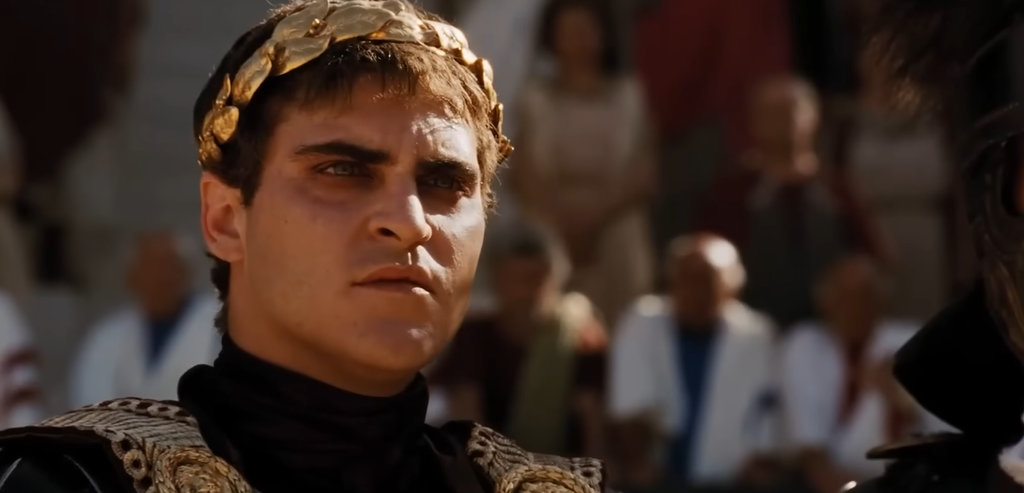
6. The need for his father’s approval never really leaves him
The scene with Marcus Aurelius works because Phoenix lets Commodus look genuinely wounded before anything else takes over. He has built up an entire future in his head, and the rejection hits him like something deeply personal rather than merely political. It makes him seem younger for a moment, which is uncomfortable in a completely different way. The emperor act drops, and you see the son underneath it.
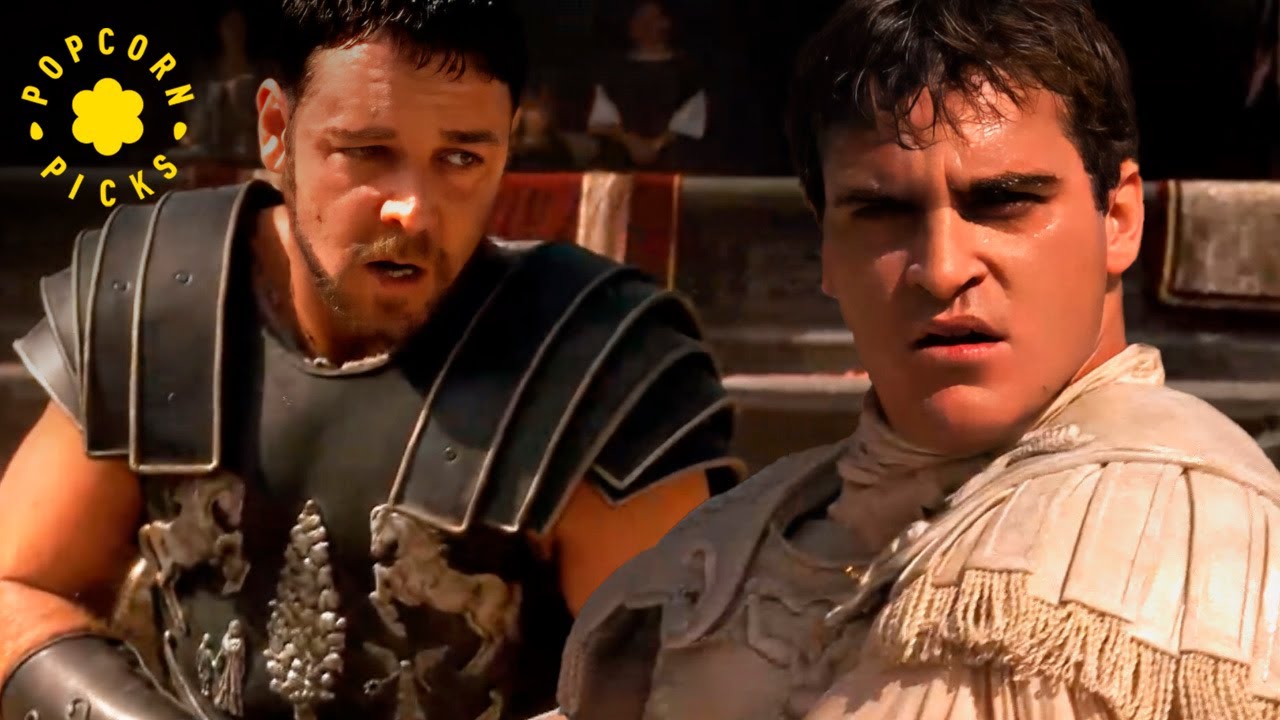
7. His mood can change without much warning
Phoenix can move Commodus from soft and wounded to cold with very little visible effort. Sometimes it’s just the way his mouth settles or his posture stiffens. He doesn’t announce the change. That’s what makes it work. You can be watching one version of Commodus and realize halfway through a line that a different one has taken over.
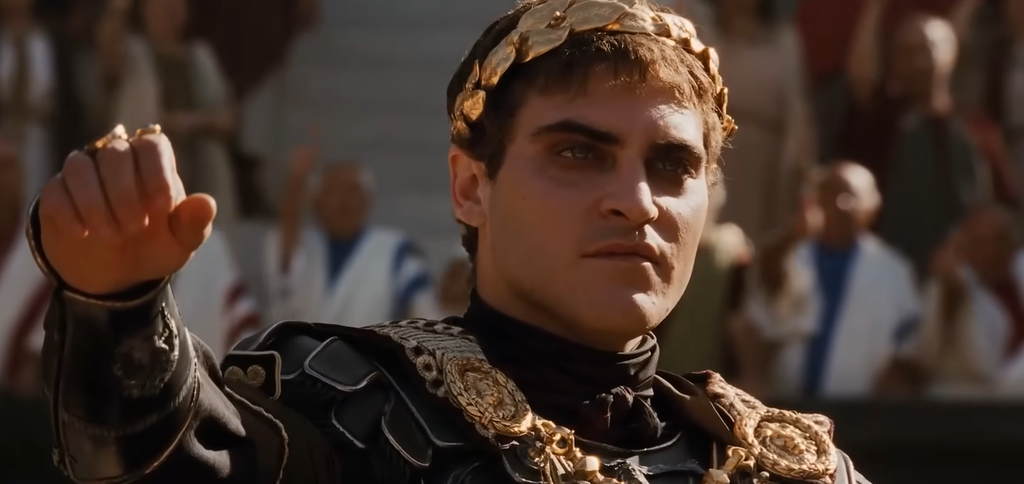
8. He barely moves when Maximus reveals himself
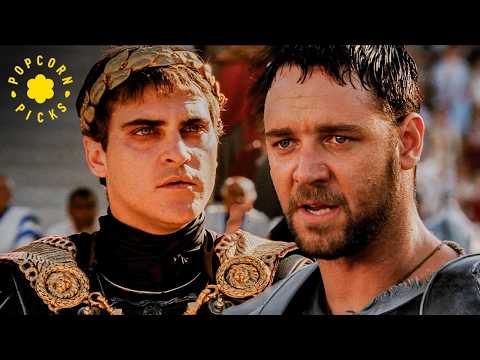
The big Maximus reveal gives Phoenix one of his best reactions in the movie because he doesn’t overplay it. Commodus is staring at a man he believed was gone, standing in front of thousands of people, and most of the panic stays trapped in his face. He freezes, watches, and tries to hold onto the emperor he’s supposed to be.
9. His eyes keep giving him away
That stillness makes Phoenix’s eyes even more important. During the Maximus scene, they move between Maximus, the arena, and the crowd as Commodus realizes how bad the situation has become. His body is trying to project control while his face is already doing the math. It’s a very small performance choice, but the camera gives him plenty of room to use it.
10. He looks least secure when everyone is watching
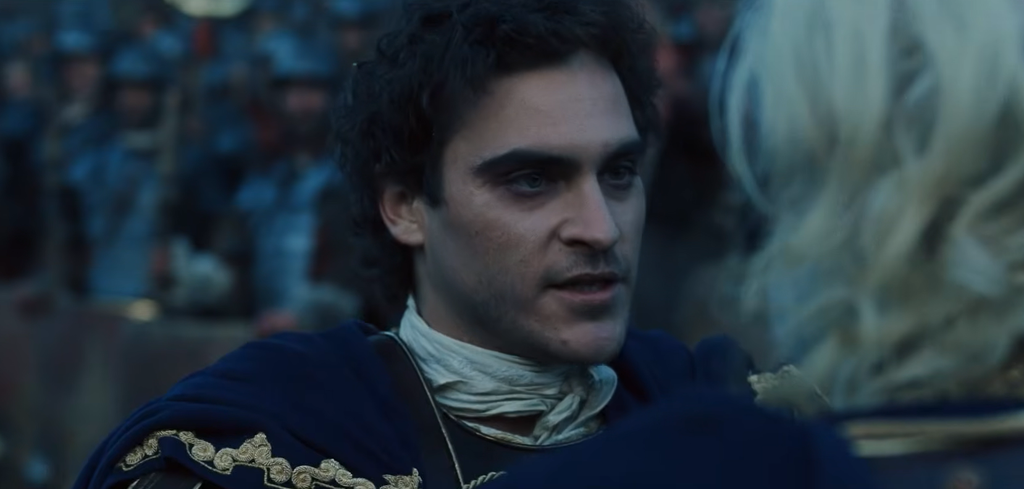
Commodus wants public admiration almost as badly as he wants power, so the arena is a terrible place for him to lose control of a situation. By the later Colosseum scenes, Phoenix plays him with noticeably less ease. The posture is still imperial and the clothes are still immaculate, but there’s a nervousness underneath it. The emperor can control the ceremony, but what he can’t control is who the crowd decides to love.
To Watch or Buy Gladiator click here: https://www.amazon.com/Gladiator-Russell-Crowe/dp/B005DNPHN4