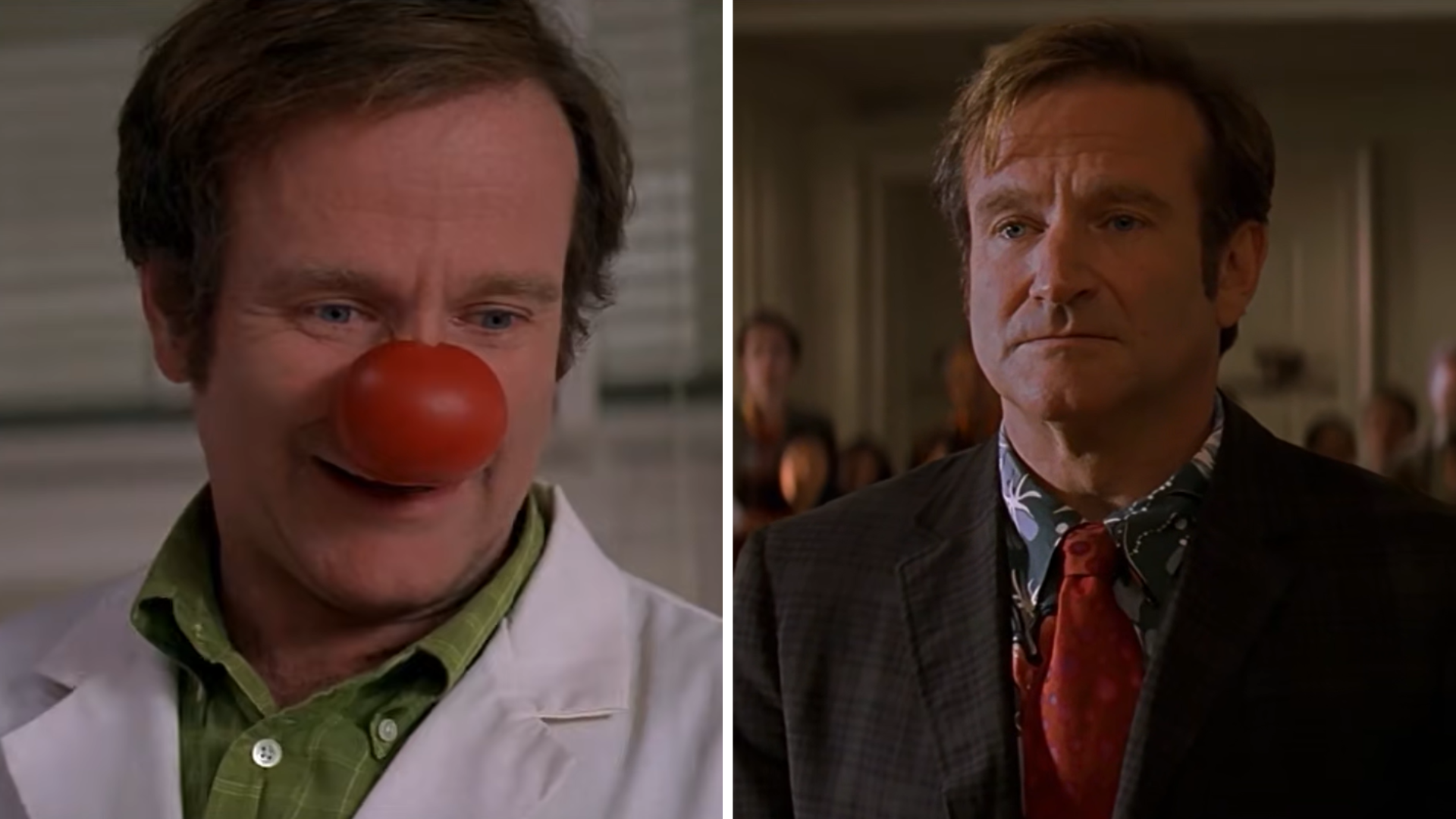
Robin Williams had an obvious advantage playing Patch Adams: a doctor who uses humor to connect with people sounds almost tailor-made for him. But Patch Adams (1998) works hard to show more than Williams performing comedy in hospital corridors. Patch begins the movie withdrawn, gradually discovers how much he enjoys reaching other people, and eventually turns that instinct into his entire approach to medicine.
Williams also spent time with the real Hunter “Patch” Adams before and during production. Adams later said the movie changed plenty about his life but felt Williams captured the compassion and generosity behind his philosophy. That distinction is important to the performance. Williams is not attempting a precise impersonation so much as building a character around the same curiosity about other people.
1. He starts Patch much quieter than audiences might expect
The early psychiatric-hospital scenes hold back the version of Williams viewers could easily anticipate. Patch is subdued, watchful, and unsure what he wants to do with himself, and Williams gives him plenty of quiet moments before the comedy begins taking over. That creates a noticeable progression once Patch discovers that engaging with another patient can bring him out of his own isolation. His humor starts to feel like something the character has found useful rather than a collection of routines Williams brought into the movie with him.
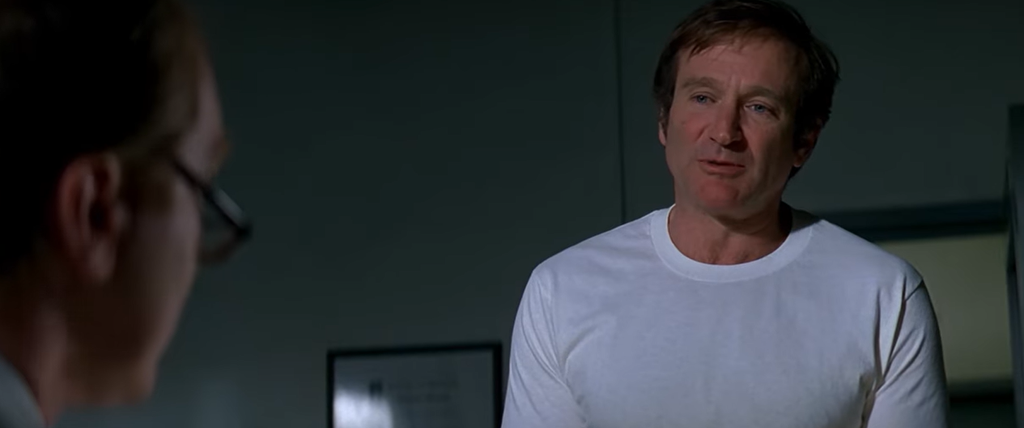
2. Patch usually listens before trying to be funny
Williams makes Patch unusually attentive when another person is speaking. He watches expressions, leans into conversations, and often seems to be figuring out what kind of response might reach that particular person. The real Adams has described spending hours talking with patients and placing enormous importance on listening, an aspect of his philosophy that the movie simplifies but does retain in Williams’ behavior.
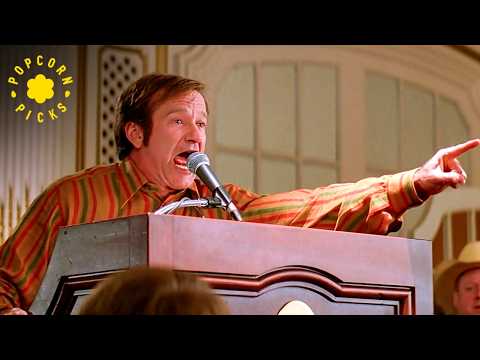
3. His physical comedy gives Patch another way to communicate
Once Patch becomes comfortable performing, Williams uses much more than dialogue. His posture changes, his face becomes more elastic, and he can turn a walk across a room into part of the joke. The children’s ward makes especially good use of that ability because Patch does not simply tell jokes to the kids; he moves around them, reacts to them, and willingly makes himself look ridiculous. Williams’ comedy becomes something Patch does with other people rather than something he delivers at them.
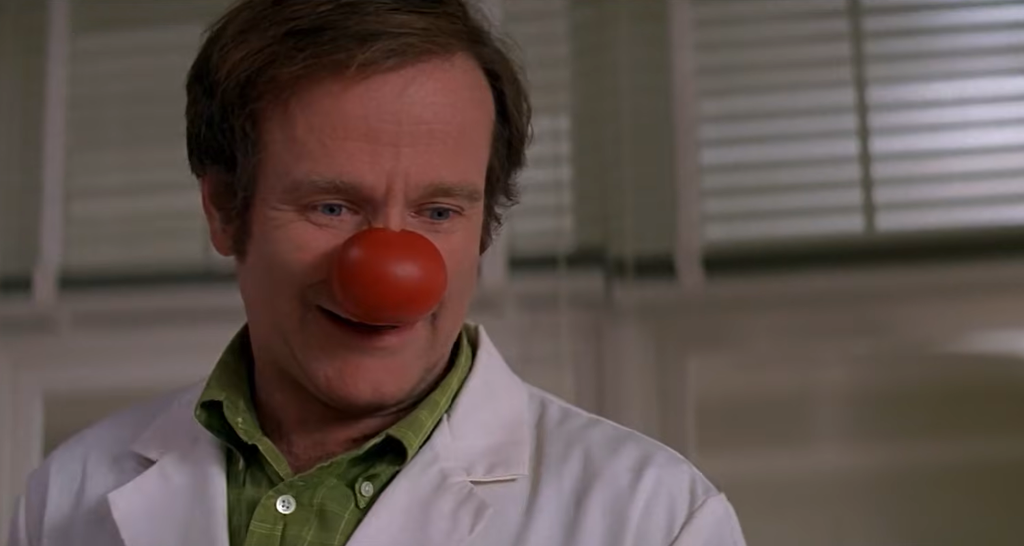
4. Almost anything nearby can become part of the routine
Hospital objects are supposed to belong to a serious medical environment, which makes Patch’s instinct to repurpose them especially effective. Williams handles ordinary items as though he has only just noticed their comic possibilities, turning the surroundings into costumes, props, and visual gags without needing the scene to stop for a formal setup. That spontaneity fits Patch particularly well because he approaches the hospital itself the same way: the rules may already exist, but he sees no reason they have to determine every interaction inside it.
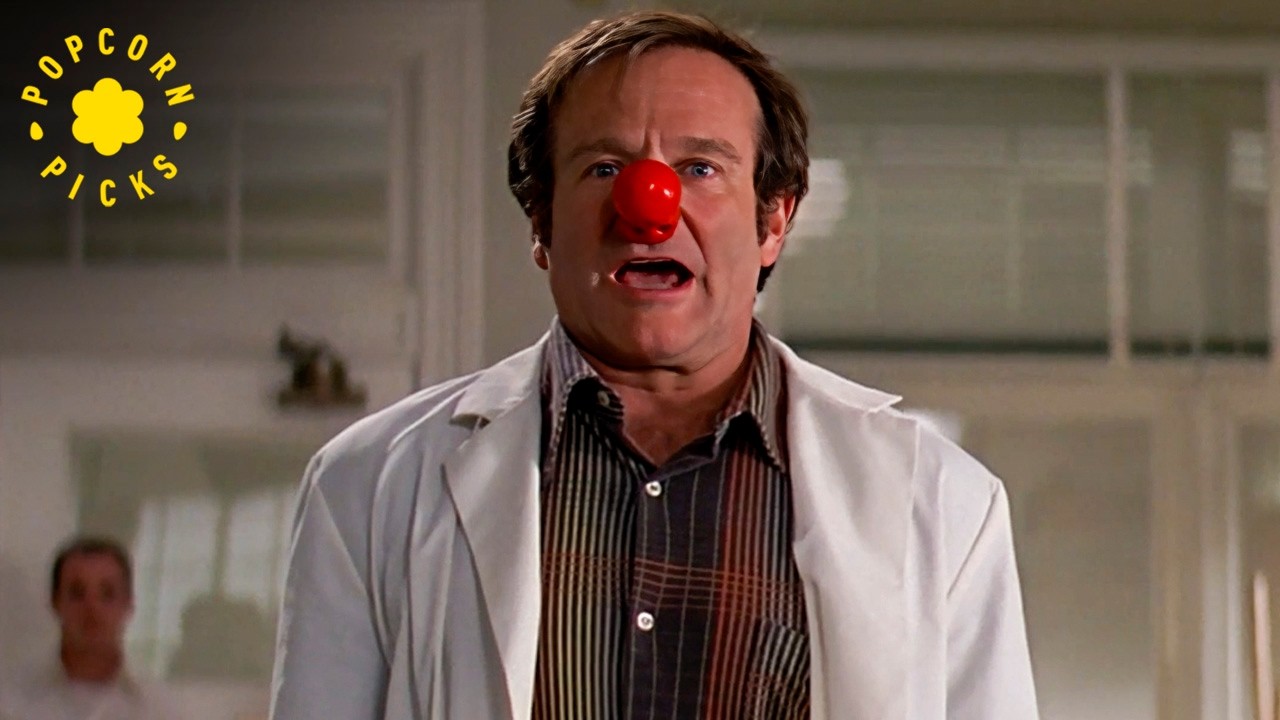
5. He knows when to let the children take over the scene
Williams could easily overwhelm the children’s ward material, but many of his nicest moments come when he watches the kids respond and adjusts to them. Their laughter and reactions determine the rhythm instead of simply decorating his performance. That gives Patch a different quality from Williams’ more purely comic characters; he may start the joke, but he is clearly interested in what comes back from the person on the other side.
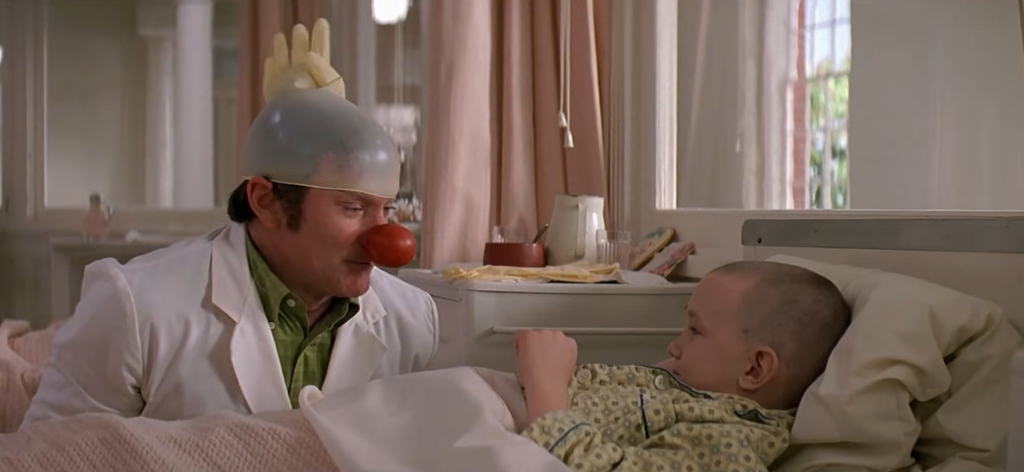
6. The comedy can disappear without Patch suddenly changing characters
Some of Williams’ most useful work comes when he stops trying to make anyone laugh. Patch can become still, listen closely, and answer somebody seriously only moments after being extremely playful. Williams does not mark those transitions with a dramatic personality change, which helps the humor and sincerity coexist. The real Adams later praised Williams as compassionate and generous as well as funny, qualities he felt helped communicate the larger message even when the film departed from his biography.
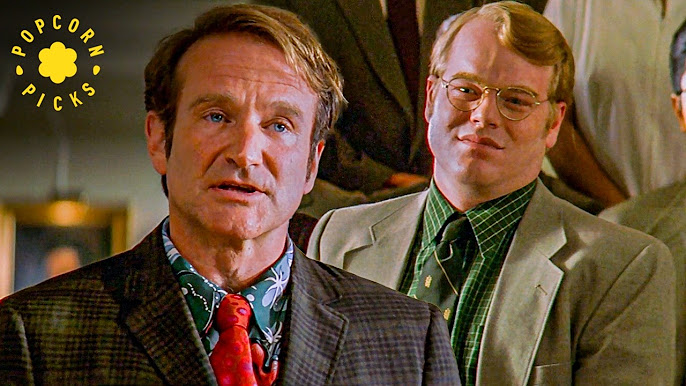
7. Carin brings out a less certain version of him
Patch often seems fearless when challenging doctors or approaching patients, but his scenes with Carin give Williams room to make him less assured. He can be hopeful, awkward, and vulnerable around her, especially once their relationship becomes more personal. That matters because Patch’s confidence could otherwise become exhausting. Around Carin, Williams lets us see someone who does not necessarily know the right thing to say and cannot solve every situation with another joke.

8. The clinic turns his comic energy into leadership
The free clinic changes the scale of what Patch is trying to do. He is no longer simply the unconventional student sneaking around hospital rules; he has persuaded other people to help build something around his ideas. Williams still gives Patch the same restless energy, but it becomes more outward-looking as he encourages patients, friends, and fellow students to participate. The film was adapted from Adams and Maureen Mylander’s book Gesundheit!, which grew out of the real Adams’ broader ideas about community and medical care.

9. He can use humor as a challenge instead of an escape
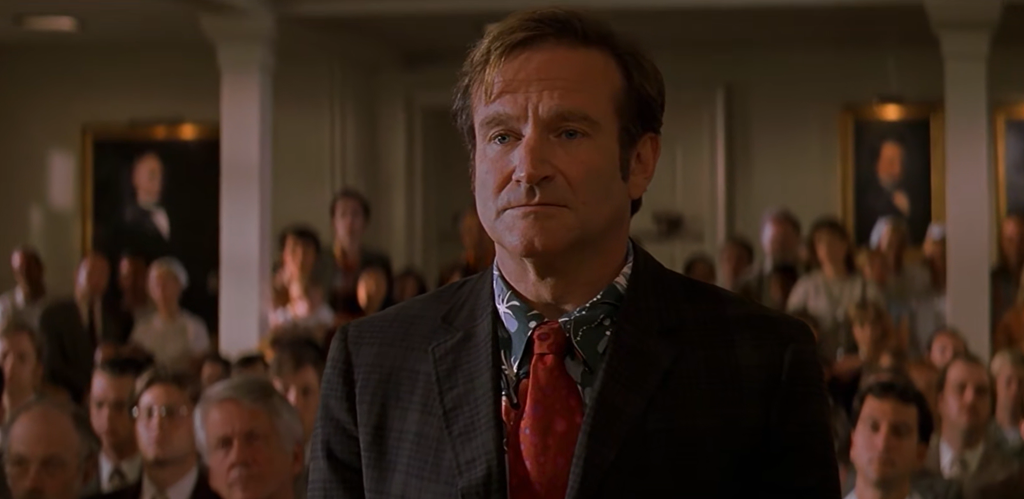
When Patch faces medical-school authority, Williams changes how the comedy works. Instead of performing for a patient, Patch uses quick answers and irreverence to puncture the formality of the people judging him. As the confrontation becomes more serious, Williams gradually reduces those flourishes and lets Patch explain what he actually believes. The humor remains part of his personality, but it no longer needs to carry the entire scene.
10. Williams makes the sincerity feel connected to the jokes
The performance would be much less effective if the emotional scenes felt like interruptions between comedy routines. Williams keeps returning both sides of Patch to the same basic interest in people, whether he is entertaining children, listening to Carin, or arguing about the distance between doctors and patients. Adams himself said the film was not the version of his life he would have made, but he believed it successfully promoted compassion, generosity, and a more personal relationship with patients. Williams’ performance makes that connection easier to understand because the serious Patch never feels completely separate from the funny one.
To Watch or Buy Patch Adams click here: https://www.amazon.com/Patch-Adams-Tom-Shadyac/dp/B002E0HJTY