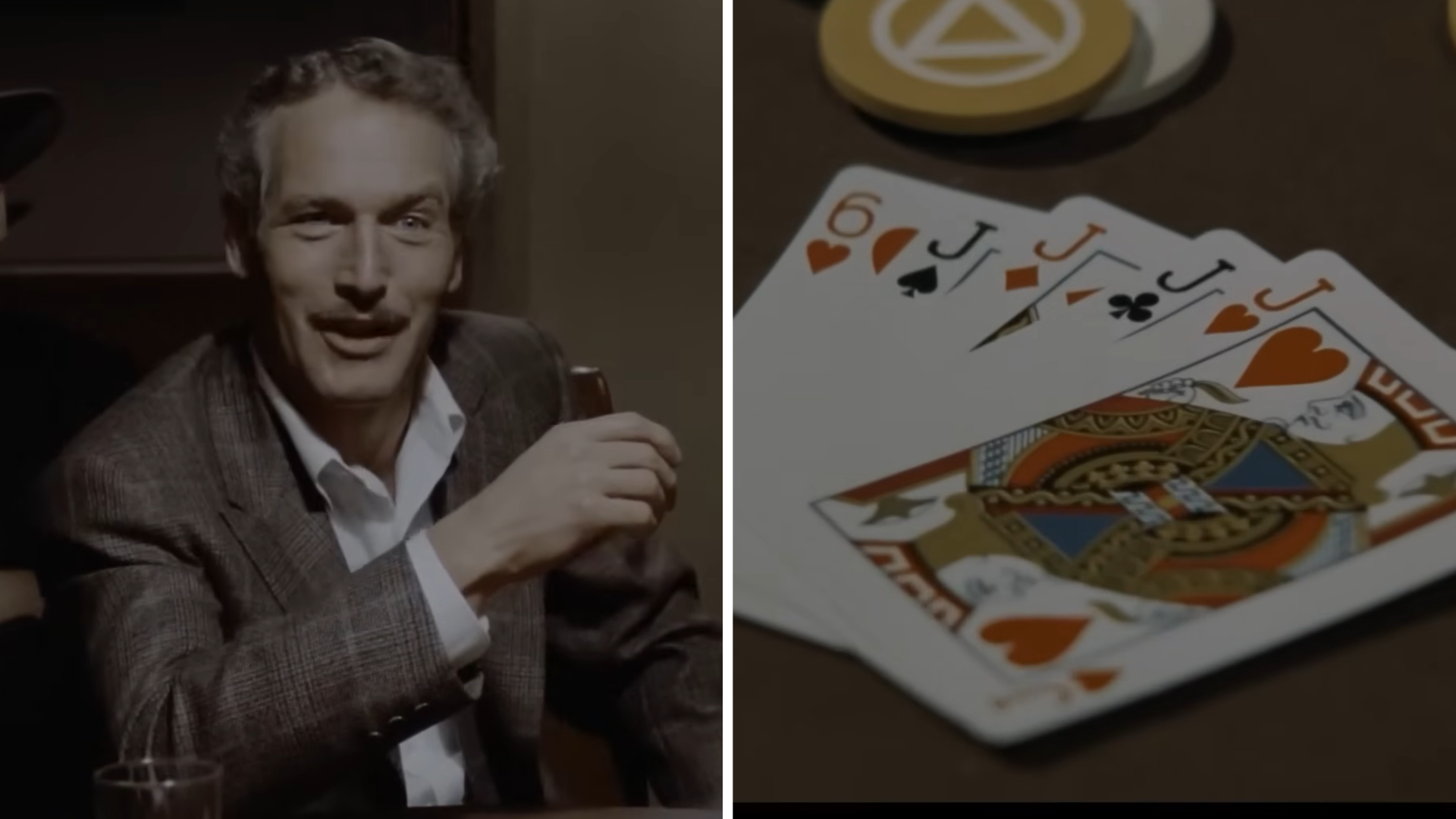
The poker game in The Sting (1973) looks like a battle between two men who both think they can cheat better than the other. Henry Gondorff enters Doyle Lonnegan’s private game disguised as “Shaw,” a loud Chicago bookmaker who drinks too much, ignores the dress code and seems to enjoy irritating everyone at the table.
There is much more preparation behind the performance than Lonnegan realizes. Gondorff’s crew already knows how he plays, how he cheats, and how badly he reacts when someone embarrasses him. Even the $15,000 at stake matters less than making Lonnegan angry enough to walk into the much larger con waiting for him afterward.
1. The crew chooses poker because Lonnegan cheats
Before the train trip, Gondorff’s crew studies Lonnegan closely enough to learn about his regular high-stakes game and, more importantly, his habit of cheating. That gives them a predictable setting where he already feels secure and believes the advantage belongs to him. Gondorff can therefore build the opening stage of the con around something Lonnegan willingly does himself instead of trying to manufacture an encounter from scratch.
2. Gondorff dresses and behaves like someone Lonnegan will underestimate
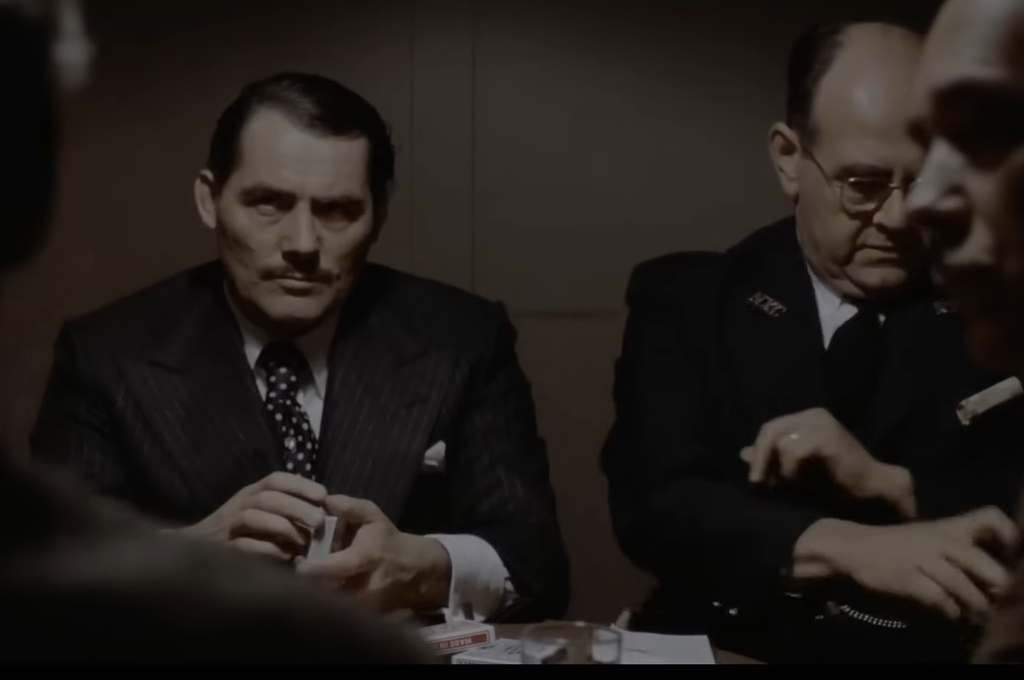
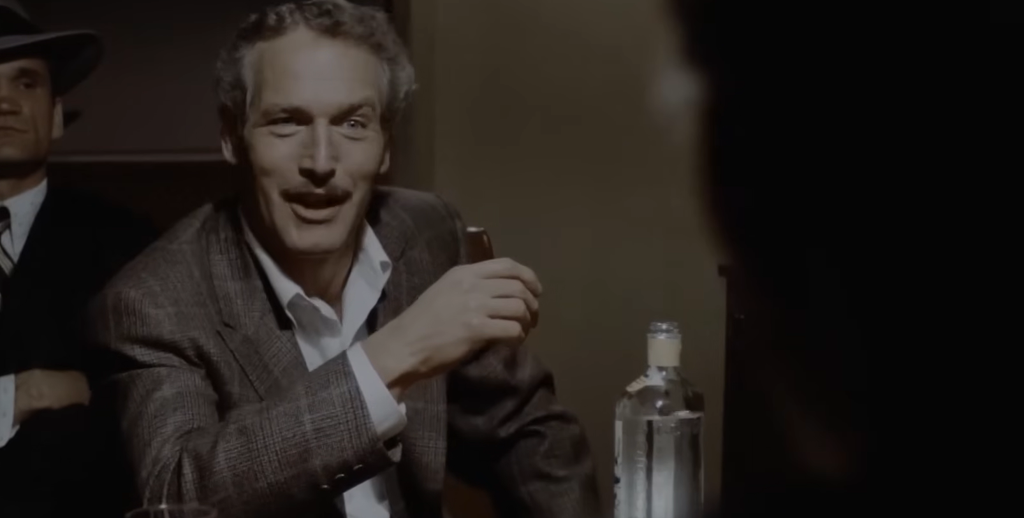
Gondorff enters the game looking noticeably less polished than the other players, to the point that he has to be offered a tie before he can sit down. His fictional bookmaker, Shaw, also carries himself with an easy carelessness that hardly suggests a disciplined card expert. The combination of money, sloppy manners, and apparent overconfidence gives Lonnegan exactly the kind of opponent he expects to exploit.
3. Billie has already stolen Lonnegan’s wallet
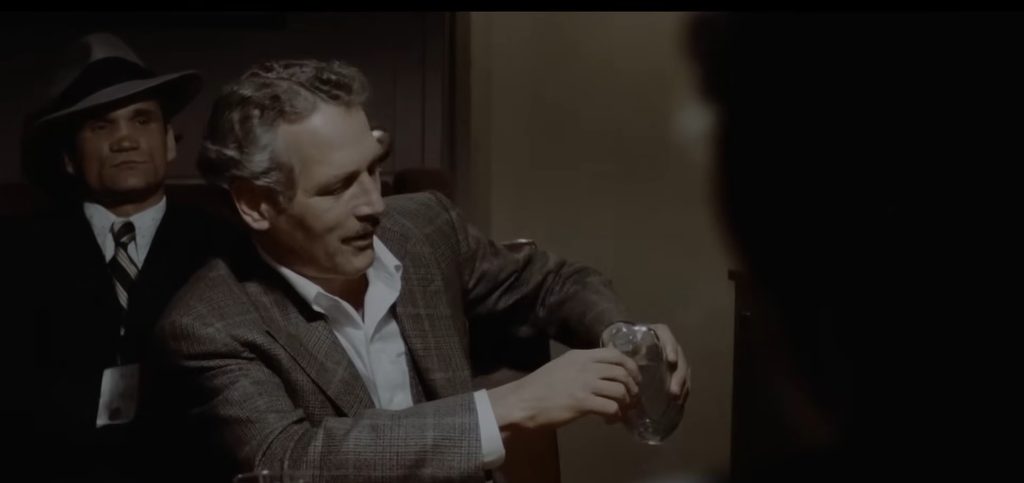
Before the serious betting begins, Billie bumps into Lonnegan elsewhere on the train and lifts his wallet, which eventually makes its way to Gondorff. The theft becomes especially useful after the final hand, when Lonnegan suddenly discovers that the money he needs to cover his loss is no longer in his pocket. What seems like another comic humiliation at the end of the game was actually arranged well before anyone sat down at the table.
4. Gondorff keeps irritating Lonnegan with his own name
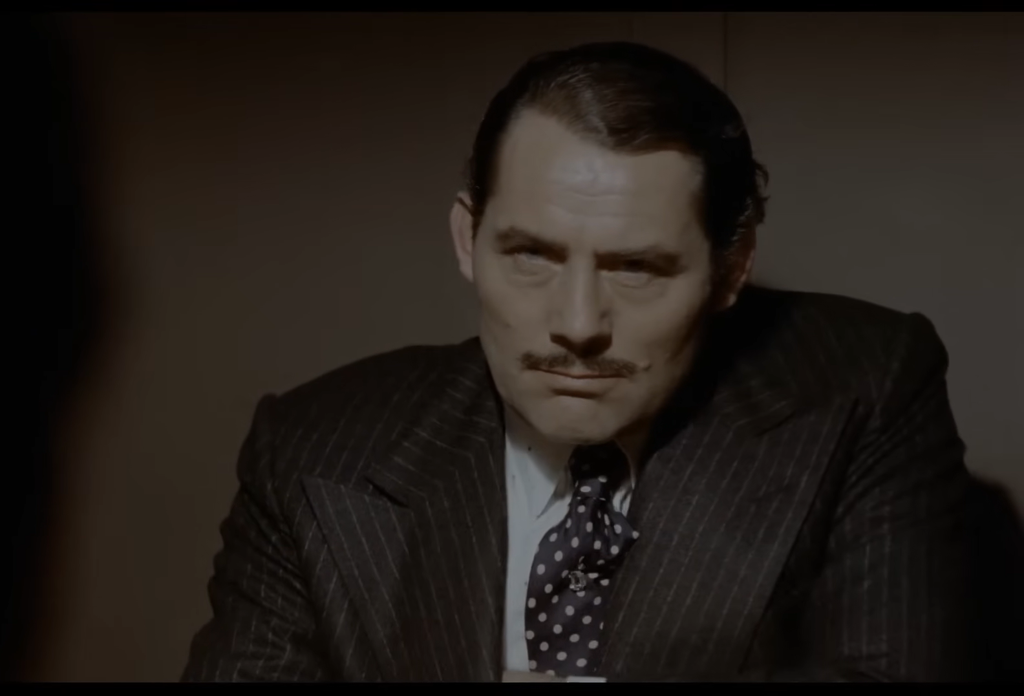
Newman repeatedly has Shaw stumble over Lonnegan’s name, and Robert Shaw gradually lets the annoyance show. By the time Lonnegan sharply identifies himself as “Doyle Lonnegan” and tells Shaw to remember it, the supposedly casual bookmaker has already become personally irritating to him. That irritation is useful because the con works better once Lonnegan stops seeing the game as ordinary business and starts wanting to put Shaw in his place.
5. Card expert John Scarne helped with the poker work
The filmmakers brought in John Scarne, one of the era’s better-known authorities on gambling and card manipulation, as a technical adviser. Scarne has also been credited with doubling Newman’s hands for some of the more specialized card work. That extra expertise helps the scene because Gondorff cannot merely sound convincing when he talks about cards; the handling itself has to look comfortable enough for Lonnegan to believe Shaw belongs in a high-stakes game.
6. Newman makes Shaw increasingly obnoxious as the game continues
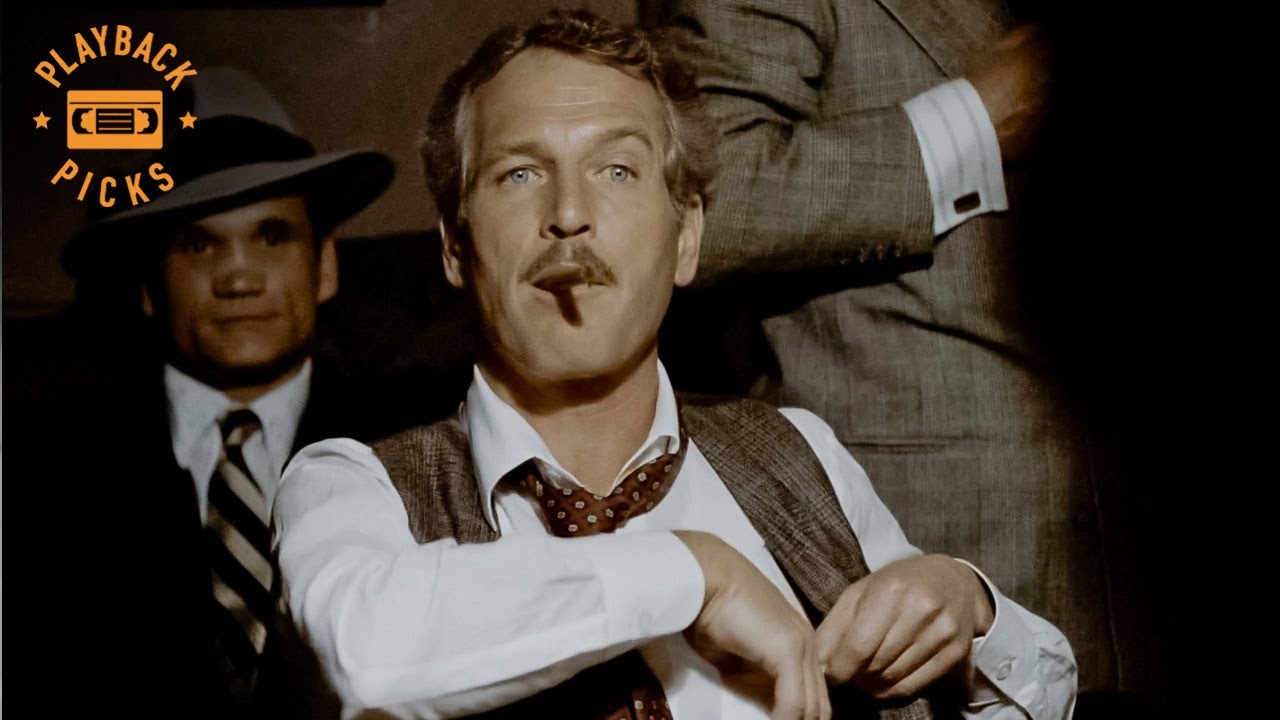
Shaw wins money and immediately starts needling the other players, laughing loudly, insulting one man’s ability and brushing aside Lonnegan’s suggestion that everyone take a short break. Newman never makes the behavior so extreme that the disguise becomes unbelievable, but he keeps adding just enough arrogance to push Lonnegan further. The result is that Lonnegan eventually becomes more interested in humiliating Shaw than simply taking his money.
7. Gondorff knows what kind of cheating to expect
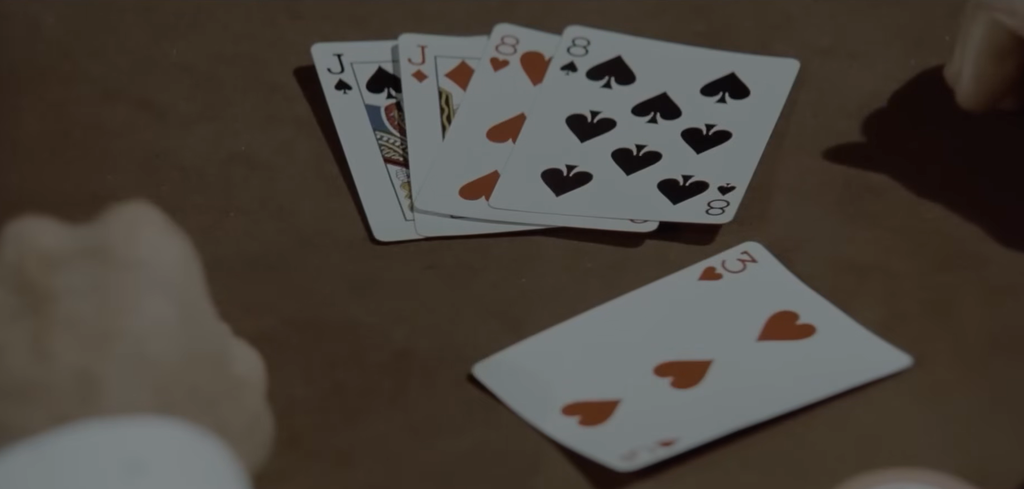
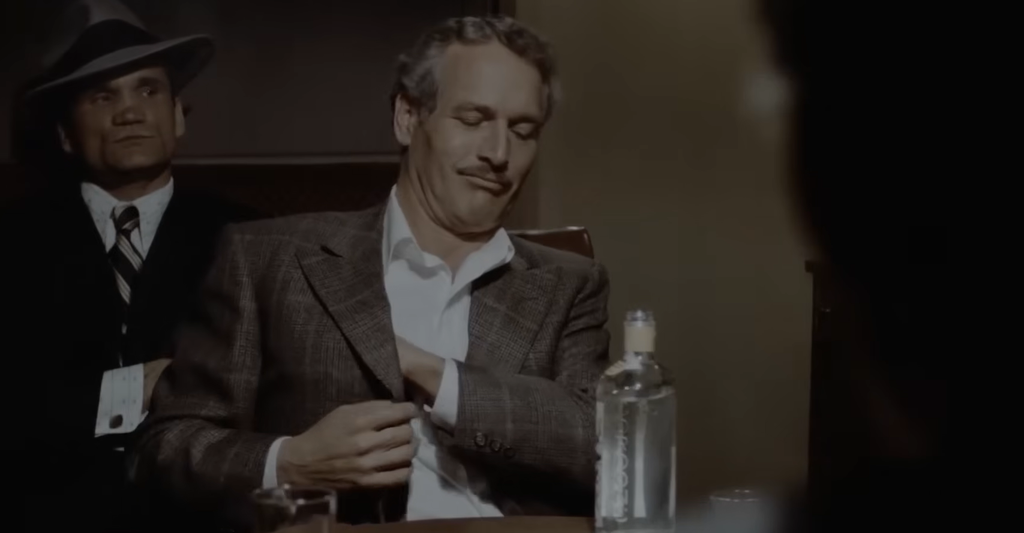
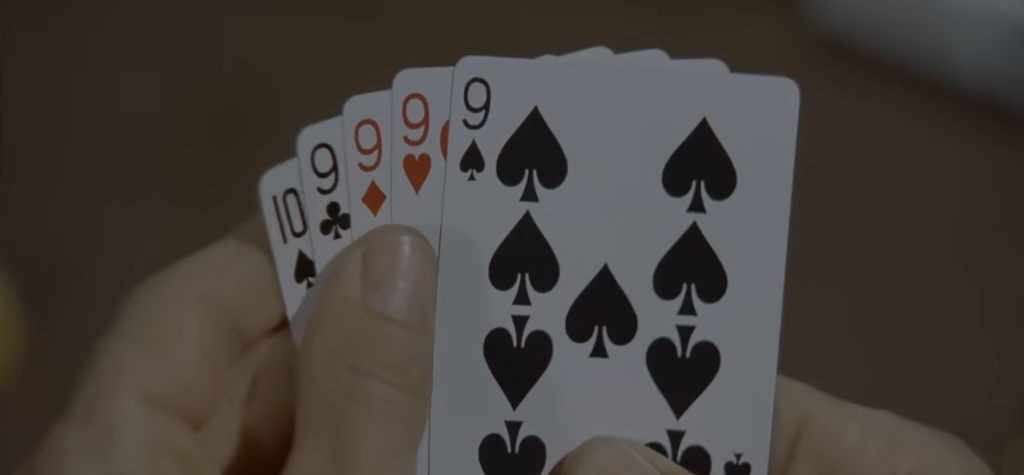
The crew has learned that Lonnegan likes to introduce a cold deck and tends to stack it around relatively high four-of-a-kind hands. That preparation is why Gondorff can keep provoking him without seeming worried when Lonnegan leaves the table and orders a fresh deck prepared with nines. From Lonnegan’s perspective, he is taking control of the game; from Gondorff’s, he is finally doing what the crew expected.
8. Lonnegan’s final deck gives Gondorff a hand worth betting
The clever part of Lonnegan’s setup is that Gondorff is not supposed to receive obviously bad cards. The rigged deal gives Shaw four threes while Lonnegan holds four nines, which means both men have hands strong enough to justify increasingly large bets. Lonnegan can keep raising with complete confidence because he already knows what Shaw is holding, while Gondorff has every reason to behave as though he believes he has the stronger hand.
9. The movie never shows exactly how the four jacks appear
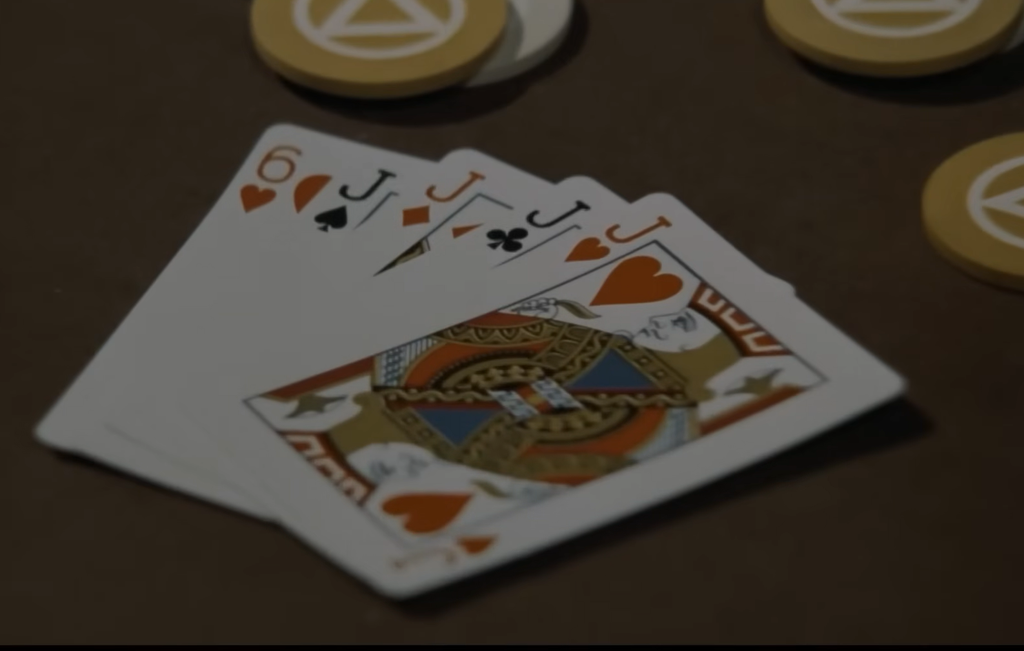
The audience has already seen enough of Lonnegan’s scheme to know that Gondorff should be holding four threes, but the film keeps the crucial countermove out of sight. When Newman reveals four jacks at the end of the betting, we understand that Gondorff has replaced the hand without ever being shown precisely when or how he did it. Keeping the mechanics hidden puts the viewer unusually close to Lonnegan’s position: he knows he has been beaten by another cheat, but he cannot point to the moment when it happened.
10. The $15,000 win sets up the much larger con
Gondorff wants more from the train game than Lonnegan’s money. By embarrassing him in front of the other players and then demanding immediate payment, Shaw gives Lonnegan a personal reason to want revenge. Lonnegan also cannot complain openly about the four jacks without explaining why he was so certain Shaw should have been holding something else. That frustration is what makes Hooker’s next approach believable, because he can pose as one of Shaw’s unhappy employees and offer Lonnegan what sounds like a chance to get even.

To Watch or Buy The Sting, click here: https://www.amazon.com/Sting-Paul-Newman/dp/B000I9S69K