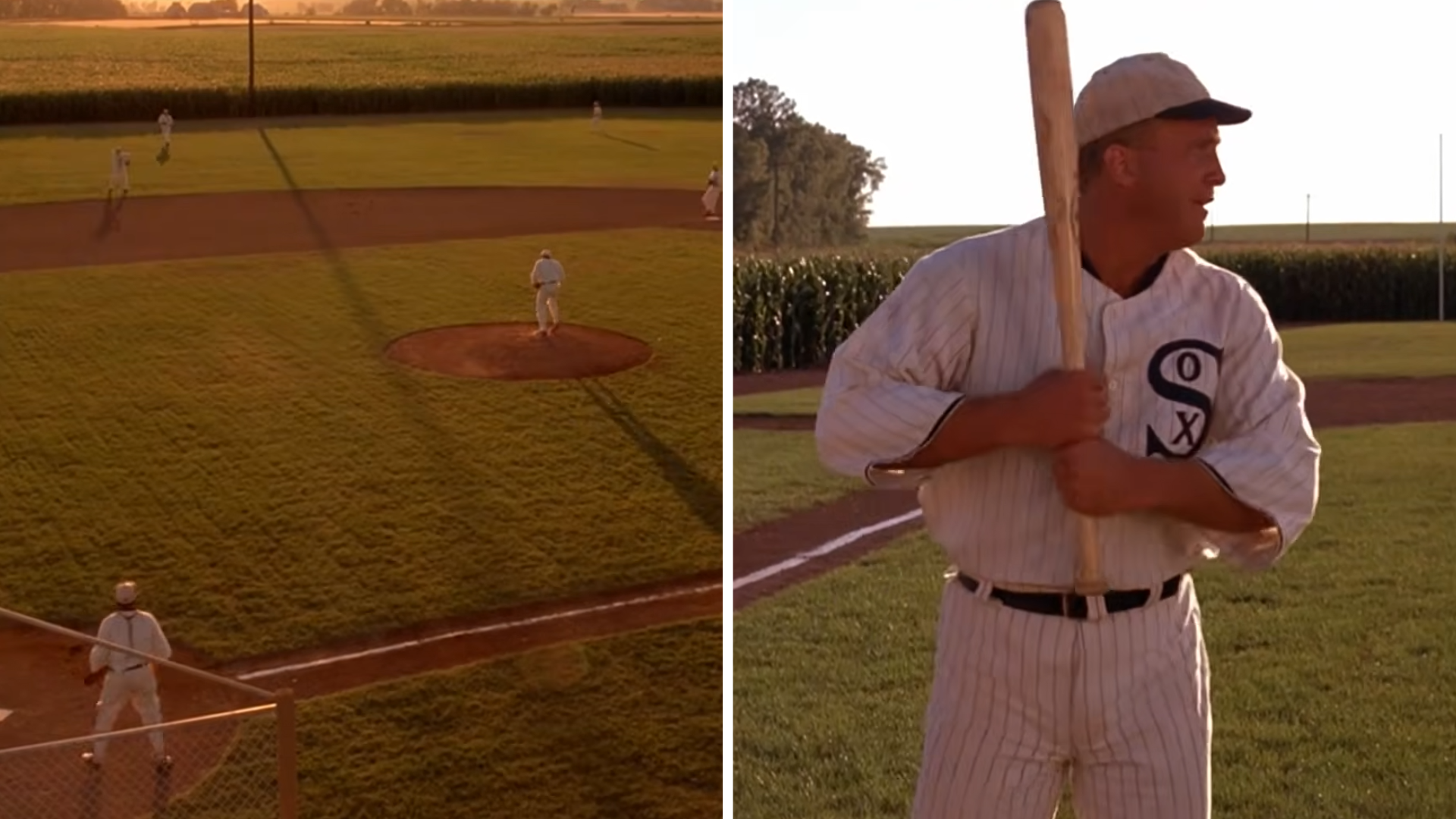
Field of Dreams (1989) does not recreate one single era of baseball. Its Iowa field becomes a meeting place for several of them, from Shoeless Joe Jackson and the 1919 White Sox to Moonlight Graham’s brief major-league career in 1905 and the memories Ray Kinsella carries from playing catch with his father.
The setting helps tie those different periods together. Instead of a modern stadium, the players return to a simple diamond surrounded by corn, wooden bleachers, and open farmland. By the time Terrence Mann talks about generations returning to watch their childhood heroes, the movie has already made the past feel physically present.
1. The field rises directly out of an Iowa cornfield
The location does much of the nostalgic work before any of the old players appear. Director Phil Alden Robinson eventually chose the Lansing farm near Dyersville partly because it stood largely by itself and was surrounded by corn, exactly the sort of landscape the filmmakers wanted around Ray’s field. The neighboring Ameskamp property was also needed to fit the full dimensions of the diamond, while the production had to irrigate the area during a difficult growing season to get the corn ready for filming.
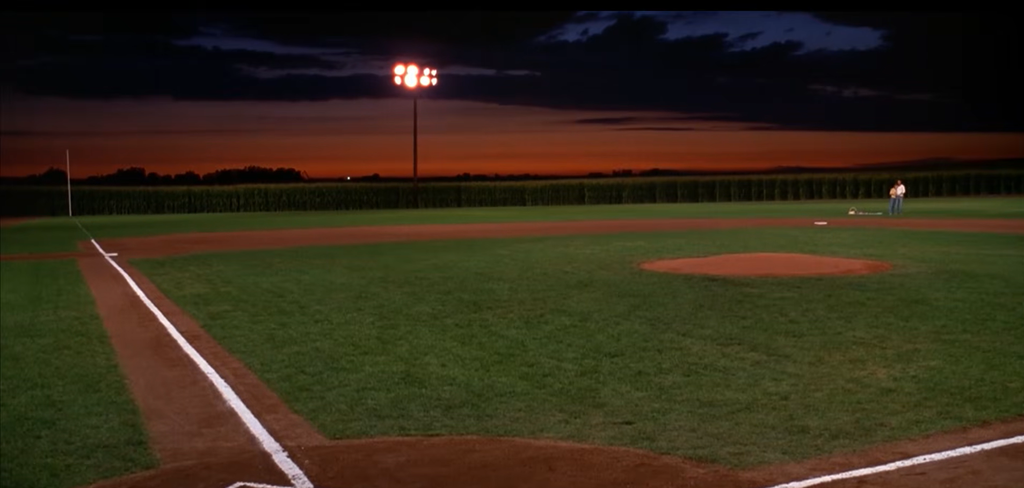
2. Ray’s homemade field keeps everything simple
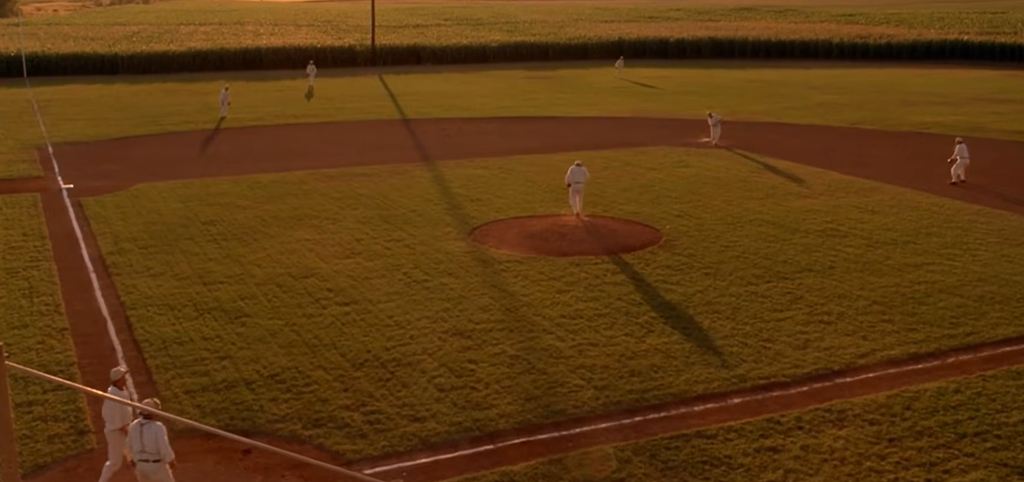
Ray builds a place to play rather than anything resembling a major-league stadium. There are modest wooden bleachers, a backstop, grass, and dirt, with the farmhouse still sitting nearby. Nothing separates the field from the rest of Ray’s property except the shape he has carved into the crops, which gives it the feeling of the neighborhood and rural diamonds where generations of people first encountered the game.
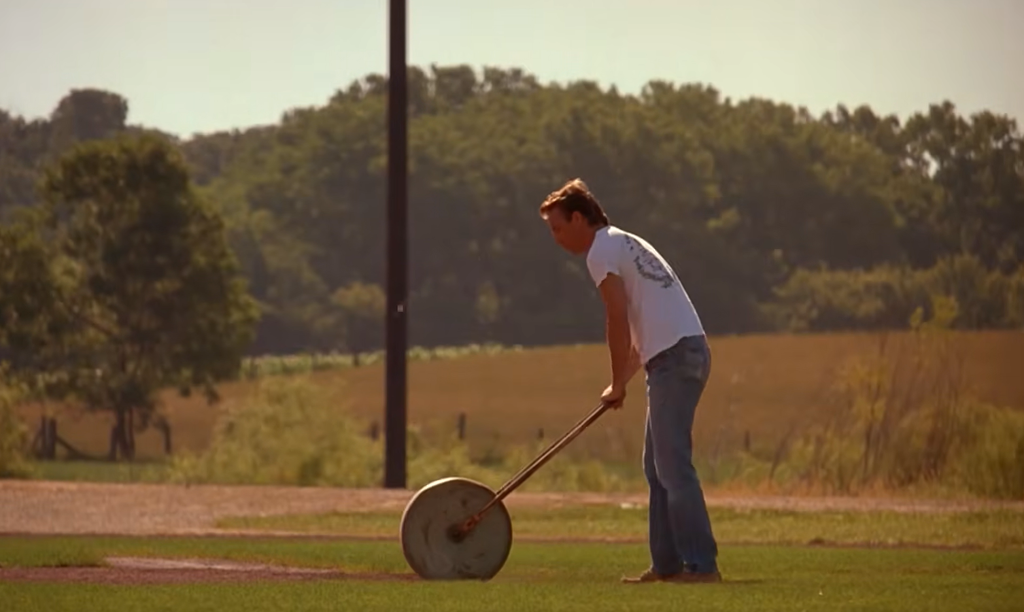
3. There is almost nothing to distract from the game itself
The field has no giant screens, elaborate upper decks, or layers of advertising around the action. When the players take the field, the strongest visual elements are their uniforms, the grass, and the wall of corn beyond them. The stripped-down setting fits Mann’s later description of spectators sitting in their shirtsleeves and remembering where they watched their heroes as children, because the movie has removed nearly everything except the game and the memories attached to it.
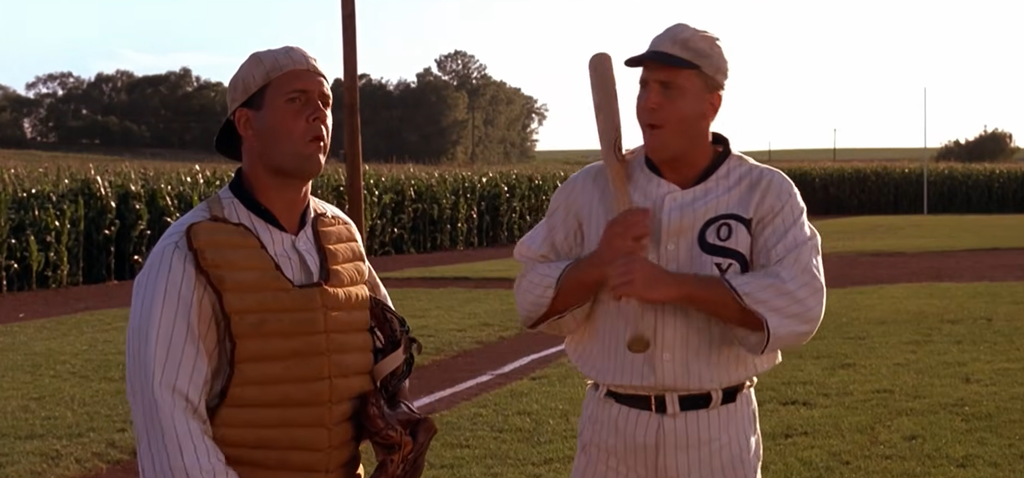
4. The ghost players bring 1919 back with them
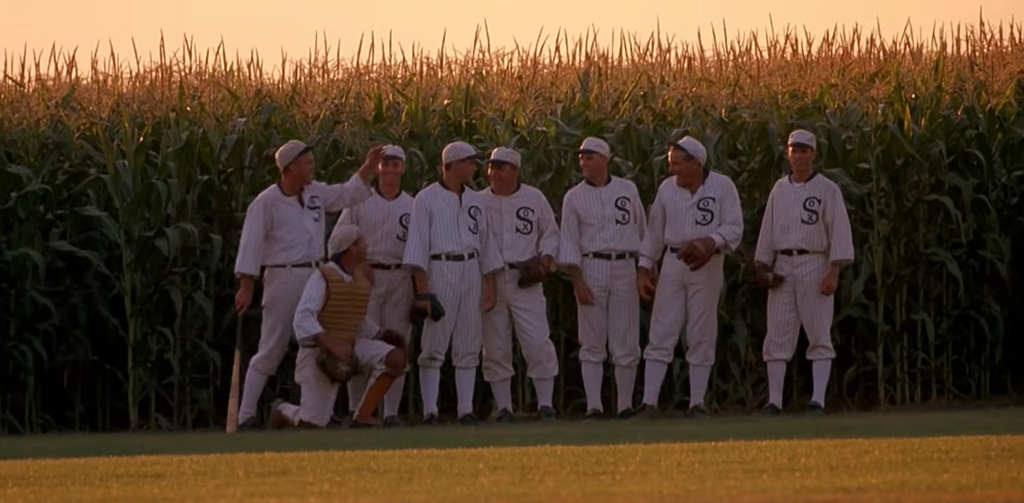
Shoeless Joe is eventually joined by other members of the 1919 Chicago White Sox, and their old-fashioned uniforms immediately give Ray’s field another time period. The real team remains closely associated with the Black Sox scandal, in which eight White Sox players were accused of involvement in a scheme to fix the 1919 World Series. Field of Dreams turns that history into something much more wistful, letting the players appear young again and return to a game they had lost the chance to play.
5. Their equipment helps complete the early-baseball look
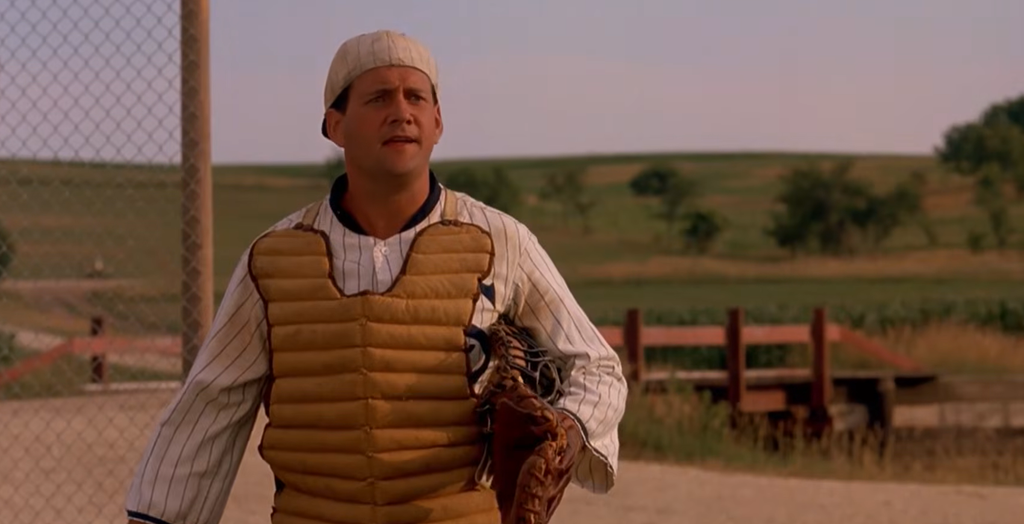
The period feeling extends beyond the jerseys. The players carry wooden bats and smaller leather gloves, and their caps, high socks, and loose-fitting uniforms create a silhouette noticeably different from the game Ray would have watched in the late 1980s. The movie rarely stops for a close-up just to announce that an object is old; the equipment is simply there in their hands while they practice and play, making the historical detail feel part of everyday life.
6. Baseball’s past literally walks out of the corn
The players could have been introduced with an elaborate supernatural effect, but Field of Dreams gives them a much simpler entrance. They walk through the corn at the edge of the outfield and onto Ray’s grass, making the crops function almost like a curtain separating the present from another era. The image became so closely associated with the movie that later events at the Dyersville site have recreated players emerging through the corn in period uniforms.
7. Shoeless Joe gives the fantasy a real historical anchor
Ray Liotta’s Shoeless Joe is not an invented symbol of old baseball. Jackson played for the White Sox from 1915 through 1920 and was one of the eight players indicted following the 1919 World Series scandal. His real history is more complicated than the almost mythical figure Ray remembers through his father, but that tension is part of the movie’s nostalgia: Ray did not grow up knowing Jackson personally, only through stories passed down by someone who loved watching him play.
8. Moonlight Graham takes the movie back to 1905
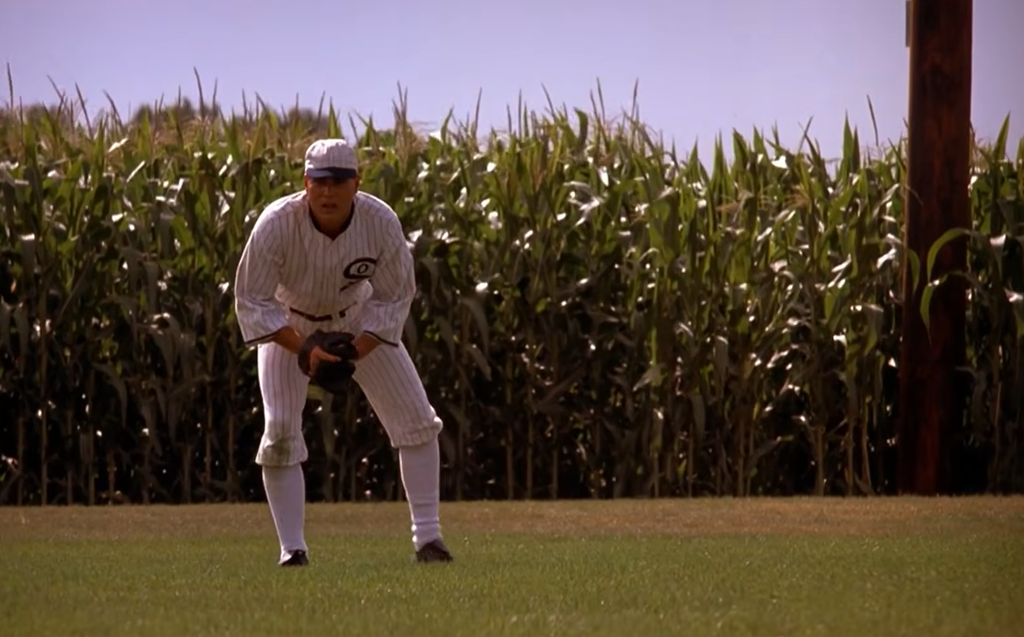
Archibald “Moonlight” Graham reaches even further into baseball history. The real Graham appeared for the New York Giants on June 29, 1905, entering late in a game as a right fielder without ever getting a turn at the plate. Field of Dreams gives that tiny entry in the record books an imagined second chance, allowing the young Graham to step onto Ray’s field before the older Doc Graham later chooses to leave it behind to help Karin.
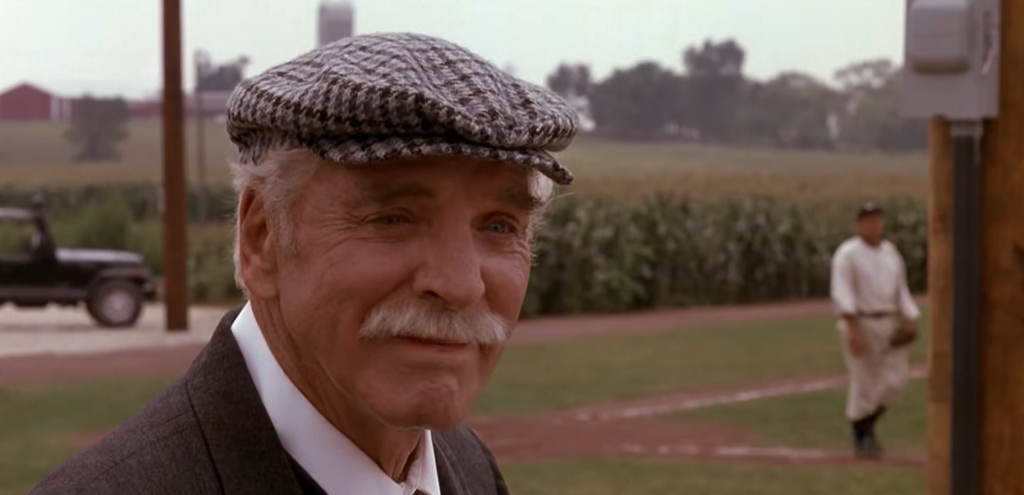
9. Ray’s father makes the nostalgia personal
The old uniforms and famous names eventually lead to something much smaller: Ray playing catch with his father. John Kinsella appears as the young catcher Ray remembers rather than the older man with whom his relationship became difficult, allowing father and son to meet through the version of baseball that connected them in the first place. Their final game of catch needs no crowd or professional stadium, only two gloves and the same simple field Ray built at the beginning of the story.
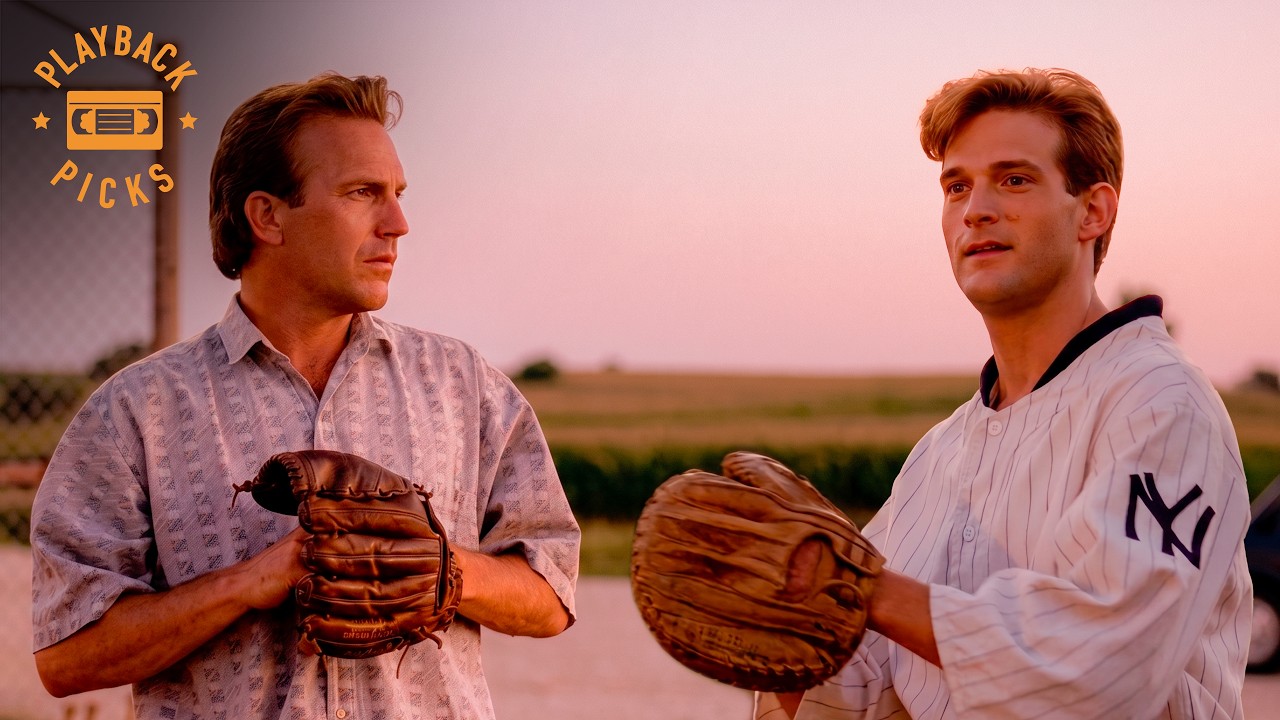
10. Terrence Mann explains why the past still matters
James Earl Jones’ speech gives words to images the movie has been building for nearly two hours. Mann imagines visitors sitting along the baselines where they once sat as children, remembering their heroes while the world outside the field continues changing. His argument that baseball has helped mark the passage of American time connects Shoeless Joe, Moonlight Graham, John Kinsella, and Ray without pretending they all belong to the same generation. On this field, they do.
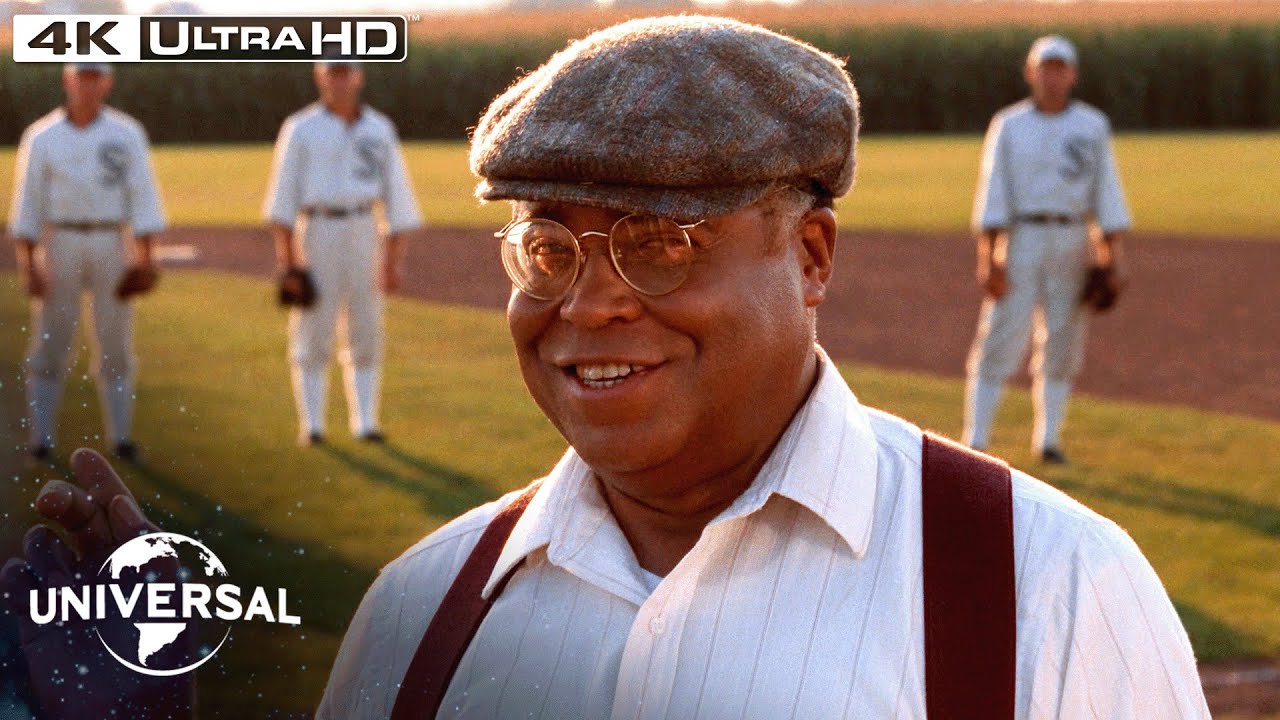
To Watch or Buy Field of Dreams, click here: https://www.amazon.com/Field-Dreams-Kevin-Costner/dp/B000I9S668