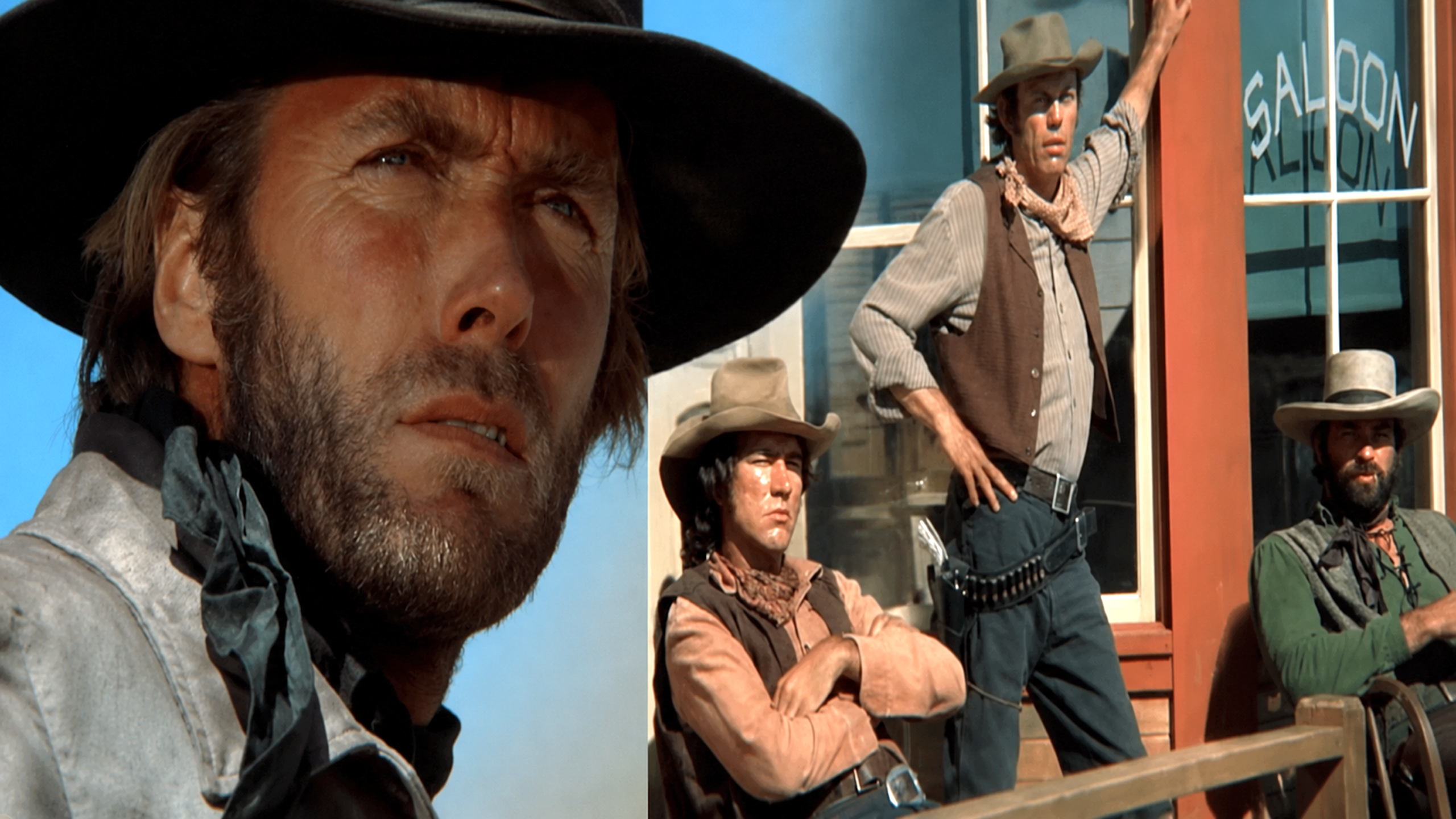
For a generation that did not grow up with Westerns, it can be hard to understand the particular thrill of watching a stranger ride into town and knowing that trouble is coming. The looks from the locals, the silence in the saloon, the tension in a barbershop, and the feeling that a gunfight is only seconds away were all part of the language of the genre. Clint Eastwood had a deep understanding of that language, and High Plains Drifter offers a clear lesson in how those scenes worked.
Released in 1973, High Plains Drifter stars Clint Eastwood as a mysterious stranger who rides into the small mining town of Lago and is soon pulled into a violent conflict with its residents. It was Eastwood’s second film as a director, coming at a point when he had already become one of Hollywood’s most recognizable faces. The movie gave him another chance to play with the conventions of the Western, and here are 6 key moments showing how he does it.
1. The Stranger Rides Into Town
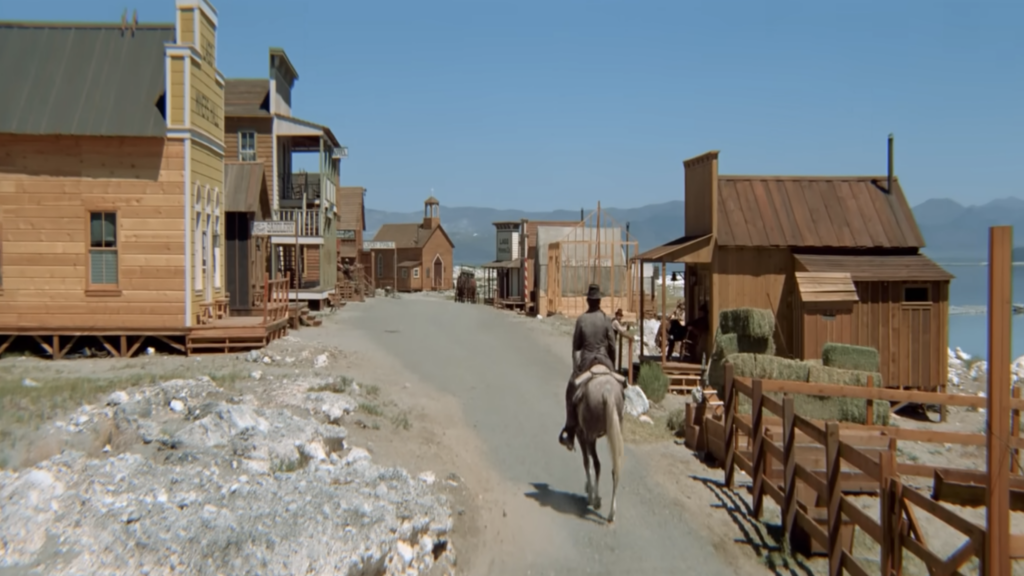
A stranger rides into town in broad daylight, surrounded by mountains, heat, and an almost empty landscape. His clothes, his horse, and the way he approaches the town already tell us something about him before he says a word. High Plains Drifter draws on a visual language Western audiences had already learned to recognize: the mysterious outsider, the small town, and the feeling that his arrival is about to change everything.
2. The Town Watches Back
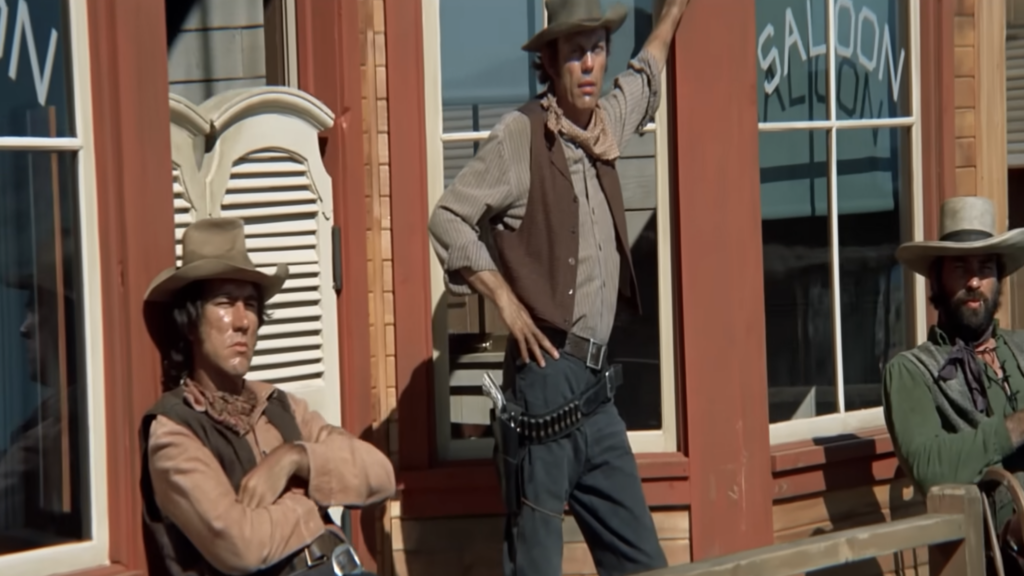
The residents do not need to say a word to make their feelings clear. Their looks follow the stranger as he moves through town, while the guns hanging from their belts communicate that he has entered a place where trouble is never far away. It is a simple Western language that audiences came to recognize instantly: the stranger arrives, the town watches, and everyone is waiting to see what happens next.
3. The Stranger Does Not Back Down
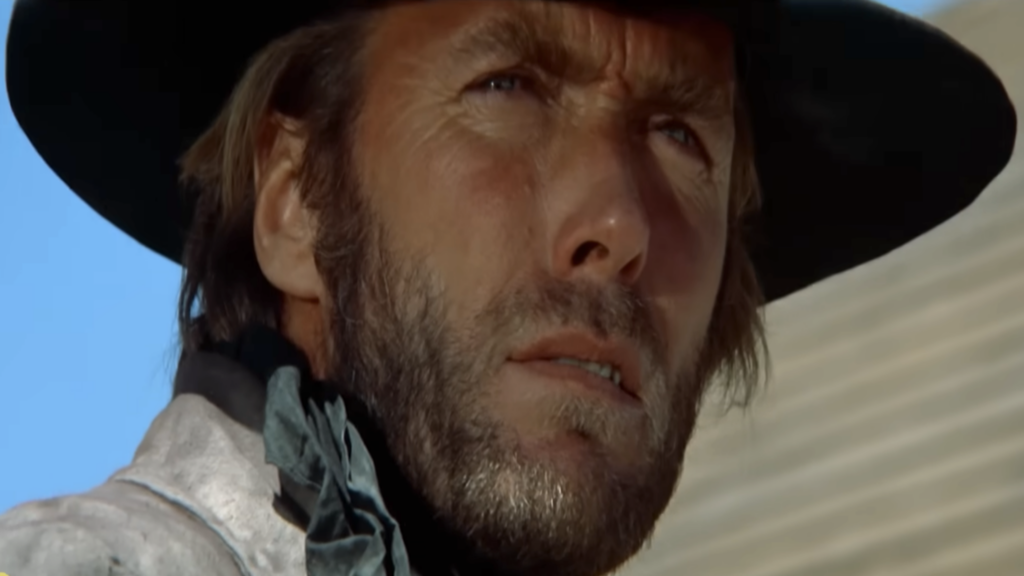
From horseback, the Stranger seems completely unfazed by the people watching him. Clint Eastwood gives the character a quiet confidence that comes through in his posture and especially in his eyes. He does not look nervous or intimidated, even when the town makes it clear that he is not exactly welcome. His expression suggests that intimidation is not going to work on him.
4. The Hand on the Gun Signals What Is Coming
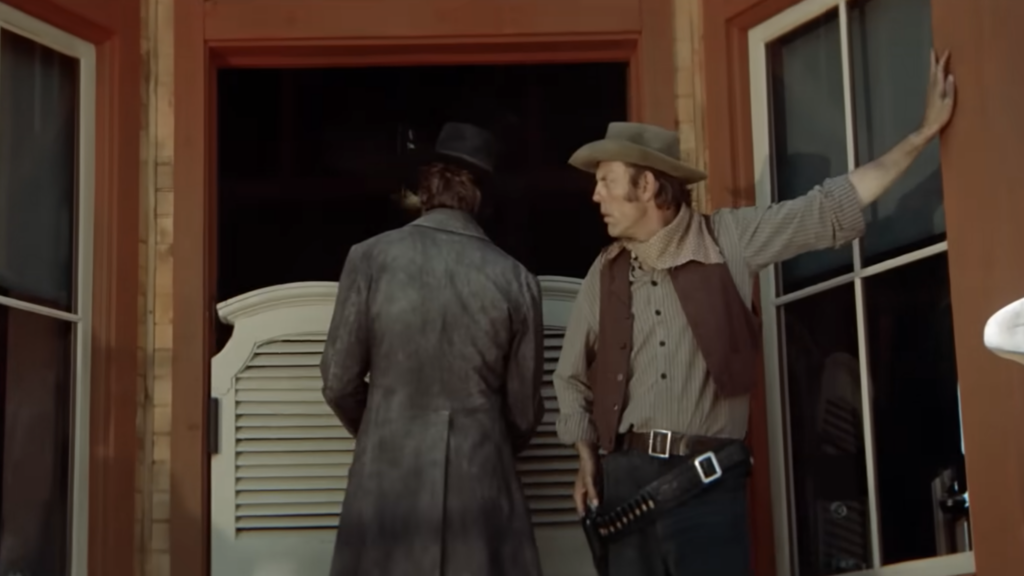
As the Stranger enters the saloon, one of the locals reaches for his gun almost casually. Nothing has happened yet, but the gesture already feels like a warning. In a Western, a hand moving toward a holster can say almost as much as dialogue: the tension is no longer a possibility but a threat that is about to become real.
5. Everyone Knows This Scene
The saloon scene feels instantly familiar because movies have returned to this kind of standoff for decades. The stranger walks in, the locals watch him, a hand moves toward a gun, and the tension keeps building as everyone waits for the first move. Versions of this setup would later appear everywhere, from westerns to comedies that parody the same visual language. The best part? Not a single word needs to be spoken. The looks, the silence, and the hand near the gun tell us everything we need to know.
6. Never Interrupt a Man at the Barbershop
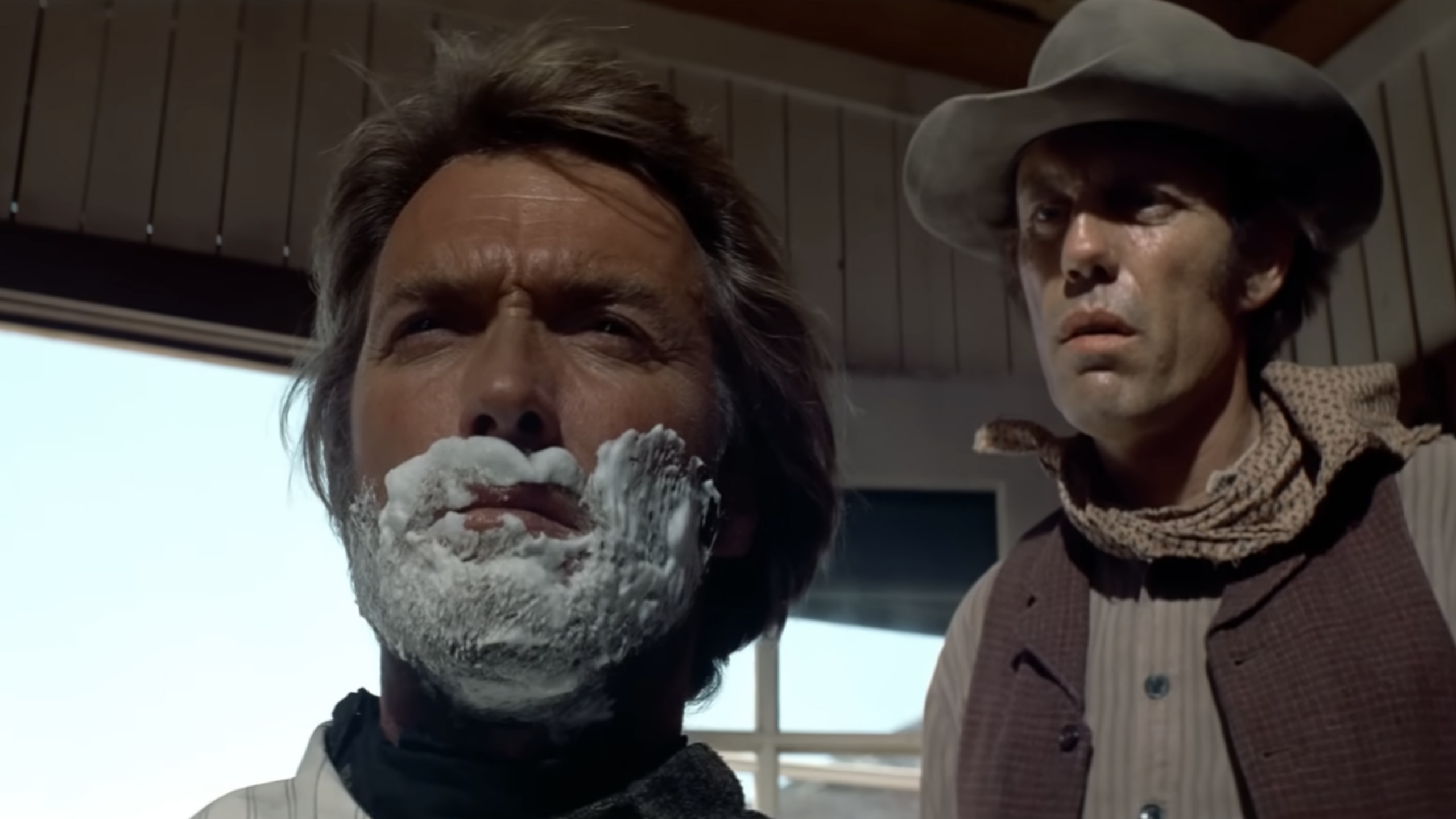
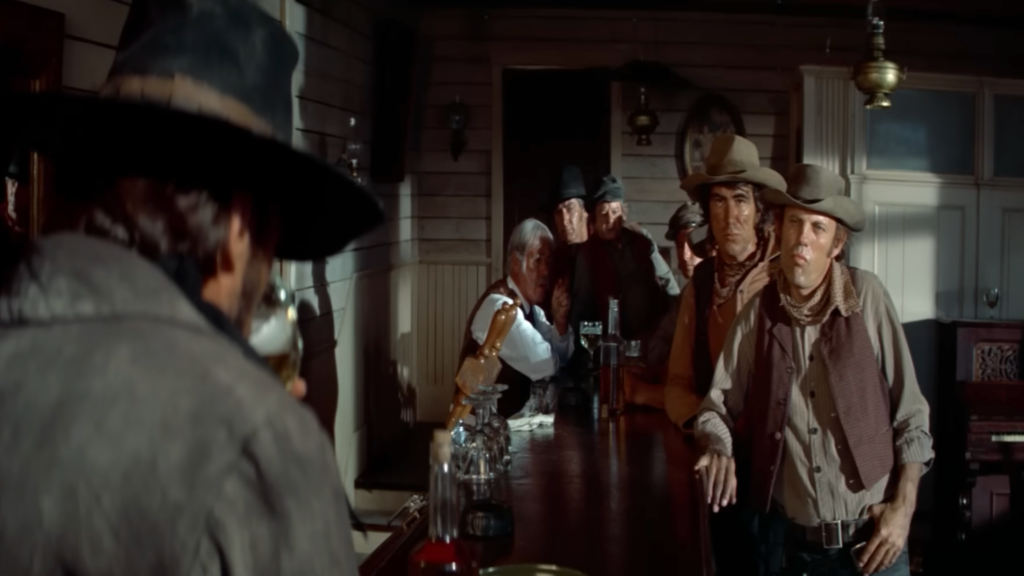
The Stranger makes one last stop at the town barbershop, but the locals seem ready to settle things once and for all. There is something almost ridiculous about choosing a barber’s chair for a showdown, yet that only makes the tension stronger. He sits back as if nothing is wrong, the men around him prepare for trouble, and then a burst of gunfire breaks the silence. By this point, the movie has already taught us what to expect. The setting, the looks, and the silence have done most of the work before the first shot is fired.