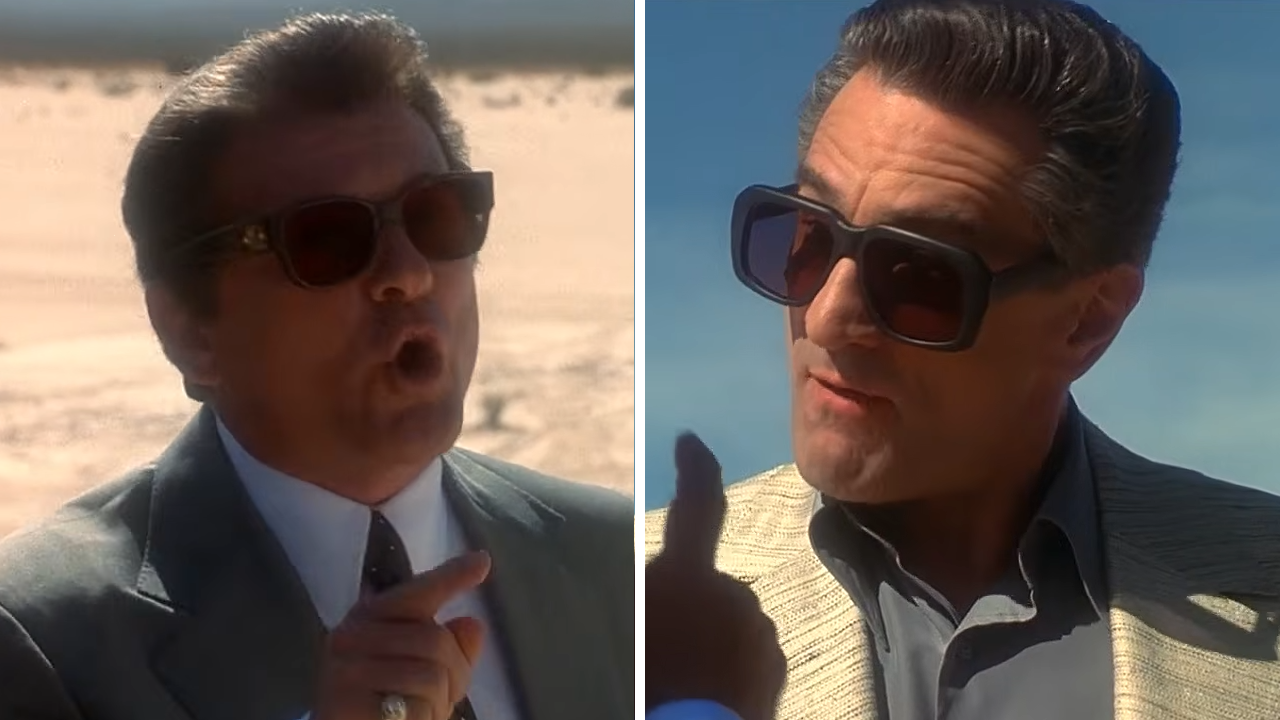
In Casino (1995), by the time Ace and Nicky meet in the desert, their friendship is already in bad shape. Ace thinks Nicky is drawing too much attention to the casino. Nicky thinks Ace has forgotten who helped make his position possible. Neither man arrives interested in hearing the other one out.
That tension feels unusually messy for a scene this controlled visually. Robert De Niro and Joe Pesci interrupt each other, repeat themselves, and keep dragging old resentments into the argument. Martin Scorsese wanted that roughness preserved, even if it meant changing how the entire scene was photographed.
1. De Niro and Pesci were allowed to improvise
Scorsese later identified the desert confrontation as one of the important Casino scenes where the dialogue was opened up to improvisation. The basic conflict was already there, but De Niro and Pesci had room to push and interrupt each other instead of treating every exchange like something that had to land on an exact cue.
That helps explain why the argument sometimes sounds less like movie dialogue and more like two people who have had versions of this fight before. They talk over each other, double back and get increasingly annoyed when the other man refuses to accept his version of events.
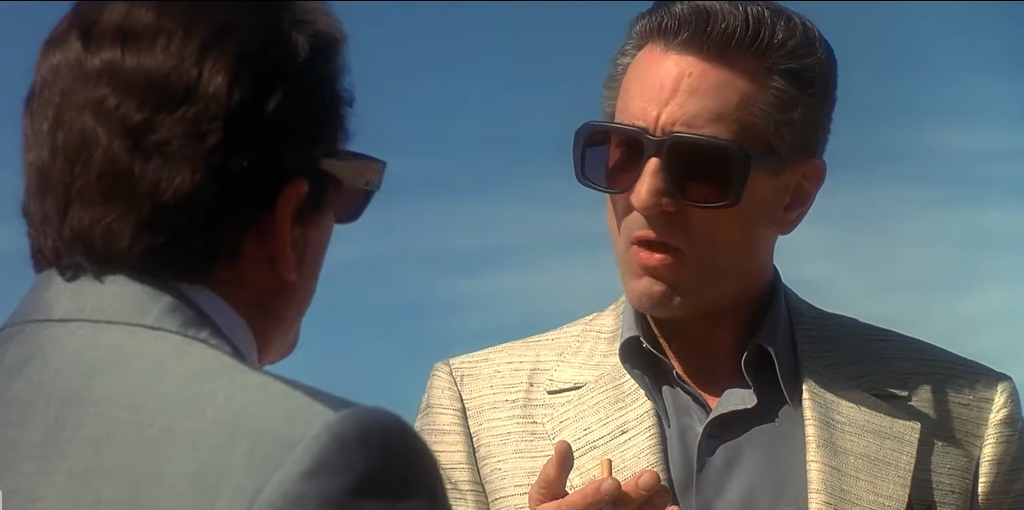
2. The screenplay already gave them a strong framework
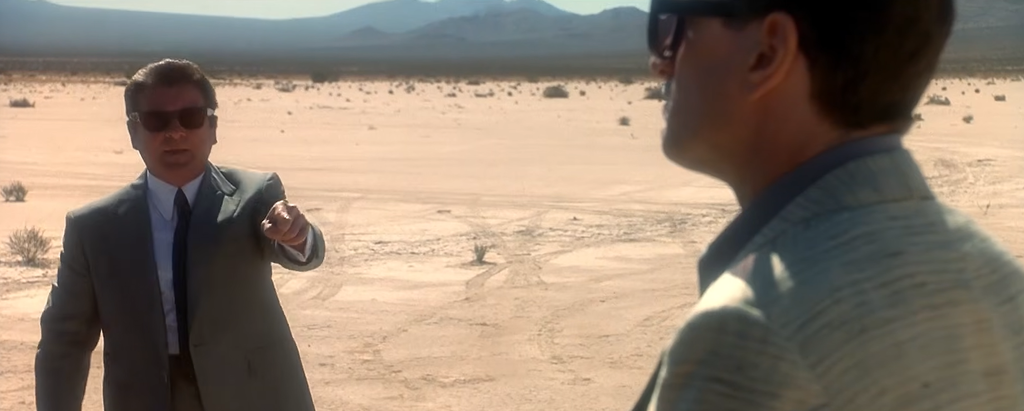
Improvised doesn’t mean Scorsese simply put the actors in the desert and told them to argue. The screenplay already has Ace arriving nervous, Nicky storming up to him, and the conversation turning into a dispute over unwanted attention, loyalty, and who really holds power in Las Vegas.
The actors were therefore working inside a scene with a very clear destination. What they could loosen was the route they took getting there, which is part of why the final exchange feels spontaneous without becoming shapeless.
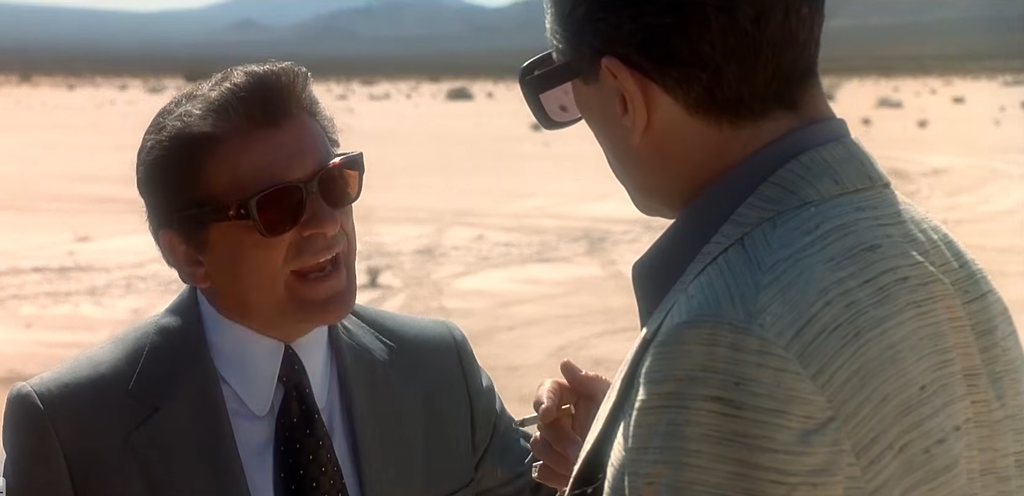
3. Scorsese wanted two cameras running at once
Cinematographer Robert Richardson said Scorsese wanted De Niro and Pesci covered simultaneously so he wouldn’t lose anything that happened during the improvisation.
That matters with two actors who react as much as they speak. If Pesci suddenly changes his delivery, De Niro’s immediate response is there too. There’s no need to rebuild the moment later while shooting the other side of the conversation.
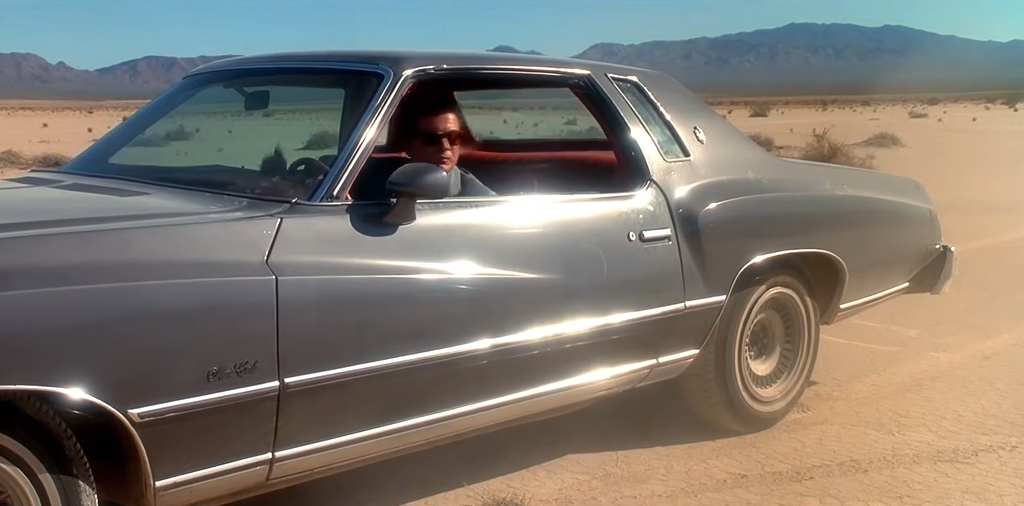
4. That decision forced Richardson to change the lighting
Richardson originally intended to rely much more heavily on backlight. Once it became clear that both cameras needed usable images at the same time, that plan stopped being practical.
Instead of making the actors conform to the lighting setup, the crew adapted the lighting around the way Scorsese wanted them to perform. It’s a nice example of the photography serving the acting rather than the other way around.
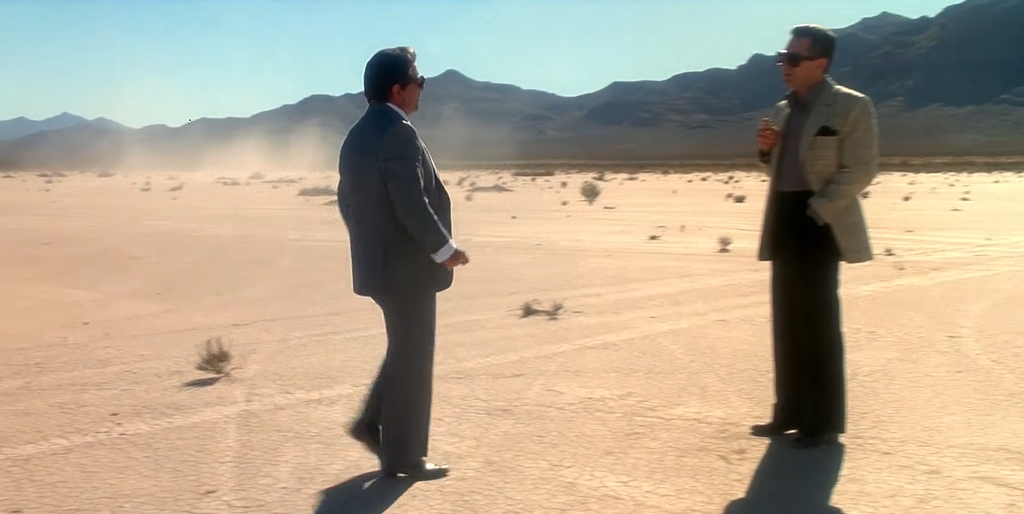
5. De Niro and Pesci are actually lit differently
The compromise produced a slightly odd setup. Richardson put the backlight on Pesci, while De Niro received harder frontal and overhead light.
It wasn’t originally conceived as some grand visual metaphor for Ace and Nicky being on opposite sides. It came out of the practical problem of keeping two cameras rolling while the actors improvised. Still, the difference works nicely in a scene where they can barely agree on anything.
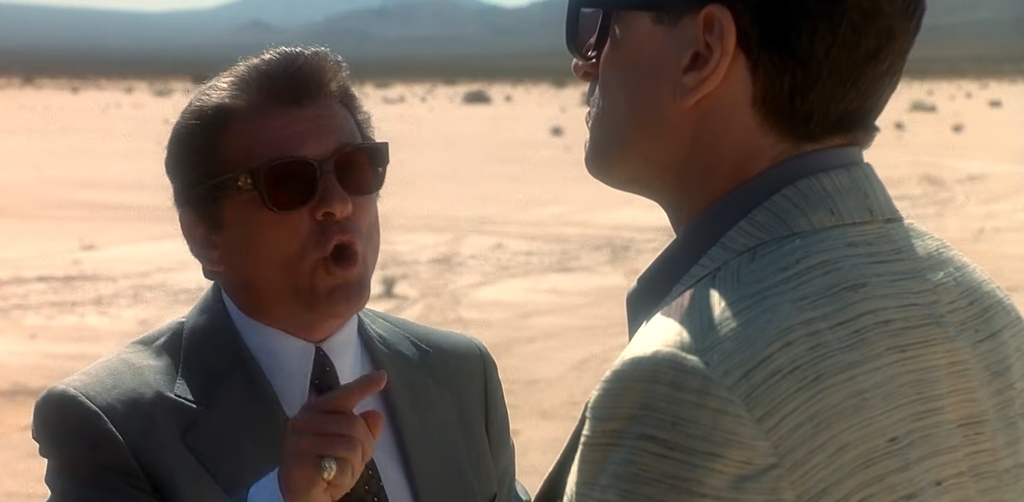
6. The desert gave them harsh light for most of the day
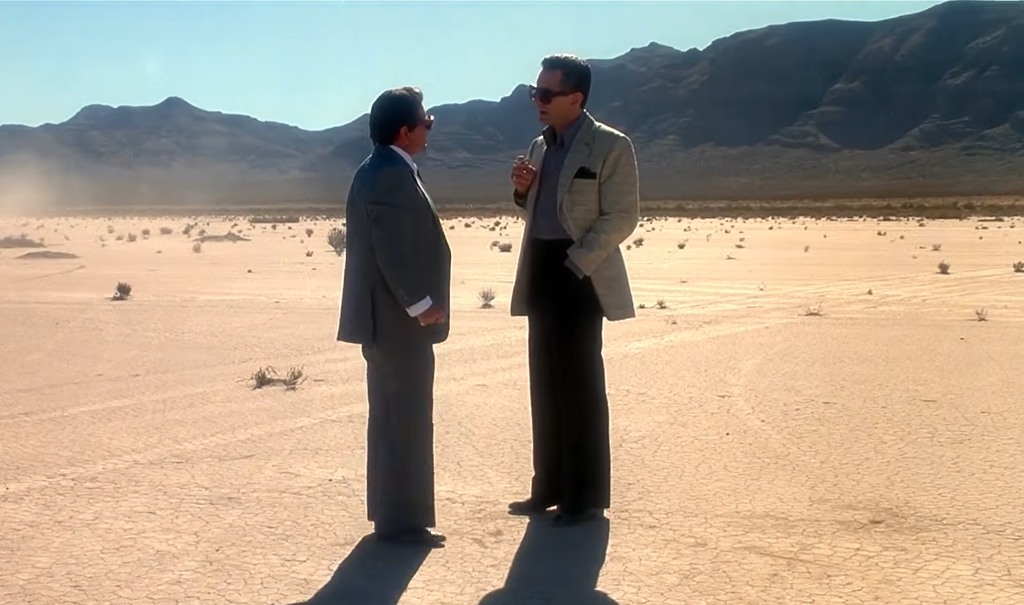
Richardson remembered the location producing steep light that looked close to midday from roughly 9 a.m. until 4 p.m. That made the confrontation feel exposed in a way the casino interiors rarely do.
There are no soft lamps, smoky rooms, or glowing signs to hide behind. Ace and Nicky are standing under hard daylight with almost nothing around them, which suits a scene where all the polite layers have finally dropped away.
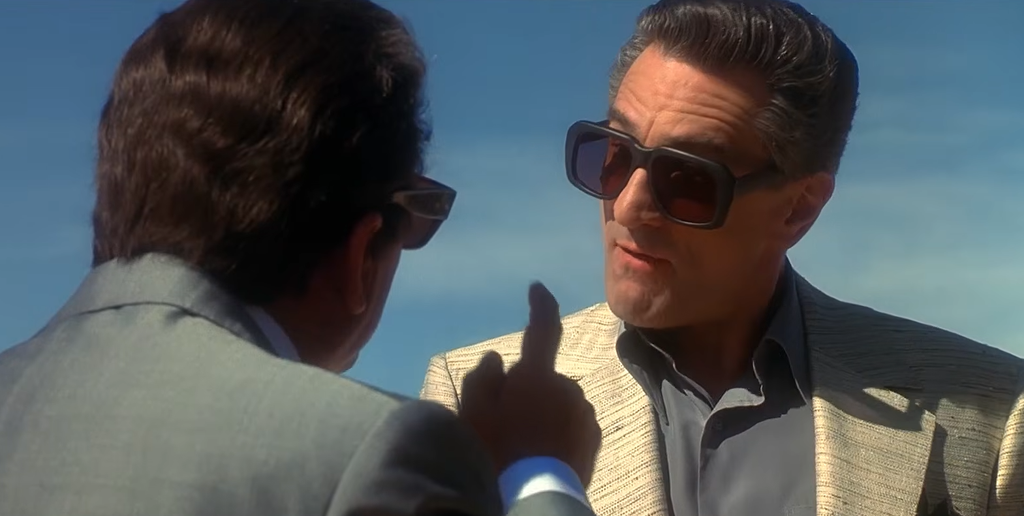
7. The color palette is almost the opposite of Las Vegas
Richardson also liked what that light did to the landscape. The pale dry ground pushed against a heavily saturated blue sky, creating a much cleaner and harsher image than the reds, golds, and artificial lighting that dominate so much of Casino.
After spending so much time inside a movie obsessed with spectacle, the argument happens somewhere almost empty. De Niro, Pesci, two cars and an open desert are basically all Scorsese needs.
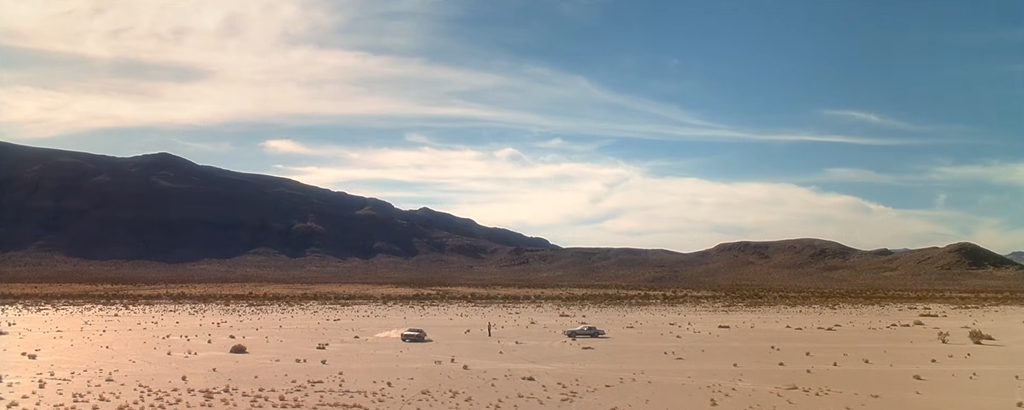
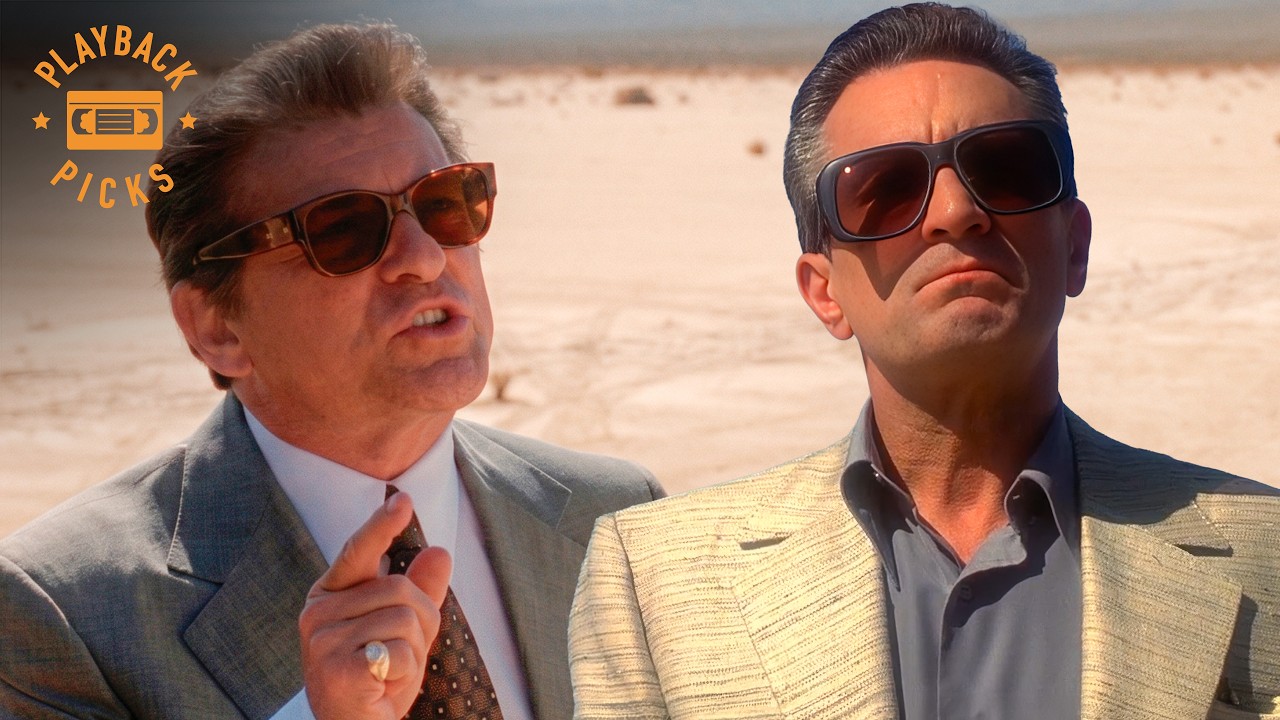
8. Ace is frightened before Nicky even arrives
The screenplay doesn’t wait for the argument to tell us how worried Ace is. He stands alone studying the landscape and becomes increasingly aware of how isolated he is. By the time he sees Nicky approaching, he has already decided his chances of getting back safely feel much worse than usual.
The script even specifies that Nicky’s car first appears as a reflection in Ace’s sunglasses. It’s a small visual idea, but it lets the scene begin with Ace anticipating trouble before Pesci says a word.
9. The real argument is about two different kinds of power
Ace believes power comes from keeping the casino running, staying useful to the people above him, and building enough public visibility that officials can’t push him around quietly. Nicky thinks that version of power only exists because men like him made it possible in the first place.
That’s why their disagreement gets personal so quickly. They aren’t just arguing about whether Nicky should leave town for a while. Each man is basically telling the other that he has misunderstood who made whom important.
10. Ace and Nicky came from a real relationship that also fell apart
The characters were based primarily on Frank “Lefty” Rosenthal and Anthony Spilotro, two Chicago associates whose lives in Las Vegas increasingly became tangled together. Rosenthal later recalled that Spilotro’s arrival brought immediate law-enforcement attention, with investigators assuming Rosenthal was the casino insider and Spilotro the muscle behind him.
That doesn’t mean the exact desert argument happened as shown. Casino dramatizes and reshapes real events. But the basic problem underneath the scene was real enough: Rosenthal wanted to operate in Vegas while Spilotro’s growing notoriety made staying unnoticed much harder.
To Watch or Buy Casino, click here: https://www.amazon.com/Casino-Robert-Niro/dp/B0019IMVDG