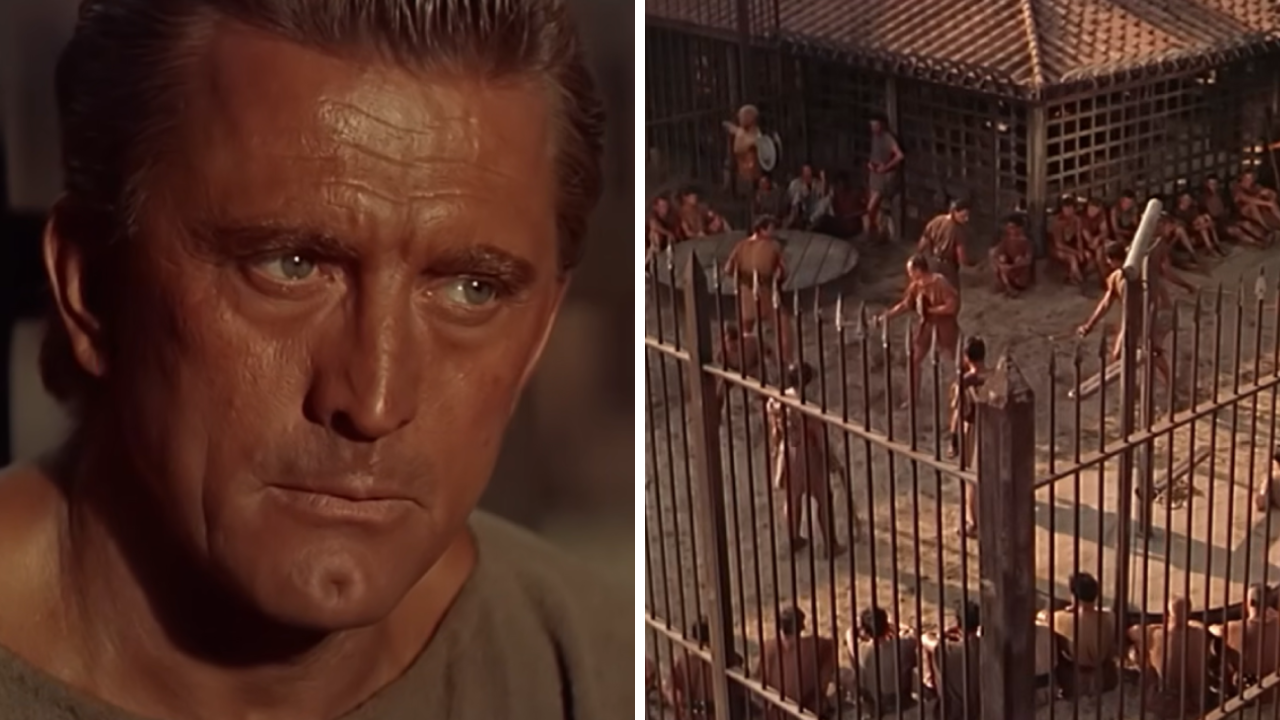
The training montage in Spartacus (1960) moves fast enough to make the Capua school feel like a machine. Kirk Douglas is pushed through exhausting drills, used as a living anatomy chart, watched by guards, mocked by Marcellus, and finally tested in practice combat.
Behind those few minutes is a surprising amount of production history. Saul Bass helped shape the school itself, the sequence belongs to the part of filming where Anthony Mann gave way to Stanley Kubrick, and Dalton Trumbo’s screenplay explains several details the movie barely pauses to show.
1. Saul Bass helped design the gladiator school
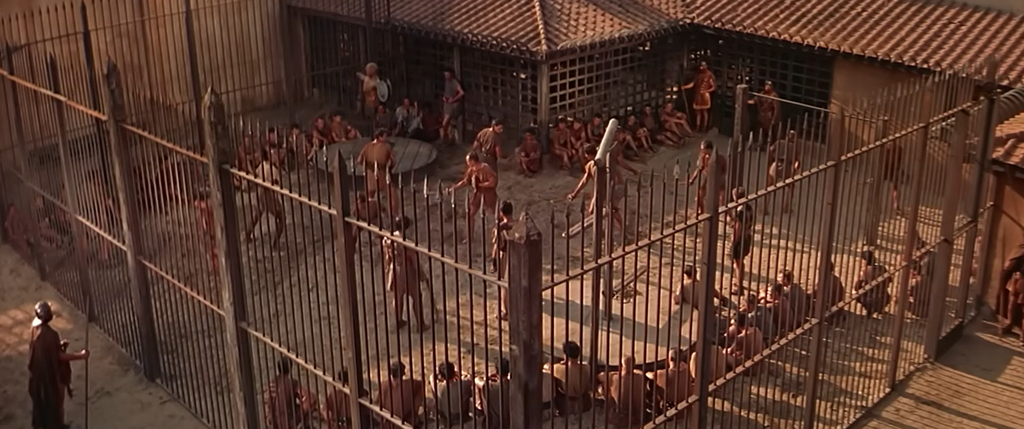
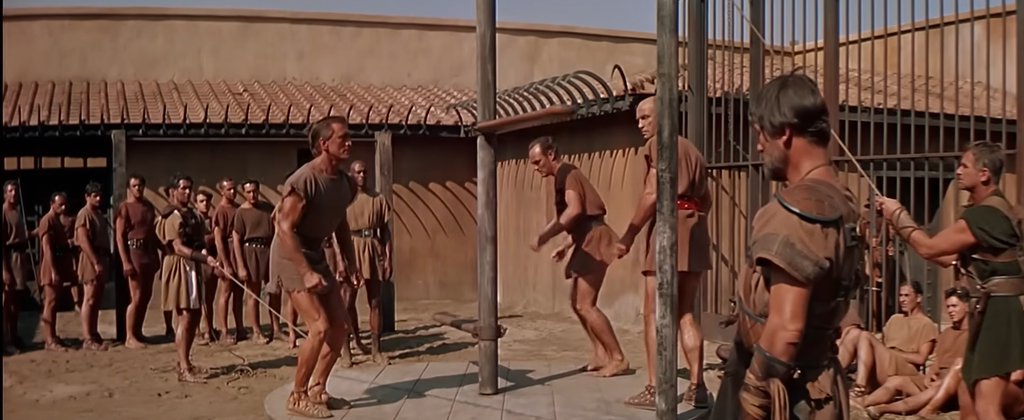
Saul Bass is usually associated with the striking opening titles of Spartacus, but Kirk Douglas hired him for much more than that. Bass worked as a visual consultant on the film, and his responsibilities included conceptualizing and designing the gladiatorial school.
That makes the training yard more than a backdrop for Douglas. The ramps, open spaces, and strange equipment are part of a setting that had been carefully planned to make the school feel like its own controlled world.
2. The school was where the movie changed directors
Anthony Mann began Spartacus and directed the opening mine material before production moved to the gladiator school. According to TCM, it was during this stretch that Douglas and Mann clashed over the direction, especially Mann’s work with Peter Ustinov.
Douglas dismissed Mann on February 13, 1959, and Stanley Kubrick was shooting by February 16. That does not mean every image in this particular montage can be assigned neatly to one director, but the Capua material sits right at one of the biggest turning points in the film’s production.
3. The color system was written into the screenplay
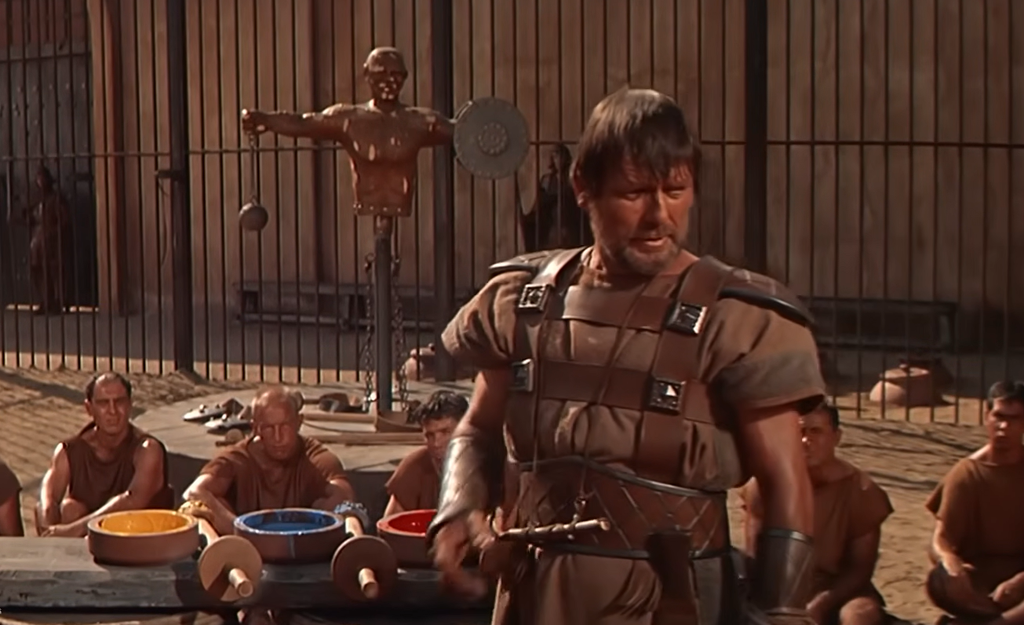
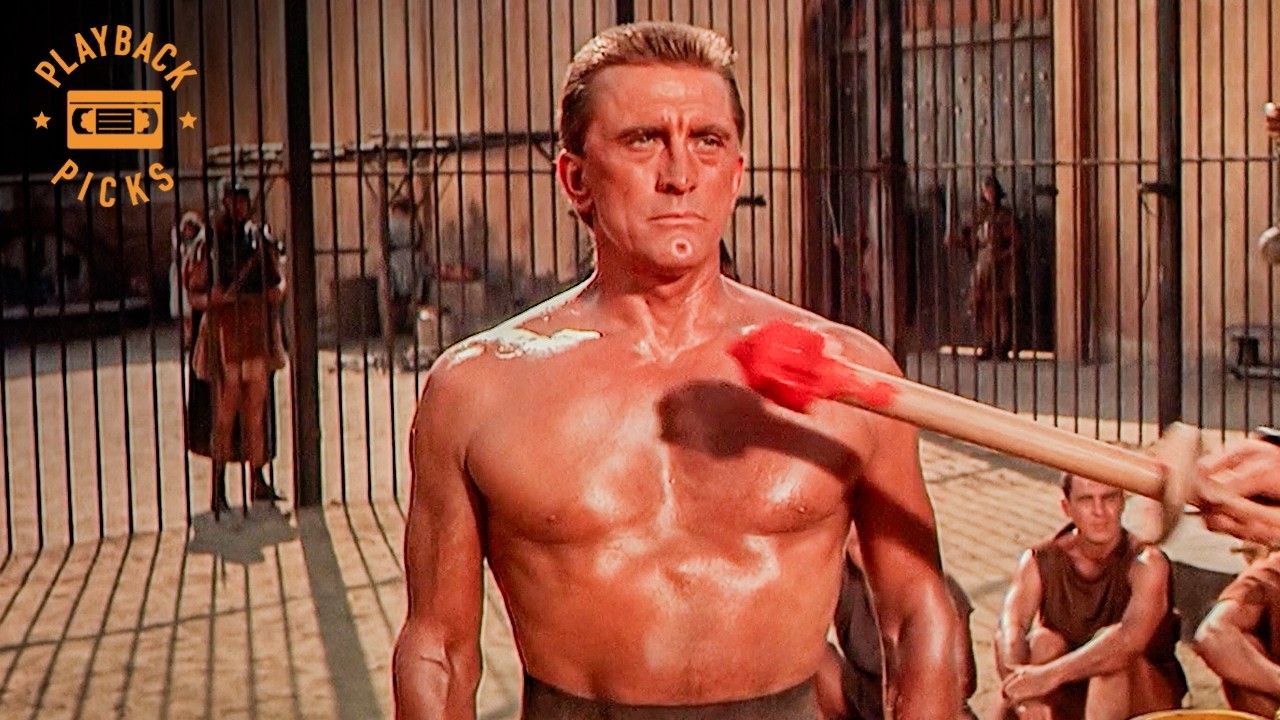
The lesson where Marcellus uses Spartacus to demonstrate different target areas was already laid out in Trumbo’s screenplay. The script describes Spartacus as marked in several colors “like a map” before Marcellus explains what each one means.
Red marks an immediate fatal strike, yellow a slower one and blue a disabling strike. The scene is memorable because it reduces Spartacus to a teaching aid, but it also gives the audience a quick visual explanation of the combat rules the trainees are expected to learn.
4. Those strange training machines were planned in detail
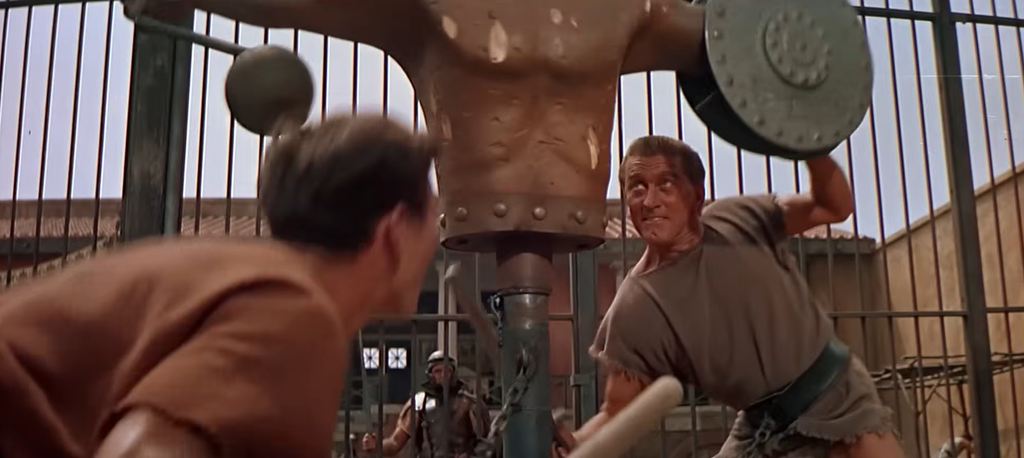
The apparatus in the opening section was not simply background decoration added to make the school look busy. Trumbo’s screenplay specifically identifies a blade machine and a mechanical shield-and-mace used to train the new gladiators.
The script even specifies padded leather coverings on the blades during one stage of training. Details like that help the montage feel less like a collection of random exercises and more like a system designed to teach timing, balance, and reactions through repetition.
5. The practice swords could record every strike
One of the easiest details to miss comes late in the montage, when the trainees begin fighting with wooden practice weapons. The screenplay explains that their leather tips were dipped in lamp-black, or soot, before the bouts began.
A successful strike therefore left a dark mark on the opponent. That makes the trainer’s call of “That’s a kill” near the end of the clip much clearer: the instructors have a simple visual way to judge exactly where a weapon landed.
6. Alex North scored the training as separate pieces
Alex North did not treat the entire sequence as one anonymous stretch of background music. The complete soundtrack includes cues titled “Training The Gladiators,” “Painting,” and later “Training The Gladiators #2.”
That division matches the way the montage keeps changing its focus. Physical drills give way to the color-coded lesson, quieter character beats, and then combat practice, while North’s score helps connect those pieces into one extended passage.
7. The montage is also building Spartacus and Varinia
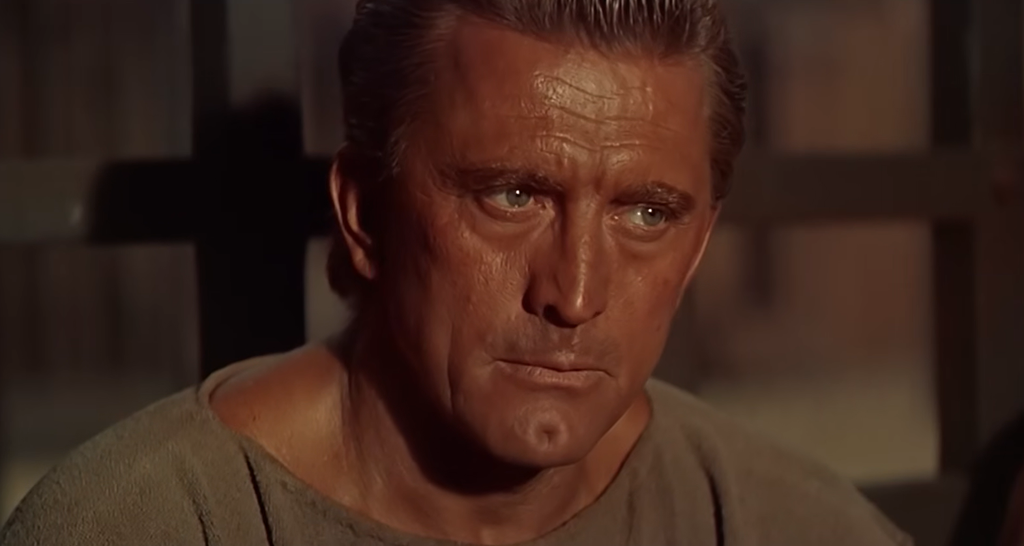
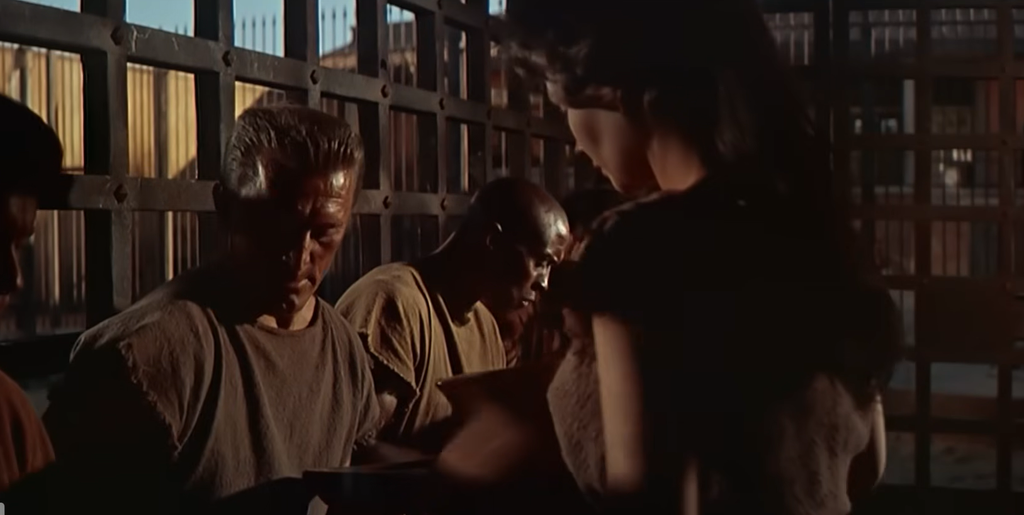
For all the emphasis on fighting, the sequence keeps returning to Varinia. Spartacus notices her during Marcellus’ lesson, which gives Marcellus another excuse to humiliate him in front of the others. Later, the two get a much quieter moment when Spartacus asks whether she was hurt.
Those brief interruptions keep the montage from becoming purely mechanical. Spartacus is learning how to survive inside the school, but the movie is also showing the connection with Varinia growing in the small spaces where the guards are not able to control every interaction.
To Watch or Buy Spartacus, click here: https://www.amazon.com/Spartacus-Stanley-Kubrick/dp/B0F4F46BCZ