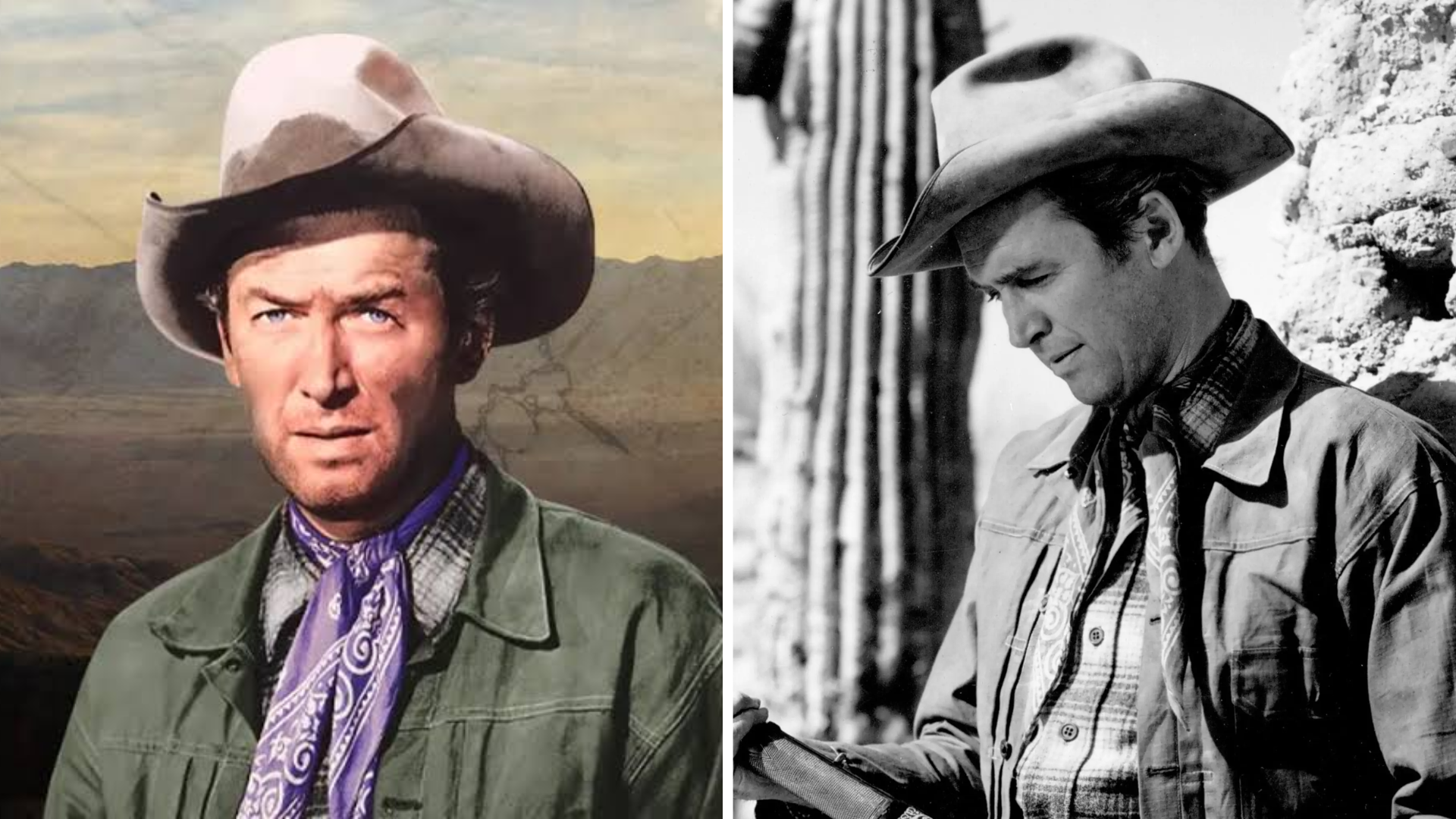
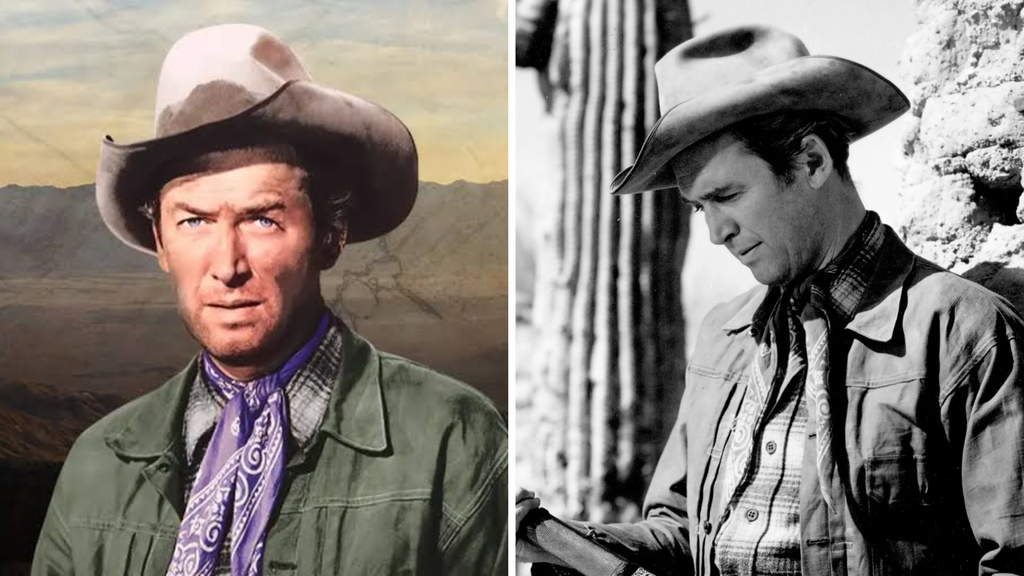
Before Winchester ’73 (1950), James Stewart was the guy you rooted for in Mr. Smith Goes to Washington (1939) and cried with at the end of It’s a Wonderful Life (1946). Decent, warm, a little bumbling in the best way. Then Anthony Mann handed him a rifle and a grudge, and something shifted. These seven moments from the film show exactly how Stewart traded in the good-natured everyman for a harder, quieter, more dangerous kind of hero.
1. Stewart enters Dodge City already hunting someone
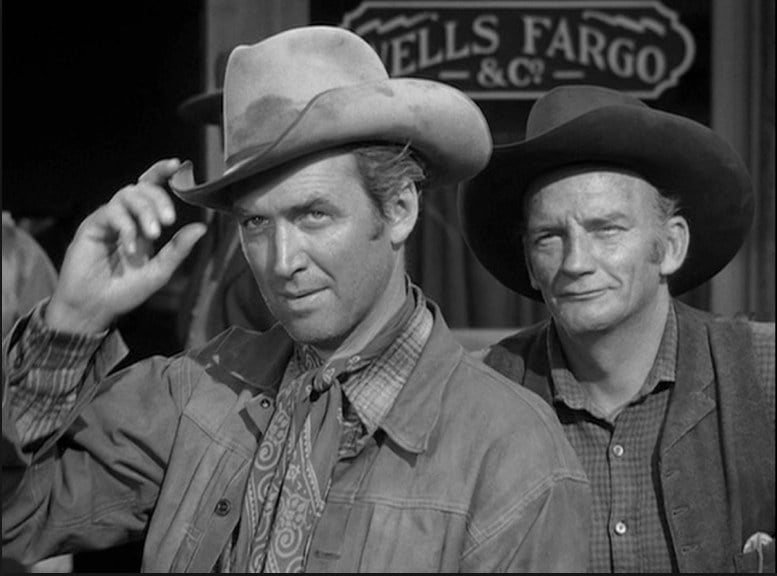
Lin McAdam rides into Dodge City with his partner, High-Spade, and Stewart plays the arrival with his eyes doing most of the work. He scans the crowd the way a man does when he is not sightseeing. Before a word of dialogue explains anything, the audience understands that Lin came to Dodge for a specific reason and that the reason is a person. Stewart had spent years playing characters who reacted to the world around them, from idealistic senators to small-town dreamers. Here he is the one setting things in motion, and the difference shows up in the first minute he is on screen.
2. His grip on the rifle says more than words
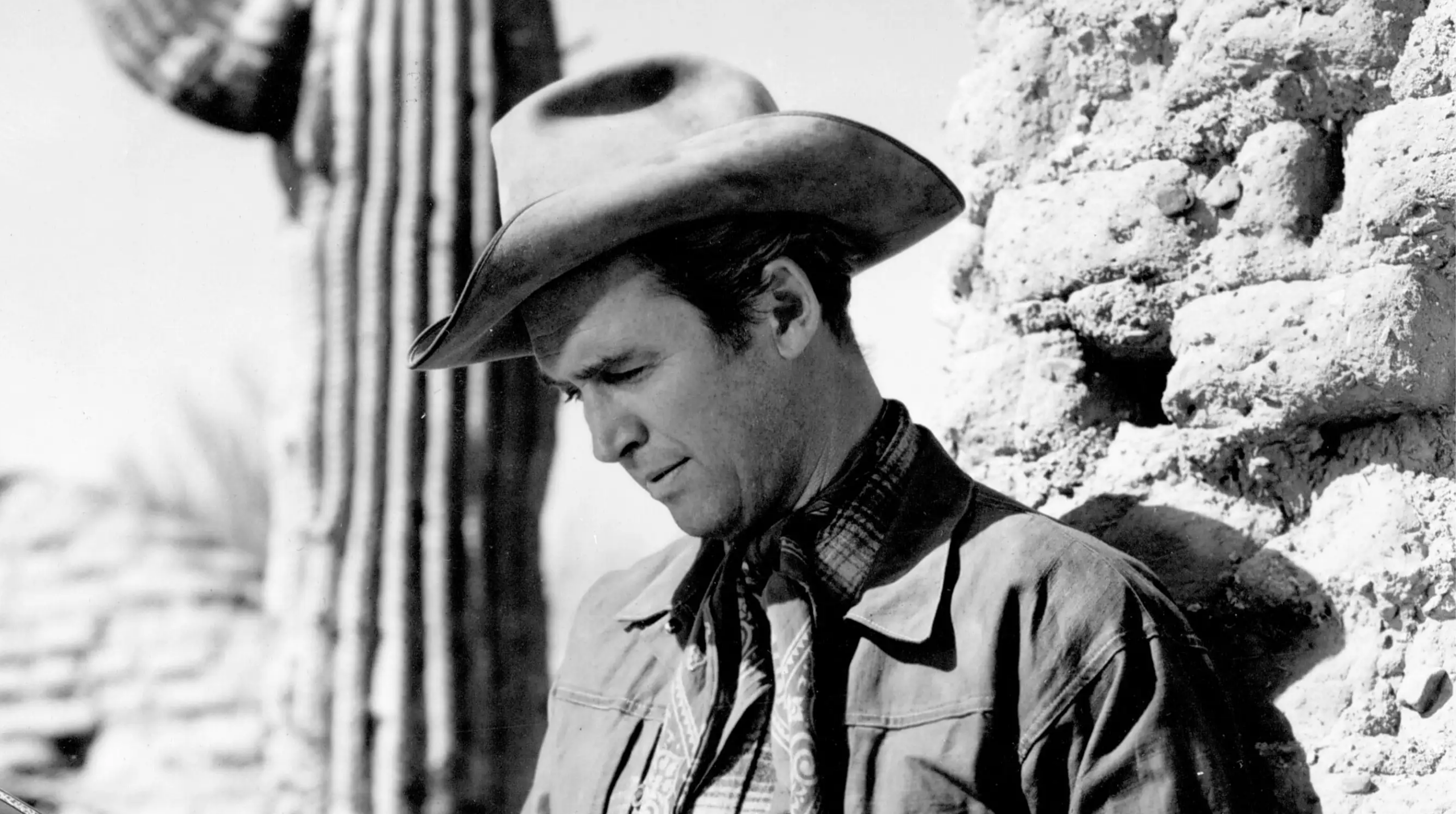
At the Dodge City marksmanship contest, Lin gets his hands on the prize Winchester 1873 and takes his time with it. Stewart runs his fingers along the barrel the way someone handles a thing they have been thinking about for a long time. It is not admiration for a well-made gun. There is something personal in it. This was the first of eight Westerns Stewart made with Mann, and already Mann is letting the actor communicate through objects and physical behavior rather than speeches. The rifle becomes a stand-in for everything Lin wants and cannot yet say out loud.
3. Shooting straight through the coin trick
During the contest, Lin splits a coin tossed into the air. It is the kind of shot that ends arguments. Stewart does not play it as a showboat moment. He lines it up, fires, and waits for the result with the calm of someone who already knew the outcome. That restraint is the trick. A lesser performance turns the scene into a crowd-pleasing stunt. Stewart turns it into a character statement: this man is not here to impress anyone. He is here because he is the best shot in the room, and that fact matters for reasons the audience will spend the rest of the film learning.
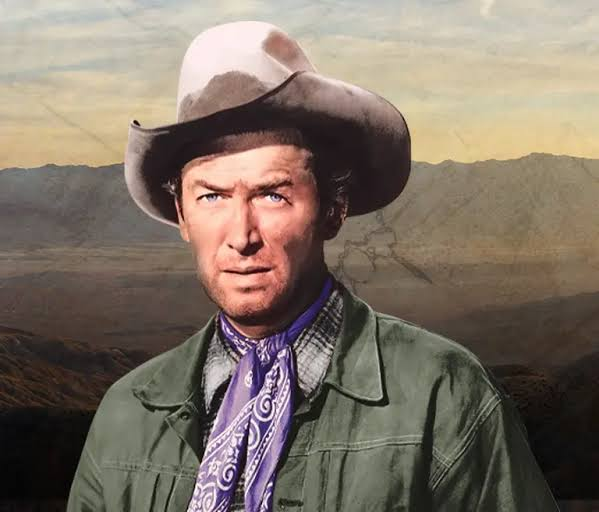
4. Rage breaks through the quiet voice
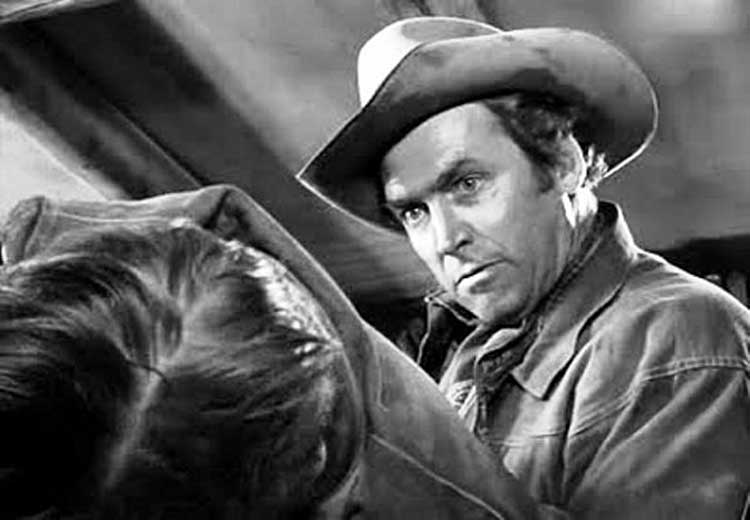
Inside the Dodge saloon, Lin comes face to face with Dutch Henry Brown after the contest, and Stewart lets something surface that his earlier roles never required. The voice stays low, but the jaw tightens and the eyes go flat in a way that reads as genuinely dangerous. Stewart had built a career on warmth. Here he uses the same soft delivery to carry something cold underneath it, and the contrast is unsettling. The film’s noir elements give Mann and Stewart permission to go to that place, and the saloon confrontation is where the audience first understands that Lin’s pursuit of Dutch is not about justice in any simple sense.
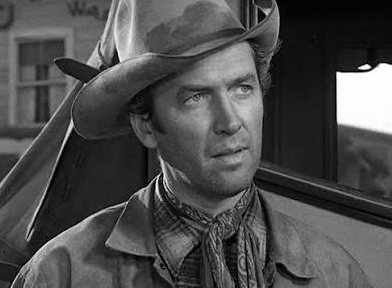
5. Stillness as a form of menace
Lin sits at a campfire, watching the trail Dutch rode out on, and says nothing. Stewart holds the moment without filling it. No muttering, no restless movement, no signal to the audience about what comes next. American audiences knew Stewart as a talker, the man who could deliver a monologue and make you believe every word. This scene works because he does the opposite. Anthony Mann understood that stillness could carry as much weight as action, and Stewart trusted that enough to just sit there and let the fire do the talking. It is one of the quieter pieces of screen acting in any Western from that era.
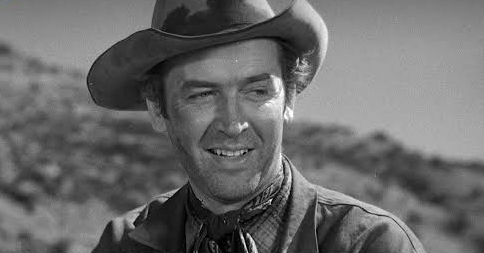
6. He keeps riding when any other man would stop
High-Spade tells Lin to let Dutch go, and Lin rides on anyway. Stewart plays the moment without a dramatic speech or a hard stare meant to underline the decision. He simply does not stop. That stubbornness, quiet and absolute, was a departure from the more reactive heroes Stewart had played in his earlier career. Those characters were pushed into action by circumstances. Lin chooses this over the objection of someone who cares about him, and the choice reveals a fixation that goes beyond any reasonable definition of justice. Stewart makes you understand the obsession without asking you to approve of it.
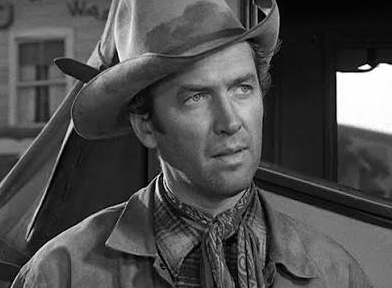
7. The final climb toward his brother and the rifle
Lin picks his way up a rocky hillside toward the last confrontation with Dutch Henry Brown, and Stewart plays the climb with the weight of the whole film behind it. No score swelling under him, no hurrying. Just a man moving toward something he has been moving toward since the first frame. Winchester ’73 was selected for the National Film Registry in 2015 for being culturally and historically significant, and this closing sequence is a good part of the reason why. Stewart also famously took a percentage of the film’s profits in place of a salary, a first in Hollywood. The gamble paid off. So did the climb.
To watch or buy Winchester ’73, click here: https://www.amazon.com.com/Winchester-73-James-Stewart/dp/B0088WEOCM