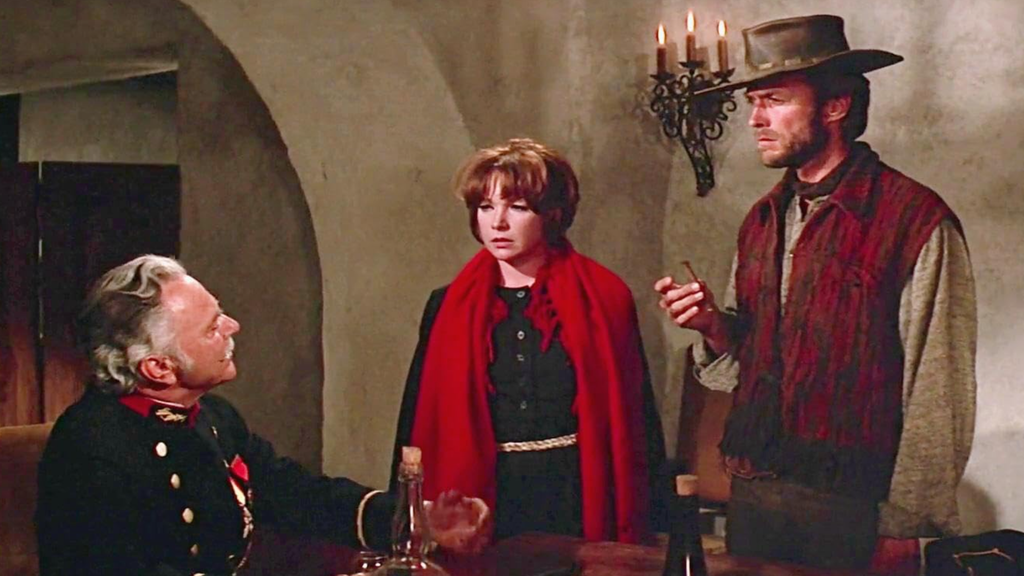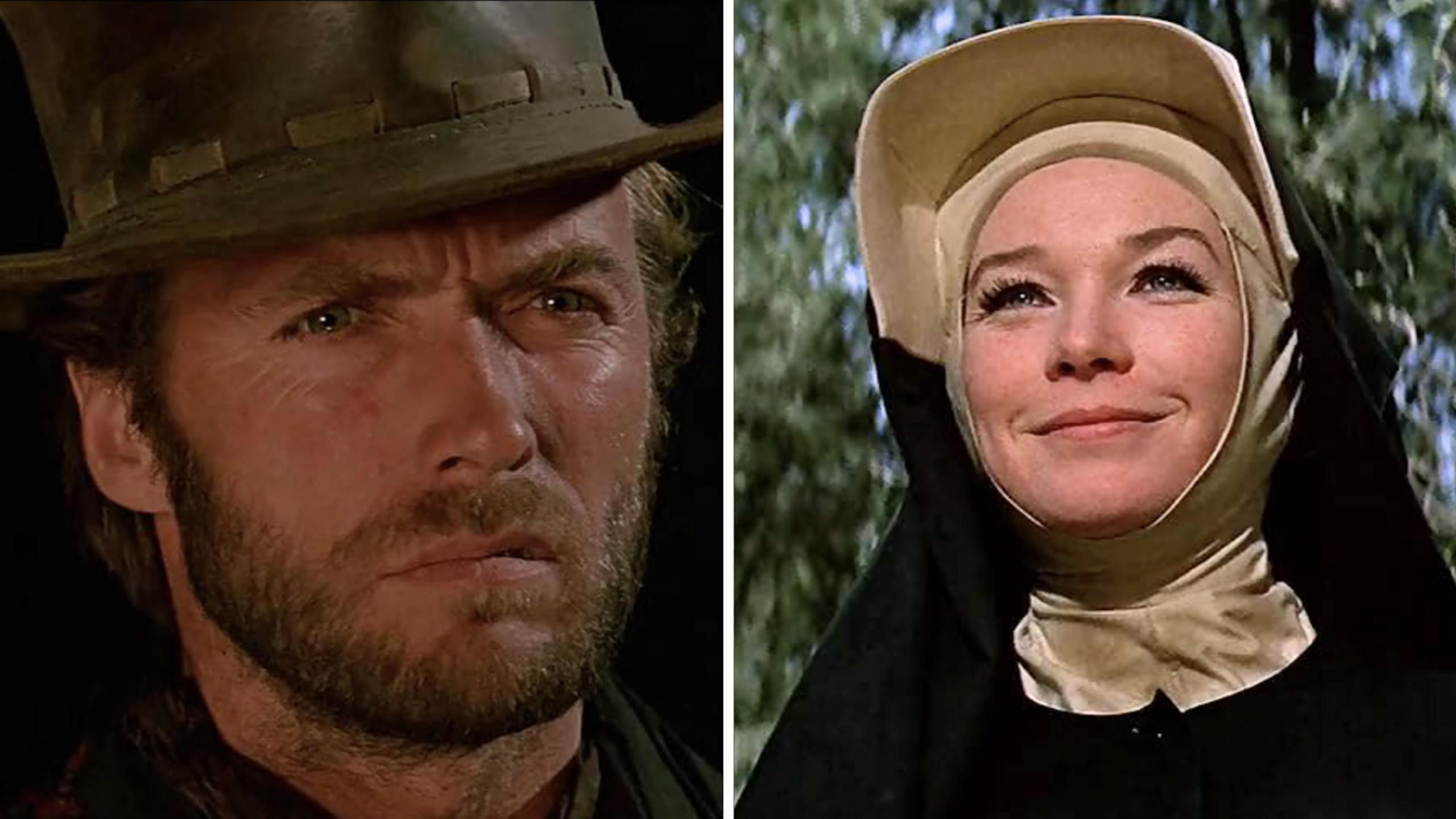
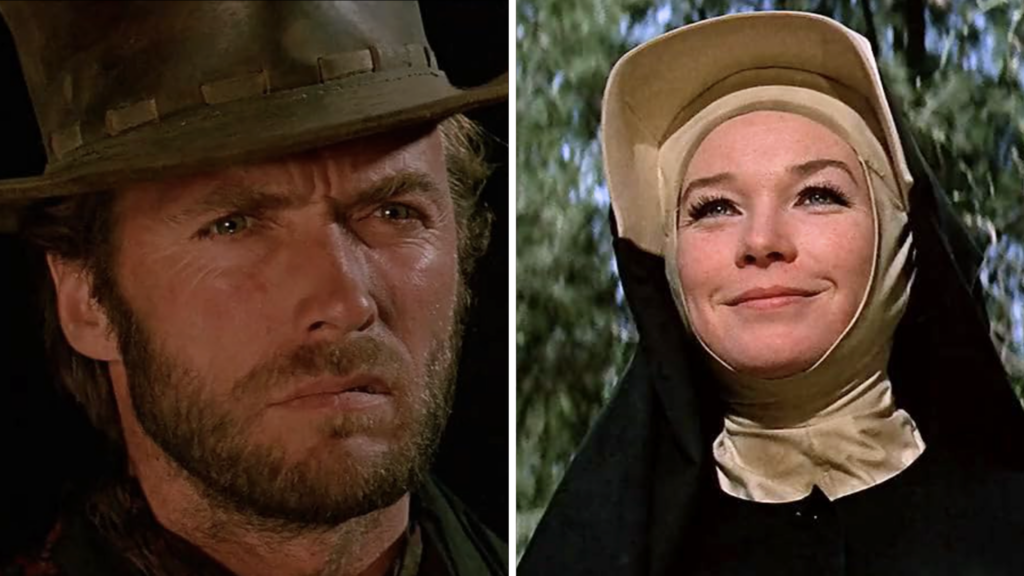
Two Mules for Sister Sara (1970) is a Western built on a single long con, and it runs the trick all the way to the final act. Clint Eastwood plays Hogan, a mercenary who thinks he knows exactly what he’s riding into. Shirley MacLaine plays Sara, a nun who makes sure he never does. Don Siegel directed the whole thing in the Mexican countryside near Tlayacapan, Morelos, and what he put together is less a shoot-’em-up than a quiet study in how much you can hide behind the right costume and a straight face.
1. A nun alone in the desert raises no alarm
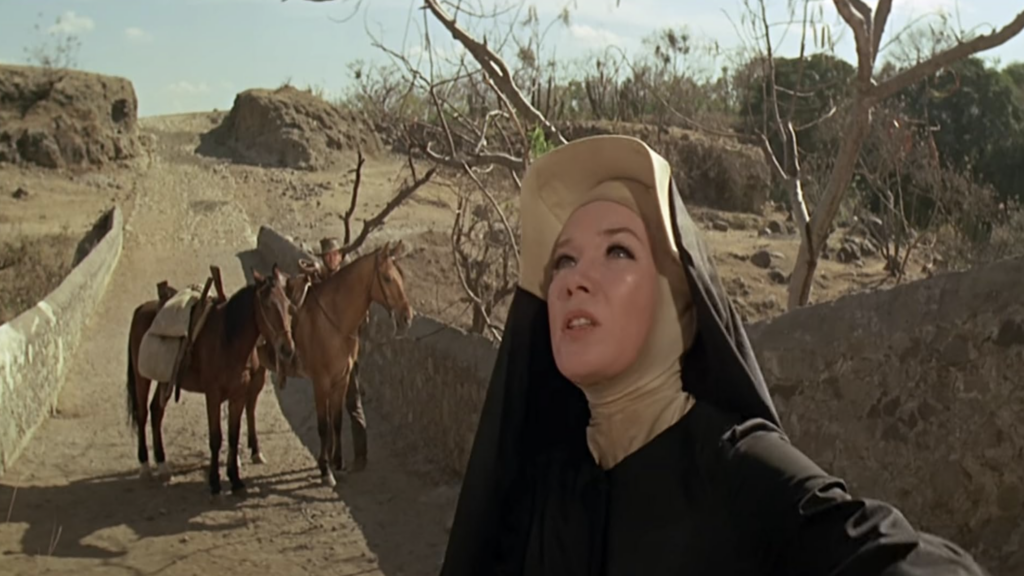
The movie opens its deception before a word is spoken. Hogan comes across Sara in open Mexican scrubland, surrounded by men who mean her harm, and his first instinct is to help. That instinct is completely reasonable. A woman alone in that landscape, in those circumstances, reads as a victim, and the film knows it. Siegel gives you just enough of the situation to make Hogan’s reaction feel automatic. He rides in, he solves the problem, and he never stops to ask the obvious question: what was a nun doing out there in the first place?
2. Her habit reads as helplessness from a distance
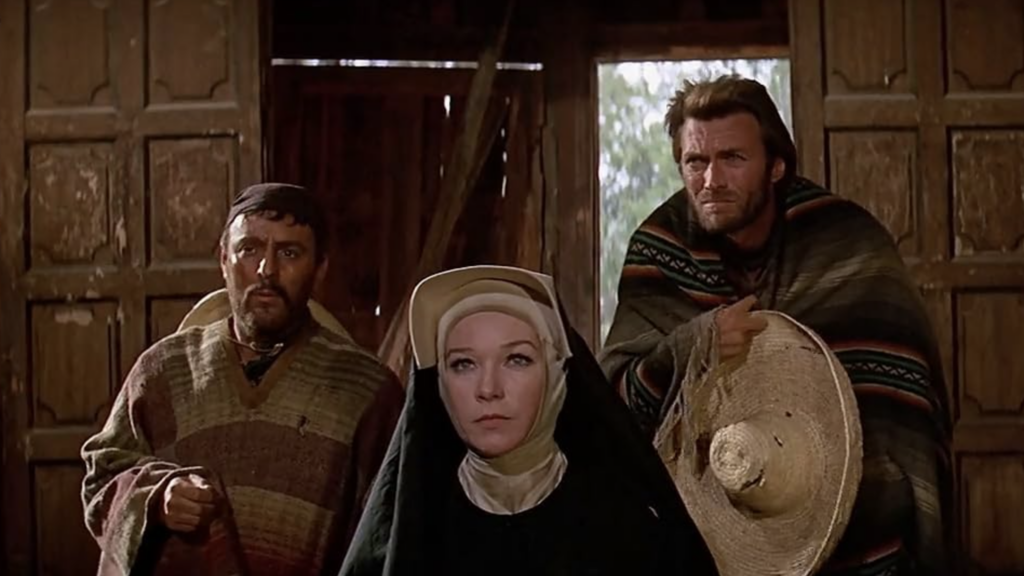
A nun’s habit in a 1860s Mexican Western is a kind of visual shorthand, and the film leans on that hard. When Hogan first rides toward Sara, what he sees is a woman in full religious dress standing perfectly still, waiting. The image does the work for her. The habit signals vulnerability, deference, and someone who needs an escort and a protector. MacLaine plays the stillness straight, and Eastwood’s Hogan reads it exactly the way the audience does. Neither of them is wrong, exactly. They’re just looking at a very good costume.
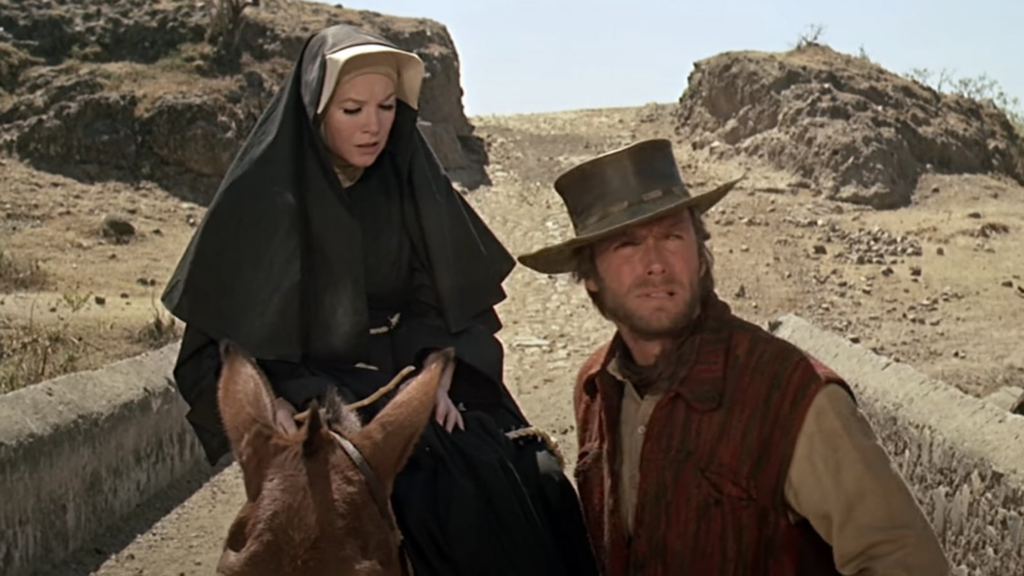
3. She prays like she means every word
Near camp, Sara kneels with her hands folded and her eyes closed, and the performance is convincing enough that you do not question it. MacLaine had already shown, in films like The Apartment (1960) and Irma la Douce (1963), that she could play a woman managing several realities at once. Here she uses that same quality differently. The devotion on Sara’s face looks genuine because MacLaine commits to it completely. She does not wink at the camera. She does not give you a tell. The joke, if you want to call it that, is that a real nun might not have sold it any better.
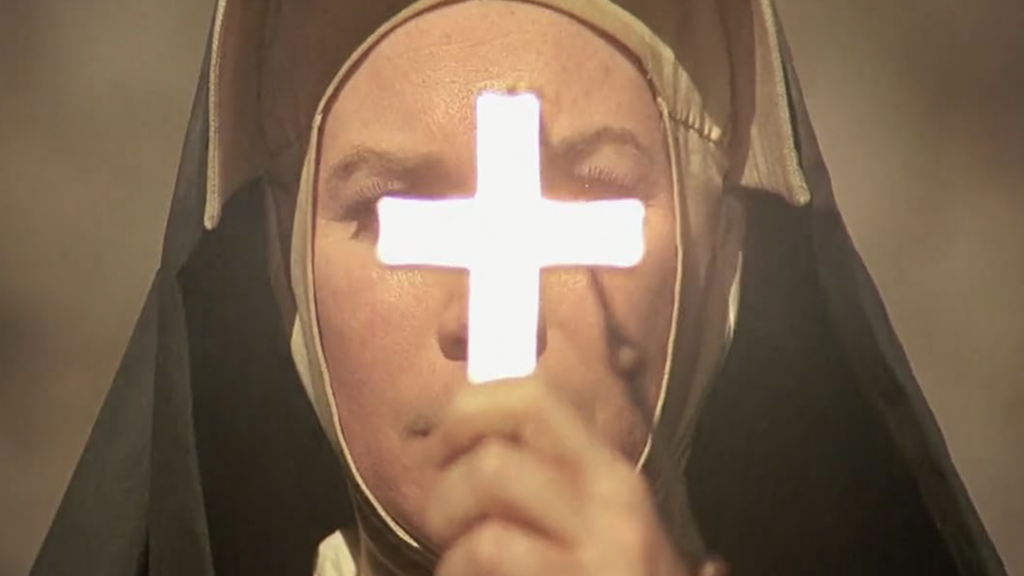
4. Hogan’s discomfort does the lying for her
Eastwood carries a lot of the deception himself, and he does it without trying. On the trail, Hogan keeps a careful physical distance from Sara, visibly uneasy in a way that reads as respect for her vows rather than suspicion of her story. By the time Eastwood made this film, audiences already knew his screen persona from the Leone Westerns of the 1960s. Watching that character go stiff and awkward around a nun is funny, and it also does Sara a favor. A man who guards around her is a man who has already accepted the premise. His discomfort is her alibi.
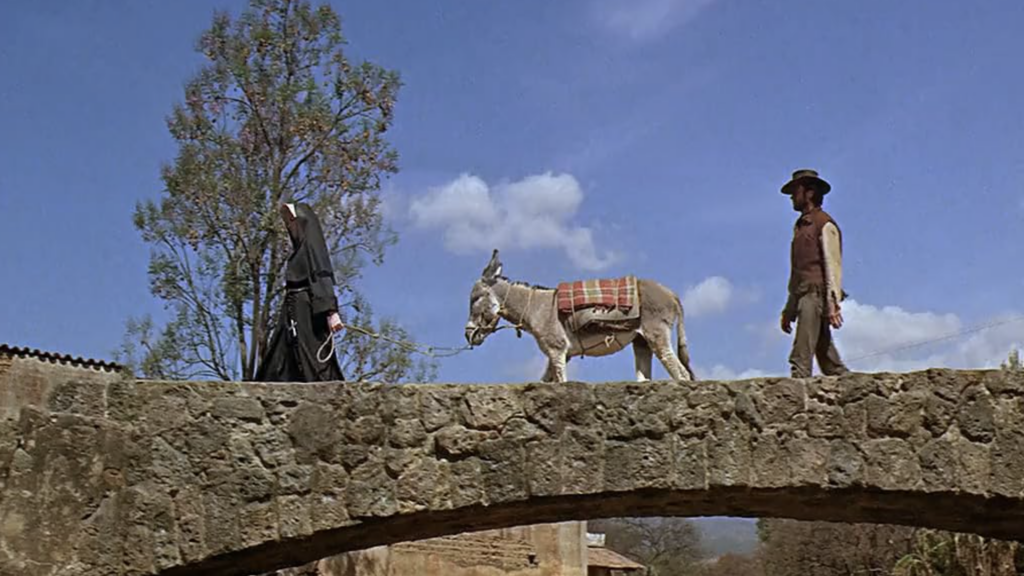
5. She drinks, sm*kes, and curses without breaking character
At some point on the trail, Sara shares Hogan’s bottle or takes a draw from his cigar, still wearing the habit, and the film plays it almost casually. Siegel, who built his career on lean, unsentimental storytelling, does not milk the moment for big laughs. He just lets it sit there. The habit is still on. The behavior does not match. And yet somehow the scene does not collapse the illusion, because MacLaine keeps Sara’s manner steady enough that Hogan, and the audience, file it away as an oddity rather than a clue. That is good misdirection.
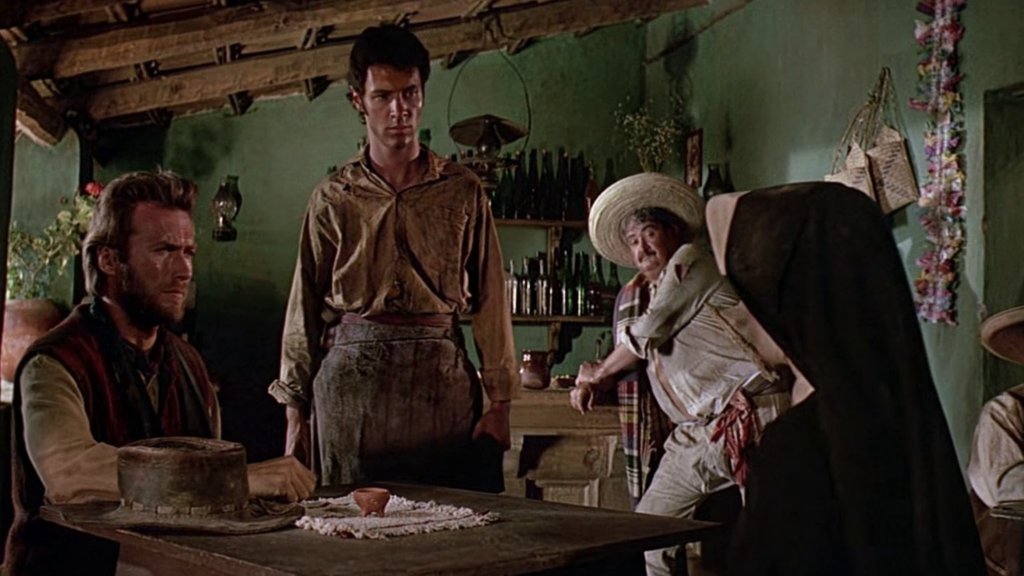
6. The Juaristas trust her before Hogan does
When Sara and Hogan reach the Juarista camp, the Mexican rebel soldiers greet her warmly, and that reception does more work than any line of dialogue. The Juaristas were fighting against the French-imposed Emperor Maximilian, and they had practical reasons to be careful about strangers. Watching them welcome Sara without hesitation makes her look legitimate in a way that Hogan’s skepticism never quite managed to undercut. If the rebels trust her, the audience figures, maybe there is nothing to distrust. The film uses their confidence to reset the viewer’s suspicion right before the end.
7. The reveal reframes every scene before it
When Sara finally discards the habit, the deception lands all at once, on Hogan and on the audience simultaneously. That is the film’s real trick. The reveal does not just explain the ending; it sends you back through everything you already watched. The stillness in the desert, the folded hands, the careful distance Hogan kept, and the rebels’ easy welcome—all of it reads differently now. Siegel filmed it all in the Mexican countryside, with a real location and two actors working against each other the whole time, and the construction holds up. You were fooled, and the movie was honest about it from the first frame.