“Where were you in ’62?”
If you remember seeing that question on the posters, trailers or newspaper ads for American Graffiti, you already knew what kind of movie George Lucas was making. Released in 1973, the film asked audiences to look back at a very specific moment in American life: one summer night in 1962, when cruising, car radios, drive-ins and rock ’n’ roll could turn an ordinary evening into a night worth remembering.
Here are six images from the film that capture what 1962 looked and felt like.
1. When Cars Meant More Than Getting Around
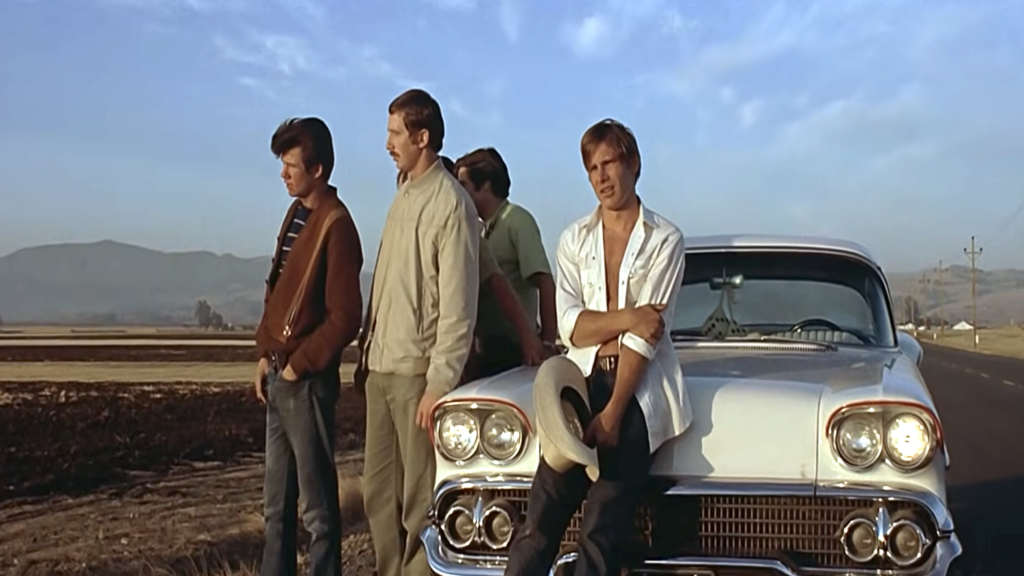
After Bob Falfa challenges John Milner to a drag race, his ’55 Chevy ends up overturned and burning on the side of the road. The aftermath captures something central to American Graffiti: in 1962, cars were not simply a way to get from one place to another. They were tied to teenage identity, friendship, competition and the nightly ritual of cruising. George Lucas drew on his own youth in Modesto, where cruising and hot rods were a defining part of teenage life.
Even the image itself feels unmistakably early 1960s: the large American car, the open California road, the simple clothes and carefully styled hair.
2. The Details Tell the Story of an Era
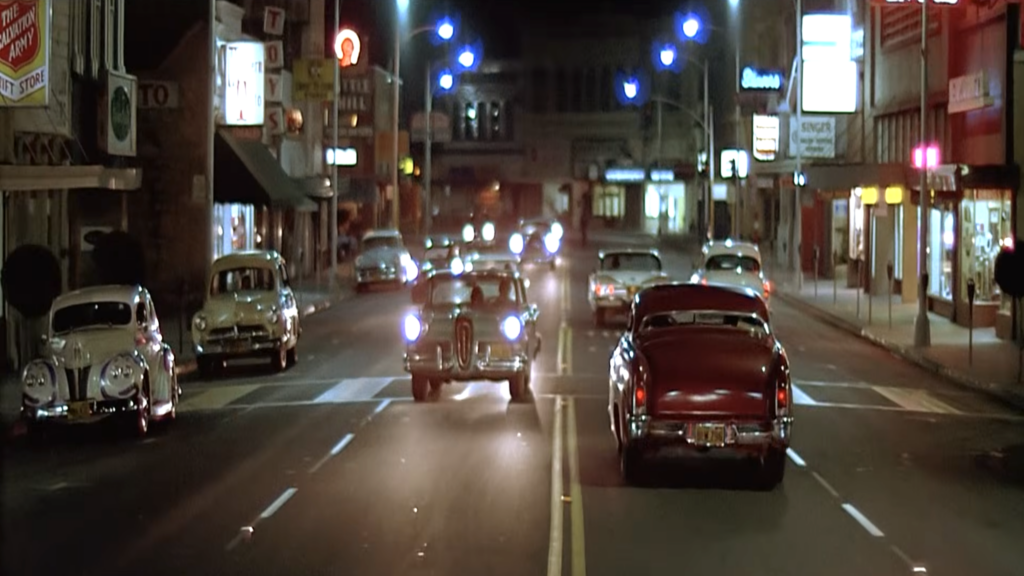
Not every car in this scene is from 1962. The movie brings together models from different years, including a 1958 Chevrolet Impala, a 1956 Ford Thunderbird, a 1955 Chevrolet, a 1951 Mercury, a 1932 Ford Deuce Coupe and a 1958 Edsel. Someone living in 1962 would naturally be driving a car from previous years. The movie captures the car culture of the early 1960s, rather than simply parading a collection of period cars to remind the audience what decade they are watching.
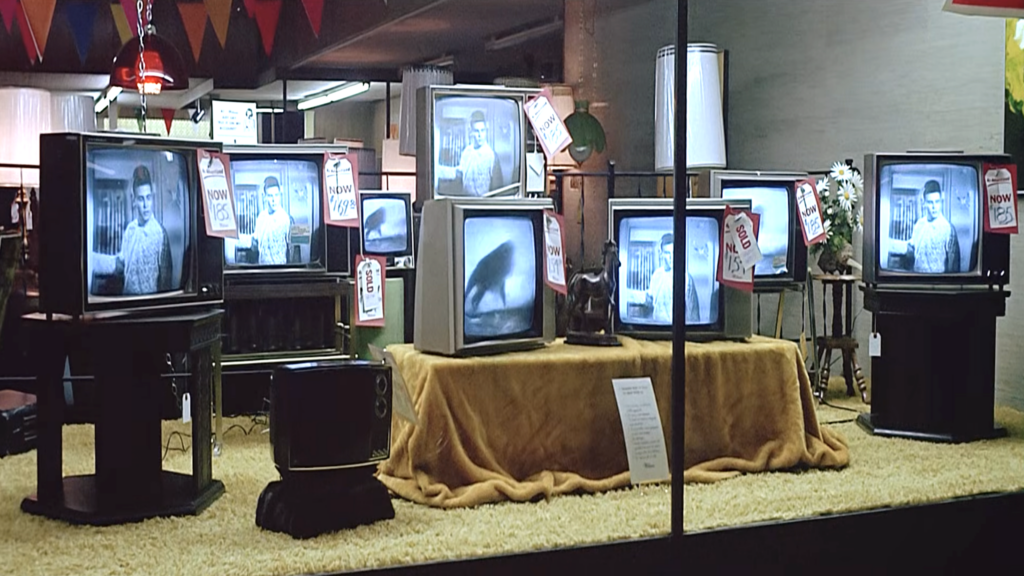
3. The TV Store Window Into 1962 America
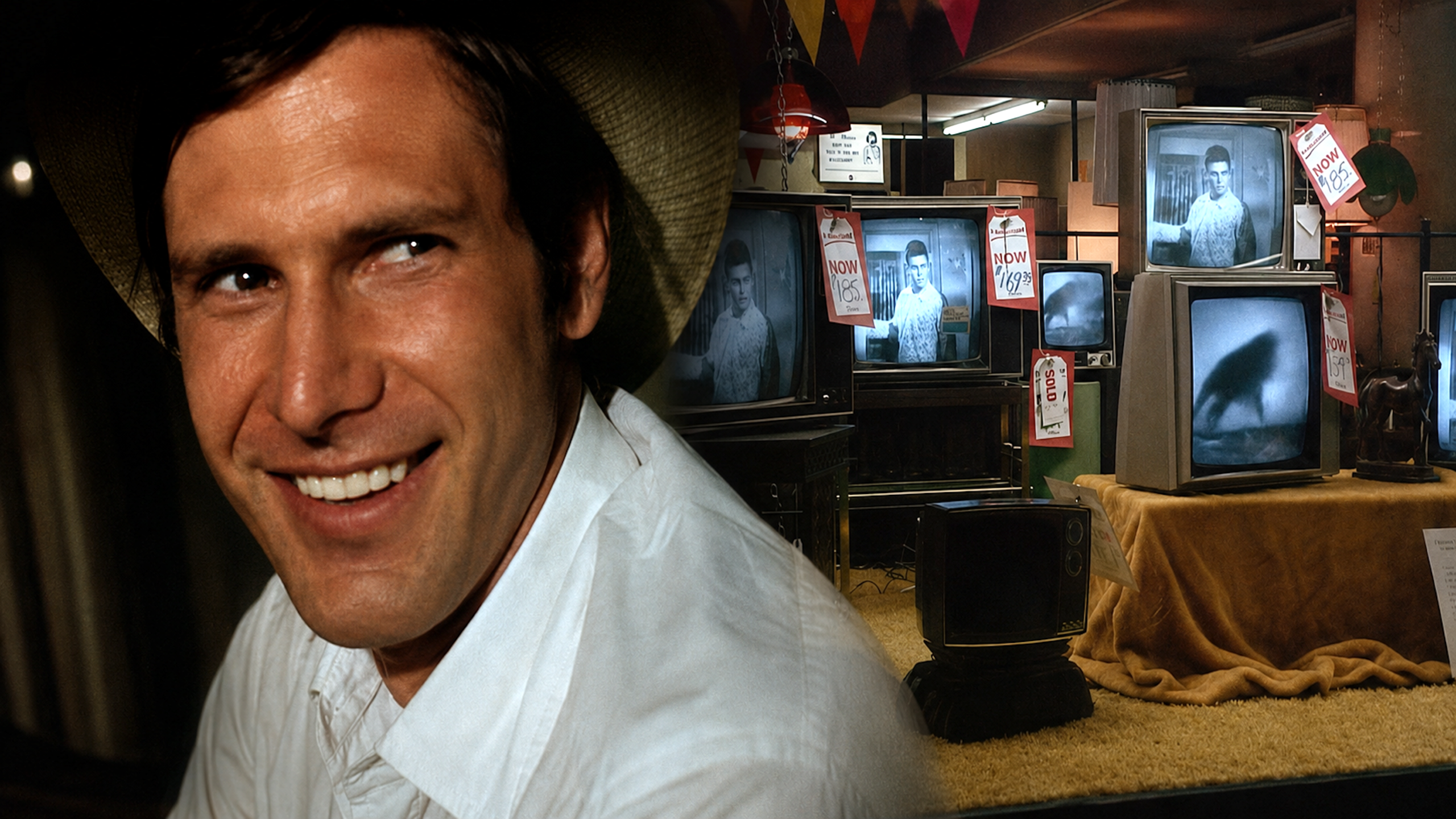
Sitting on the hood of a car outside an appliance store and watching The Adventures of Ozzie and Harriet through the window feels like a small piece of everyday life in 1962. The series had premiered in 1952 and was still part of American television in 1962, turning an ordinary store window into a snapshot of what people could have been watching at the time.
And then there are the prices. The signs on the televisions show about $169, $185 and $169.95. Those numbers were actually in the ballpark for a television in 1962: a 23-inch Admiral set cost around $168.94. Today, those price tags almost feel like another reminder that we are looking at a very different America.
4. A Glimpse at ’60s Fashion for Young Women
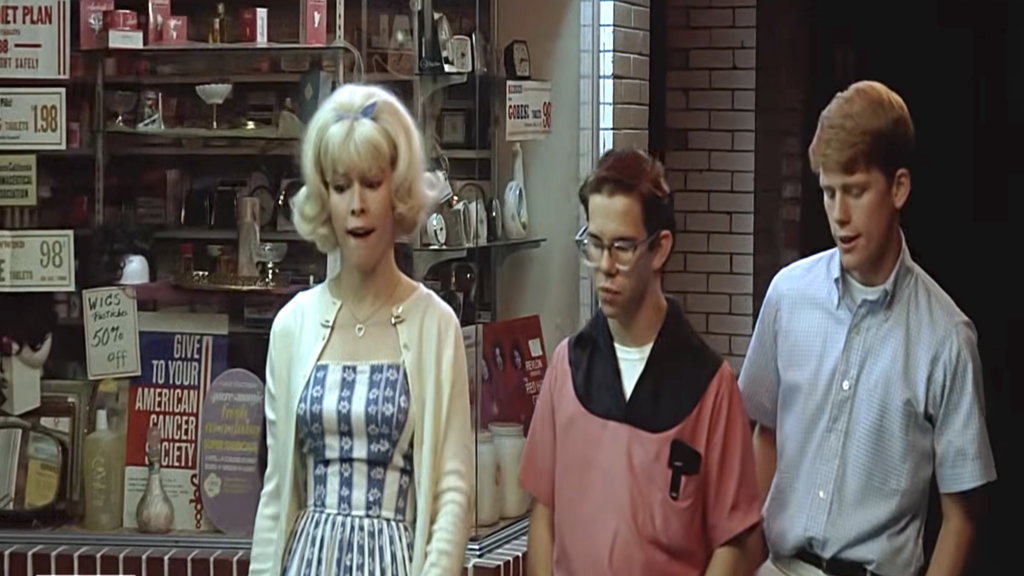
The dress, the cardigan, the white shoes and that carefully styled blonde hair capture a very particular idea of what a young woman could look like in 1962. The outfit feels polished without looking extravagant, with the cinched waist, full skirt and bouffant hairstyle giving the character the unmistakable look of the early 1960s.
There is also a small secret behind the outfit. Costume designer Aggie Guerard Rodgers, who designed all the clothes for American Graffiti, found Debbie’s Lanz dress and white shoes at Goodwill. She even recalled that the production had only one bow for her hair, which had to last through the entire shoot.
5. The Propeller Plane Era Looked Like This
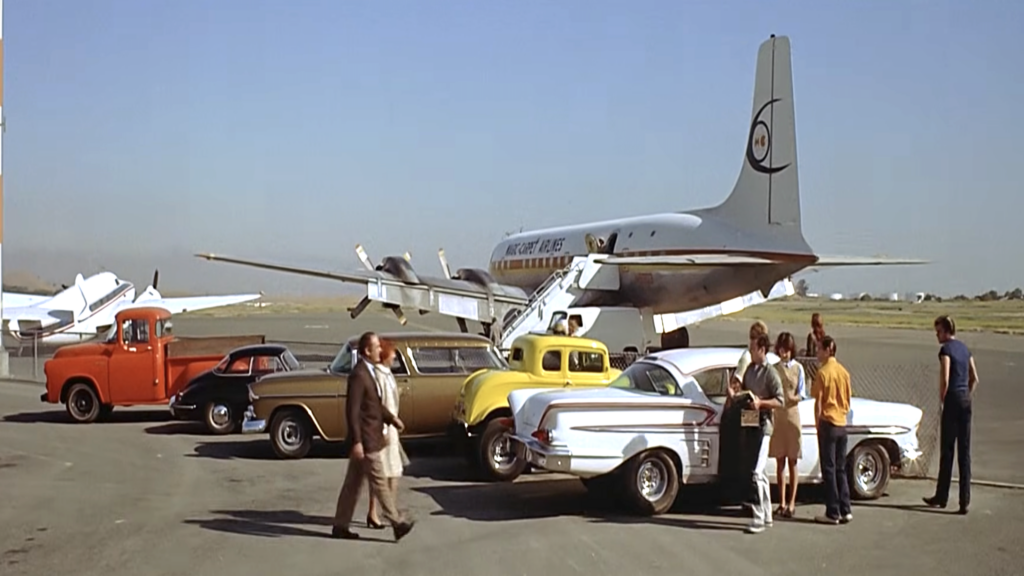
Flying looked very different in the early ’60s. In this scene, Curt says goodbye to his family and friends just a few feet from the airplane, surrounded by cars and passengers on the open airport grounds. There is something almost casual about the whole thing, a reminder of how close people could get to the planes they were about to board.
The airplane itself is another piece of the period. The Douglas DC-7C seen here was built in 1956, a four-engine propeller airliner that had already been flying for several years by the time the story takes place in 1962.
6. A Movie Theater Sign With a Story of Its Own
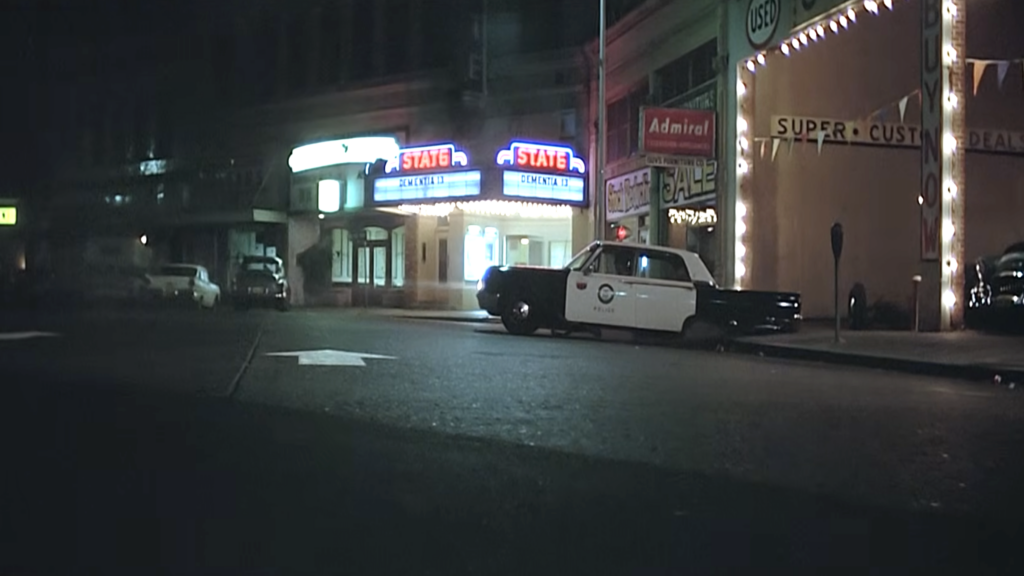
The movie theater is doing more than lighting up the street. Its bright marquee makes the cinema feel like part of the night out, right alongside the cars and storefronts. Look closely, and the sign is showing Dementia 13, Francis Ford Coppola’s first feature as a director. It was actually released in 1963, making the marquee a small anachronism in a movie set in 1962, but also a clever nod to Coppola, who was a friend of George Lucas and an executive producer on American Graffiti.