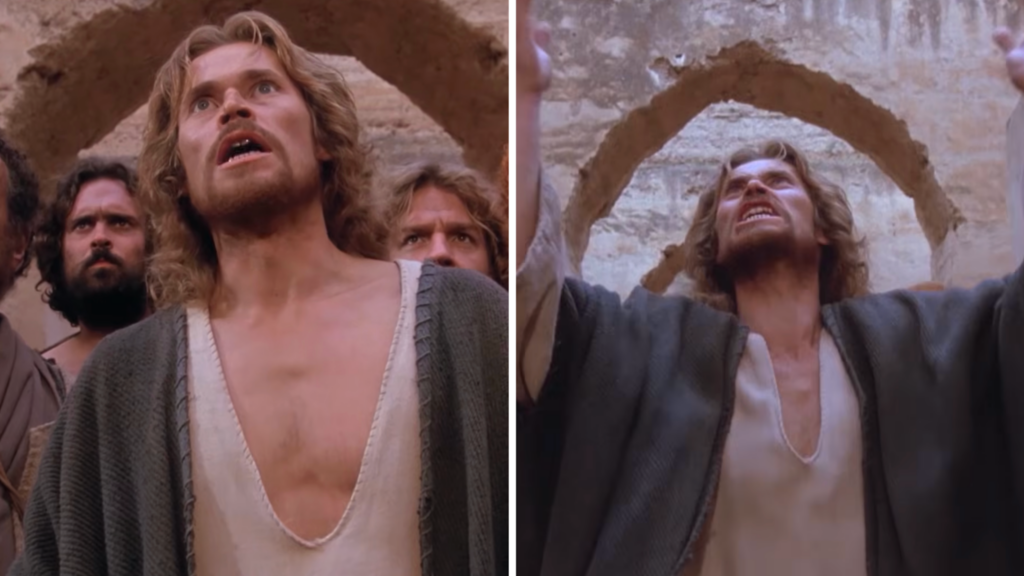

When Martin Scorsese released The Last Temptation of Christ in 1988, it triggered massive backlash, public protests, and immediate bans across multiple countries. Based on Nikos Kazantzakis’ controversial 1960 novel, the cinematic masterpiece did not set out to present a traditional, serene biblical epic. Instead of depicting a stoic, infallible figure carved from marble, the film presented a profoundly vulnerable man wrestling with severe doubt, agonizing fear, and the painful weight of a divine destiny he never asked for.
By humanizing Willem Dafoe’s portrayal of Jesus, Scorsese explored the raw tension between flesh and spirit in a way mainstream Hollywood had never dared before. Far from stripping away his holiness, the narrative showed that the ultimate sacrifice only carries weight if the struggle behind it is entirely real. Here are 7 ways The Last Temptation of Christ defied tradition to show a deeply human Jesus.
1. He Suffers from Agonizing Fear and Uncertainty
In traditional biblical films, Jesus is typically depicted with absolute moral clarity and an unwavering sense of divine purpose from the moment he appears on screen. Martin Scorsese completely flipped this archetype upside down by introducing Willem Dafoe’s character as a deeply troubled, terrified young man. He suffers from agonizing physical headaches and haunting inner voices, unable to decipher whether he is being called upon by God or tormented by the Devil. This profound spiritual confusion makes him hesitate at every step of his journey, showing a relatable human who is utterly terrified of the massive cosmic burden being placed upon his fragile shoulders.

2. He Tries to Escape His Destiny by Making Crosses for Romans
Perhaps the most shocking and controversial narrative choice in the entire film occurs at the very beginning of Jesus’s arc. Desperate to avoid the horrifying destiny he senses awaiting him, he works as a carpenter crafting wooden crosses used by Roman soldiers to execute Jewish rebels. His heartbreaking logic is purely human: he believes that if he commits a sin so shameful that his own people and God despise him, the divine voices will finally leave him alone. This desperate attempt to run away from his calling highlights a raw, flawed mortal struggling against an overwhelming fate.

3. Judas Is His Loyal Friend, Not a Greedy Traitor
The film radically reimagines the dynamic between Jesus and Judas Iscariot (played by Harvey Keitel). Rather than being a villainous traitor driven by thirty pieces of silver, Judas is portrayed as a fiercely devoted freedom fighter and Jesus’s closest confidant. While Judas initially wants a military leader to overthrow Roman rule, Jesus gradually convinces him that a spiritual sacrifice is necessary. In a poignant reversal of tradition, Jesus actually begs a hesitant Judas to betray him to the authorities, forcing Judas to carry the painful burden of being hated by history just so his master can fulfill his divine mission.

4. He Experiences Genuine Attraction and Carnal Temptation
Standard cinematic representations treat Jesus as a figure entirely detached from physical desires, but The Last Temptation of Christ directly explores his vulnerability to mortal love. The story places heavy emphasis on his complex relationship with Mary Magdalene, showing that Jesus genuinely experiences romantic longing, loneliness, and the desire for emotional intimacy. He isn’t immune to the beauty of human connection; rather, he actively feels the painful pull between the quiet comfort of building a life with a woman he loves and the brutal, isolating path of universal martyrdom that lies ahead.

5. He Struggles with the Fear of Madness
As Jesus travels across the desert gathering followers and performing miracles, he isn’t presented as a serene, unflappable teacher. Instead, he constantly questions his own sanity and the rapidly evolving nature of his message. At times, he preaches pure unconditional love and mercy; at other moments, driven by intense psychological stress and spiritual exhaustion, he preaches judgment and the sword. This unpredictable internal chaos paints a vivid portrait of a man trying to process divine revelations through a limited human brain, genuinely afraid that the pressure of his divine duty is driving him completely insane.

6. The Ultimate Temptation Is an Ordinary, Comfortable Life
During the climax of the film, as Jesus hangs dying on the cross, Satan does not try to tempt him with vast empires, gold, or worldly power. Instead, the Devil presents him with the most alluring temptation imaginable for a suffering man: a peaceful, quiet, ordinary life. In an extended hallucination, an angel rescues him from the cross, allowing him to marry, father children, grow old, and enjoy the simple pleasures of domestic happiness. By framing a normal human existence as the ultimate trap, the film brilliantly shows that the hardest thing for Jesus to give up wasn’t his life, but his human desire for comfort.

7. His Sacrifice Is Powerful Precisely Because He Was Human
The entire premise of Scorsese’s film leads to a powerful theological conclusion that many critics initially overlooked. When the aging Jesus realizes on his deathbed that his peaceful life was merely a demonic illusion, he crawls back through the burning ruins of Jerusalem and begs God to let him complete his sacrifice. Waking up back on the bloody cross as a young man, he smiles and shouts, “It is accomplished!” His triumph carries immense weight precisely because he felt real physical terror, lusted after a normal life, and bled like any mortal. His victory wasn’t effortless—it was earned through absolute human suffering.